
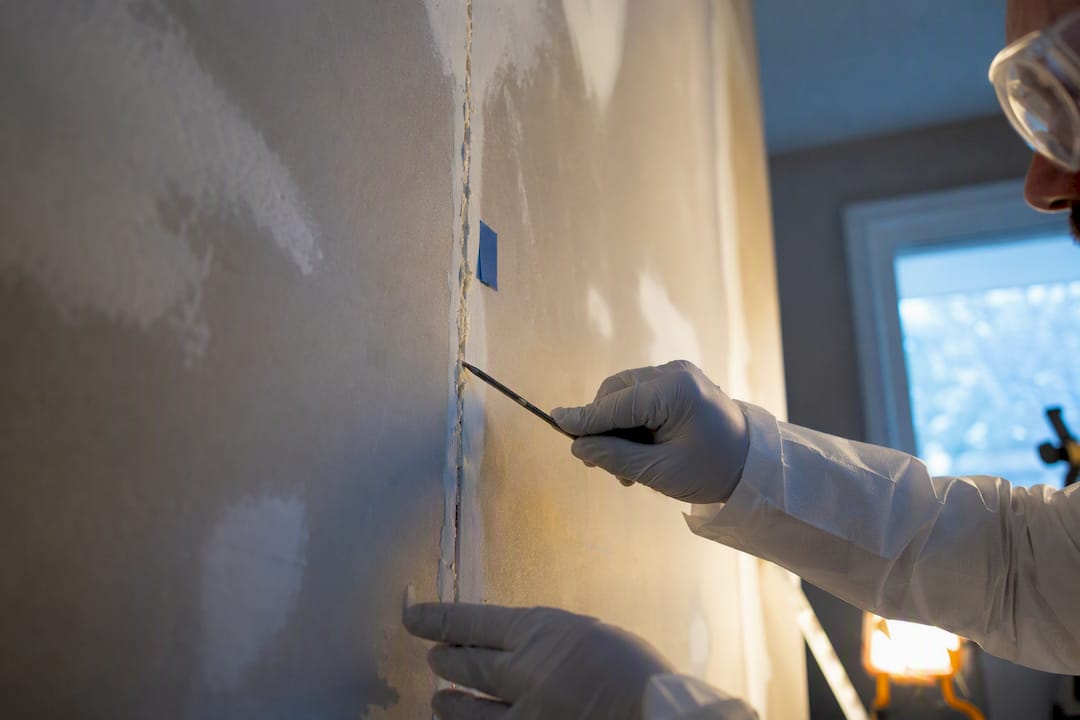
If your home was built or renovated before 1980, the joint compound sealing your drywall seams may contain asbestos, and there’s no way to tell just by looking at it. The moment you suspect it, stop sanding, drilling, or scraping, seal off the area, and turn off any HVAC serving that room. The correct next move is to obtain professional sampling, followed by licensed abatement if the lab confirms asbestos is present.
TL;DR:
- Asbestos is most likely to be found in joint compound, textured coatings, and tape used on drywall seams, especially from the mid-1940s to late 1970s.
- Visual inspection cannot reliably identify asbestos presence; proper sampling with water mist, cutting, sealing, and lab testing is essential.
- Disturbing friable asbestos-containing material through sanding, drilling, or scraping releases airborne fibres that pose serious health risks over time.
- If testing confirms asbestos, material should be managed in place or removed depending on damage and renovation plans, with full abatement requiring licensed professionals.
- Conducting sampling beforehand can prevent costly, extensive contamination by ensuring safe work practices and proper containment from the start.
Table of Contents
- Where asbestos hides in a drywall wall: joint compound, texture, and tape
- How to confirm whether your joint compound contains asbestos
- Why disturbing joint compound matters more than sitting near it
- What to do next: your containment and abatement checklist
- What professional abatement actually involves
- Contractor perspective: why testing first usually saves money
- How HMJ Contracting handles sampling and abatement for Ottawa homeowners
- Sources
- FAQ
Where asbestos hides in a drywall wall: joint compound, texture, and tape
Gypsum board itself was almost never made with asbestos. The risk sits in the finishing materials layered over it: joint compound, patching compound, and textured ceiling or wall coatings. Manufacturers added chrysotile fibre to these products because it added strength, resisted cracking, and made the mud easier to sand and feather at the seams.
Historical joint compound commonly contained asbestos at 3 to 6% by weight, and a research project that recreated period formulations found chrysotile content around 4.5% to 5.5% in mixes typical of the late 1960s. Where you’re most likely to find it:
- Seams between drywall sheets, wherever mud was applied and feathered
- Screw and nail dimples filled and smoothed over
- Textured “popcorn” or knockdown ceilings
- Skim-coated walls in homes finished with a smooth plaster-like look
The practical window runs from the mid-1940s through the late 1970s, with a cutoff around 1980. Renovations completed in the early 1980s fall into a grey zone, since some contractors used up existing stock of asbestos-containing mud after the cutoff date.
How to confirm whether your joint compound contains asbestos
You cannot identify asbestos by texture, colour, or age alone. Older mud sometimes looks chalky or fibrous, but plenty of asbestos-free compound looks the same way, and plenty of asbestos-containing mud looks perfectly ordinary. Visual inspection alone is not a reliable method of identification, which is exactly why over-the-counter test kits and guesswork lead so many homeowners astray.
Sampling itself carries risk if done wrong. Cutting into a wall without wetting the surface first can release the very fibres you’re trying to detect. The correct approach follows a specific sequence:
- Mist the target area lightly with water to suppress dust before any cutting; following expert guidance on preventing moisture in walls can also help protect your home during asbestos-related work.
- Cut a small cross-section that includes the joint compound, the paper tape, and a sliver of the gypsum board beneath it, not just the surface mud.
- Seal the sample in a labelled, airtight bag immediately.
- Send it to an accredited lab with a documented chain of custody.
Sampling only the board core and skipping the mud/tape interface is a common mistake that produces false negatives. Labs confirm asbestos using Polarized Light Microscopy (PLM), the standard analytical method for bulk building materials, with results typically returned within a few business days. A single PLM sample generally costs in the range of a modest lab fee, though pricing varies by lab and by how many samples you submit at once. Look for a sampler or lab accredited for asbestos bulk analysis, and ask for a written report with the lab’s certification number attached, not just an email with a yes or no.
Why disturbing joint compound matters more than sitting near it
Intact, undisturbed asbestos-containing compound poses very little risk. It’s bound in a hardened matrix and isn’t shedding fibres into the air. The danger appears when that material becomes friable, meaning it can be crumbled or reduced to dust by hand pressure, and friable material releases microscopic fibres that stay suspended in air far longer than ordinary dust.
Activities that turn intact compound into an airborne hazard include:
- Dry sanding with an orbital or belt sander
- Drilling, routing, or cutting into seams
- Demolition, wall removal, or scraping with a putty knife
- Dry sweeping or shop-vacuuming without a HEPA filter
Long-term inhalation of asbestos fibres is linked to mesothelioma, lung cancer, and asbestosis, and the risk builds with cumulative exposure over years, not a single afternoon of work. One comprehensive review estimated that career drywall finishers accumulate exposures in the range of 4.3 to 36.3 fibres per cc-year over a working lifetime, while a homeowner doing a weekend renovation faces a fraction of that cumulative dose. That’s a reason for calm, not carelessness. It’s still worth noting that even ordinary, asbestos-free drywall dust contains silica, talc, and mica, all of which irritate lungs and airways with repeated exposure, so dust control matters on every renovation regardless of what the lab report says.
What to do next: your containment and abatement checklist
The moment you suspect asbestos-containing joint compound, your actions in the first hour matter as much as anything a contractor does later.
Do immediately:
- Stop all work in the affected room.
- Close doors and, if possible, tape plastic sheeting over doorways.
- Shut off forced-air heating or cooling serving that space so fibres don’t circulate through the ducts.
- Avoid dry sweeping, vacuuming with a standard vacuum, or dusting the area.
Don’t: sand, drill, break, or attempt to remove suspect material yourself, even “just to see.”
Once the area is contained, arrange sampling through a certified inspector. If the lab confirms asbestos, the material either gets managed in place or removed, depending on your renovation plans. A few triggers guide that decision:
- Leave in place or encapsulate if the compound is intact and you have no immediate plans to disturb it. This is a recognized, valid management strategy, though it requires documentation so future contractors, or a future buyer’s inspector, know what’s behind the wall.
- Overlay (skimming new board or compound over the old surface) can work when the disturbance risk from removal outweighs the benefit, though it doesn’t eliminate the hazard, only buries it.
- Full removal becomes the right call when you’re renovating the room, replacing drywall, or the material is already damaged or friable.
A licensed abatement contractor should provide an itemized quote covering containment setup, negative-air equipment, disposal fees, and post-abatement clearance testing as separate line items, not a vague lump sum. A single-room abatement typically runs a few days from setup to clearance, though scope and access affect the timeline.
Pro Tip: Never accept a visual “looks clean” sign-off as your finish line. Insist on a written post-abatement air clearance report confirming fibre counts are back within acceptable levels before you let anyone back into the room.
What professional abatement actually involves
Licensed abatement isn’t just removal with extra paperwork. A proper job builds physical containment around the work area, runs negative-air machines to keep fibres from escaping into the rest of the house, and requires crews to wear fitted respirators and disposable coveralls that get bagged before leaving the site. Regulated asbestos waste goes to an approved disposal facility, not a regular construction bin, and Canada’s federal rules governing asbestos-containing materials apply to how that waste gets handled and tracked.
Before you sign off on any abatement job, ask for:
- An itemized quote listing containment, air monitoring, and disposal separately
- Copies of relevant permits where applicable
- Waste disposal manifests showing where the material went
- Pre- and post-abatement air clearance reports from an independent lab
HMJ Contracting has built its abatement process around this documentation standard specifically because it protects occupants during the work and protects property value afterward, since a documented clearance report becomes part of your home’s paper trail at resale.
Contractor perspective: why testing first usually saves money
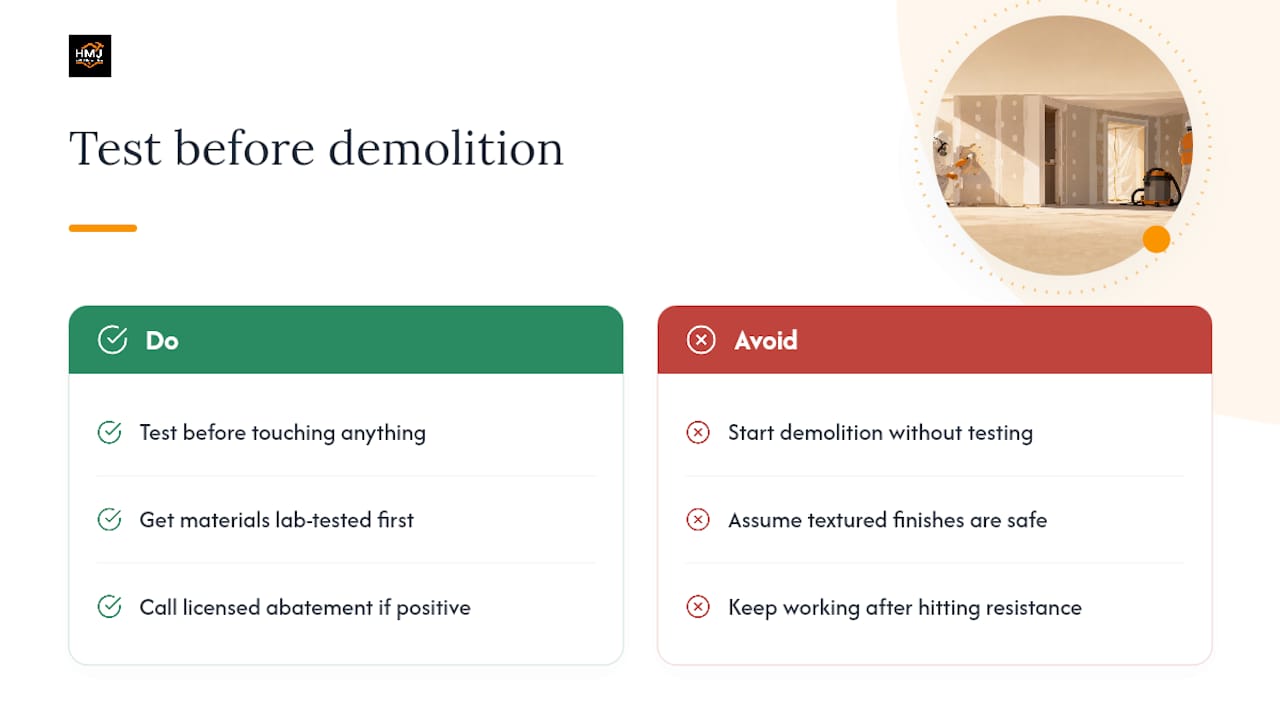
Every costly asbestos story I’ve come across follows the same pattern: someone started demolition, hit resistance from what they assumed was ordinary joint compound, and kept going. By the time they stopped, fibres had spread through the HVAC system, into adjacent rooms, and sometimes into personal belongings. What would have been a single-room abatement becomes a whole-floor containment problem.
Testing before you touch anything isn’t caution for its own sake. It’s the cheapest insurance in the entire renovation. The homeowners who skip it aren’t reckless, usually. They just don’t realize textured ceilings and skim coats carry the same risk as the obvious stuff. Licensed abatement, done properly, is a routine and well-understood process. It’s the untested demolition that turns into the expensive one.
— Jason
How HMJ Contracting handles sampling and abatement for Ottawa homeowners
If you’ve found suspect joint compound behind a wall you’re renovating, you don’t have to sort out sampling, containment, and rebuild timelines on your own. A qualified contractor coordinates certified sampling, carries out licensed abatement with proper negative-air containment, and arranges post-abatement clearance testing that confirms your home is safe to reoccupy.

An estimate itemizes containment setup, disposal, and clearance testing as separate line items, so you know exactly what you’re paying for before work starts, not after. Once abatement is complete, the same crew can rebuild the wall or ceiling, meaning you’re not left hunting for a second contractor to finish the room. If you suspect asbestos-containing joint compound anywhere in your Ottawa-area home, request an inspection through HMJ’s abatement services page and get a written quote before any work begins.
Sources
- Health Canada — Health risks of asbestos and asbestos-containing materials
- Re-creation of historical chrysotile-containing joint compounds — PMC
- NIOSH engineering controls: drywall sanding vacuum systems
- An updated evaluation of potential health hazards associated with exposures to asbestos-containing drywall accessory products
This article is general information, not a substitute for advice from a qualified doctor. Consult a qualified healthcare professional about your own circumstances before acting on anything here.
FAQ
Does drywall joint compound have asbestos?
Joint compound made or used before 1980 often contains 3 to 6% asbestos by weight, while the gypsum board itself typically does not.
How do you tell if drywall has asbestos in it?
You can’t tell by looking. A certified sampler needs to take a cross-section including the mud, tape, and board, then send it for Polarized Light Microscopy analysis at an accredited lab.
What does asbestos joint compound look like?
It looks like ordinary joint compound, sometimes slightly more fibrous or chalky, but appearance never confirms or rules out asbestos content.
Is it bad to breathe in joint compound dust?
Yes. Dust from asbestos-containing compound can cause serious long-term lung disease, and even asbestos-free drywall dust irritates airways, so vacuum sanding systems that cut exposure by 80 to 97% are worth using whenever sanding is unavoidable.
How much does asbestos testing for drywall joint compound cost?
Costs vary by lab and sample count, but a single PLM sample generally runs in the range of a modest flat fee per sample, well below the cost of an unplanned abatement job caused by disturbing untested material.