
A dry cough that will not quit, breathlessness on stairs you used to climb without thinking, or a dull ache in your chest can all point toward asbestos-related disease, but none of them prove it on their own. Persistent exertional shortness of breath, unexplained weight loss, pleuritic chest pain, and coughing up blood are the signals that deserve fast medical attention. Diagnosis always requires a documented exposure history combined with imaging and lung-function testing, not symptoms alone. If you recognize any of these signs, write down when and where the exposure likely happened, leave any suspect material undisturbed, and book a medical assessment right away if symptoms are severe or worsening quickly.
TL;DR:
- Symptoms like exertional breathlessness and persistent cough often appear years before any visible signs of asbestos-related disease, making early detection difficult.
- Lung cancers and mesothelioma may take 20 to 40 years to develop after exposure, so long latency periods require thorough documentation of any past asbestos contact.
- Accurate diagnosis depends on a combination of exposure history, imaging tests like high-resolution CT scans, and lung-function assessments, not symptoms alone.
- Home renovation involving asbestos-containing materials should be approached carefully: testing beforehand and employing certified professionals prevents dangerous fiber release.
- Inhalation of even short-term asbestos exposure may carry long-term risks; documenting all exposures remains crucial for future medical evaluation.
Table of Contents
- Early signs of asbestos exposure versus late-stage symptoms
- Major asbestos-related diseases and how each one presents
- How long after exposure do symptoms typically show up?
- What tests doctors use to diagnose asbestos-related disease
- What to do right after suspected exposure
- Risk factors that change your odds and outlook
- Reducing your risk during home renovations
- What a licensed abatement crew actually assesses on-site
- Ruling out other respiratory conditions
- Why documentation matters even when you feel fine
- If testing confirms asbestos in your home
- Where to find official guidance
- Sources
- FAQ
Early signs of asbestos exposure versus late-stage symptoms
The trouble with asbestos exposure symptoms is that the early ones look like almost everything else. A cough that lingers after a cold, mild breathlessness when you climb a hill, some chest tightness after a workout. None of it screams “asbestos” the way people expect it to.
Early signs tend to be subtle and easy to explain away:
- Mild shortness of breath during physical activity, not at rest
- An occasional dry cough with no clear trigger
- A vague tightness or discomfort in the chest
- Fatigue that doesn’t match your activity level
Late-stage signs are harder to dismiss:
- Shortness of breath during ordinary daily tasks, not just exertion
- A persistent, worsening cough that doesn’t respond to typical remedies
- Crackling sounds in the lungs a doctor can hear with a stethoscope
- Clubbing of the fingertips in advanced asbestosis
- Unexplained weight loss
- Coughing up blood
The health effects tracked by CCOHS identify gradually worsening exertional breathlessness and a persistent cough as the two symptoms most suggestive of asbestosis specifically, with crackles and finger clubbing showing up on physical exam as the disease advances. That progression from “breathless on the stairs” to “breathless standing still” often takes years, which is exactly why so many people ignore the early phase.
The overlap problem is real. Chronic obstructive pulmonary disease, ordinary bronchitis, heart failure, even long-term effects of a respiratory infection can produce nearly identical symptoms. A symptom checklist cannot tell you which one you have. That’s not a failure of the checklist; it’s simply not what checklists are built to do.
Some presentations should move you toward medical review faster than others. Rapid onset of breathlessness over days rather than months, chest pain that is sharp and worsens with breathing, or any amount of blood in your cough all warrant quicker follow-up than a slow-building cough that has been stable for a few weeks.
Pro Tip: Keep a simple symptom log, even a note on your phone, tracking when symptoms started and whether they’re getting better, worse, or staying the same. That timeline is often more useful to a doctor than a detailed description of how the symptom feels.
Major asbestos-related diseases and how each one presents
Asbestos exposure doesn’t cause one disease. It causes several, and each has its own symptom signature, even though they share a common cause.
Asbestosis is progressive scarring of lung tissue from long-term fibre inhalation. The defining symptom pattern is exertional dyspnea that slowly worsens over years, paired with a dry, persistent cough. Crackling lung sounds and, in advanced cases, clubbed fingertips are the physical exam findings clinicians look for.
Pleural disease covers plaques, effusion, and thickening of the tissue lining the lungs. These findings are sometimes picked up on imaging with no symptoms at all. Other times they produce chest pain and breathlessness that build gradually. Because pleural changes can appear years before any symptom does, a scan showing plaques doesn’t automatically mean disease is progressing, and it doesn’t automatically mean it isn’t.
Mesothelioma is a cancer of the lining around the lungs or abdomen, and it carries one of the longest latency periods of any occupational disease. Chest or shoulder pain, a cough that won’t resolve, and unexplained weight loss are the classic warning signs for the pleural form. When mesothelioma develops in the abdominal lining instead, symptoms shift toward bloating, abdominal pain, and changes in bowel habit rather than respiratory complaints.
Lung cancer linked to asbestos exposure often stays silent in its earliest stages, which is part of why it tends to be caught later than doctors would like. As it progresses, a chronic cough, hemoptysis, and weight loss become the dominant signs, closely mirroring the warning symptoms tracked for asbestos-associated malignancy generally: new or worsening cough, coughing blood, pleuritic pain, breathlessness, and unexplained weight loss.
The common thread across all four conditions is that symptoms alone never tell you which disease, if any, is present. Only exposure history combined with clinical evaluation can start narrowing that down.
How long after exposure do symptoms typically show up?
This is the part that catches people off guard. Asbestos-related disease has some of the longest latency periods in medicine, and feeling completely fine for years after an exposure means nothing about your long-term risk.
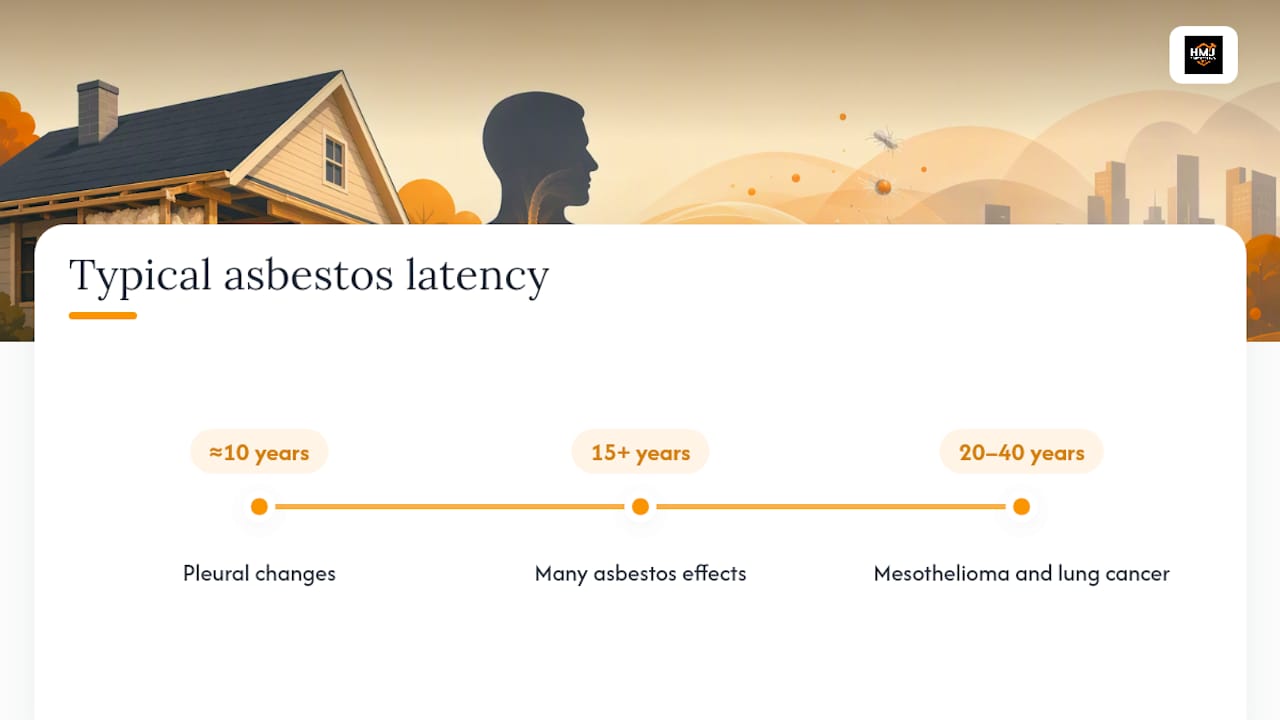
Pleural changes can appear after roughly a decade, but cancers behave very differently. Federal guidance notes that many asbestos-related effects take 15 years or more to appear, with mesothelioma and lung cancer often not showing up until 20 to 40 years after the original exposure. Someone who breathed in fibres while renovating a basement in their thirties might not see a symptom until their sixties or seventies.
Dose and duration generally raise or lower your risk, but that relationship isn’t a clean line. Some research on shorter exposures still shows elevated long-term risk, so a brief exposure isn’t automatically a safe one. That uncertainty is exactly why documentation matters. If you ever disturbed insulation, tile, or old ductwork, write down the date, the location, and what the material looked like. That record could matter to a doctor twenty years from now.
What tests doctors use to diagnose asbestos-related disease
A doctor cannot diagnose asbestos-related disease from symptoms in a five-minute conversation. The process is more structured than that, and knowing the steps ahead of time makes the appointment far less intimidating.
- Exposure history and clinical exam come first. Your doctor will ask about jobs, renovation projects, and time periods, then listen to your lungs for crackles or abnormal sounds.
- Imaging follows. A chest X-ray is usually the starting point, with a high-resolution CT scan ordered when more detail is needed to spot pleural plaques, thickening, or early scarring that an X-ray might miss.
- Pulmonary-function testing measures severity. Spirometry checks how much air you can move, while a DLCO test measures how well oxygen actually transfers into your bloodstream. Together they show whether lung capacity has declined and by how much.
- Biopsy or thoracoscopy is reserved for unclear cases. When imaging findings are ambiguous or cancer is suspected, a tissue sample settles the question that scans alone cannot.
Ontario’s medical surveillance code recommends periodic exams for anyone with a known exposure history, along with referral to a respirologist or occupational lung specialist when findings warrant closer follow-up. It’s worth understanding one distinction clearly: a lab confirming asbestos fibres in a piece of building material tells you the material is hazardous. It tells you nothing about whether your body has developed disease. Those are two separate tests answering two separate questions.
What to do right after suspected exposure
The first hour after you suspect exposure matters more than most people realize, mostly because the instinct to clean up immediately is exactly the wrong instinct.
Household steps to take immediately:
- Stop disturbing the material entirely; don’t touch, scrape, or move it further
- Keep other people, especially kids and pets, out of the area
- Never vacuum or dry-sweep suspected debris, since that launches fibres back into the air
- Close off the room if you can do so without further disturbing the material
- Contact a qualified asbestos professional to assess and test before anyone re-enters
Certain symptoms mean you skip the wait-and-see approach entirely and go straight to urgent care: severe difficulty breathing, coughing up blood, sudden severe chest pain, or rapid symptom decline over hours rather than days.
When you do see a clinician, bring specifics. Dates of the exposure, what the material was, the building’s age, your smoking history, and any prior chest imaging all help a doctor build an accurate picture faster than a general description of “feeling off.”
Pro Tip: If you’re not sure whether a household exposure counts as urgent, treat sudden or severe respiratory symptoms as urgent by default. It costs you an unnecessary walk-in visit at worst; it costs you nothing at best.
Risk factors that change your odds and outlook
Not everyone exposed to asbestos develops disease, and the difference often comes down to a handful of measurable factors.
Dose and duration matter, meaning heavier and longer exposures generally carry higher risk, though shorter exposures are not automatically risk-free. Fibre type plays a role too, with some asbestos varieties considered more hazardous than others depending on their physical structure. Smoking is the factor with the most dramatic effect: combined with asbestos exposure, smoking multiplies lung-cancer risk well beyond what either factor produces alone. That is exactly why declaring your smoking history to a clinician isn’t optional small talk. It changes how your risk gets calculated.
Prognosis varies widely depending on which disease develops and how early it’s caught. Early detection through appropriate imaging and specialist referral gives clinicians more options for managing the condition and setting a realistic surveillance schedule going forward.
Reducing your risk during home renovations
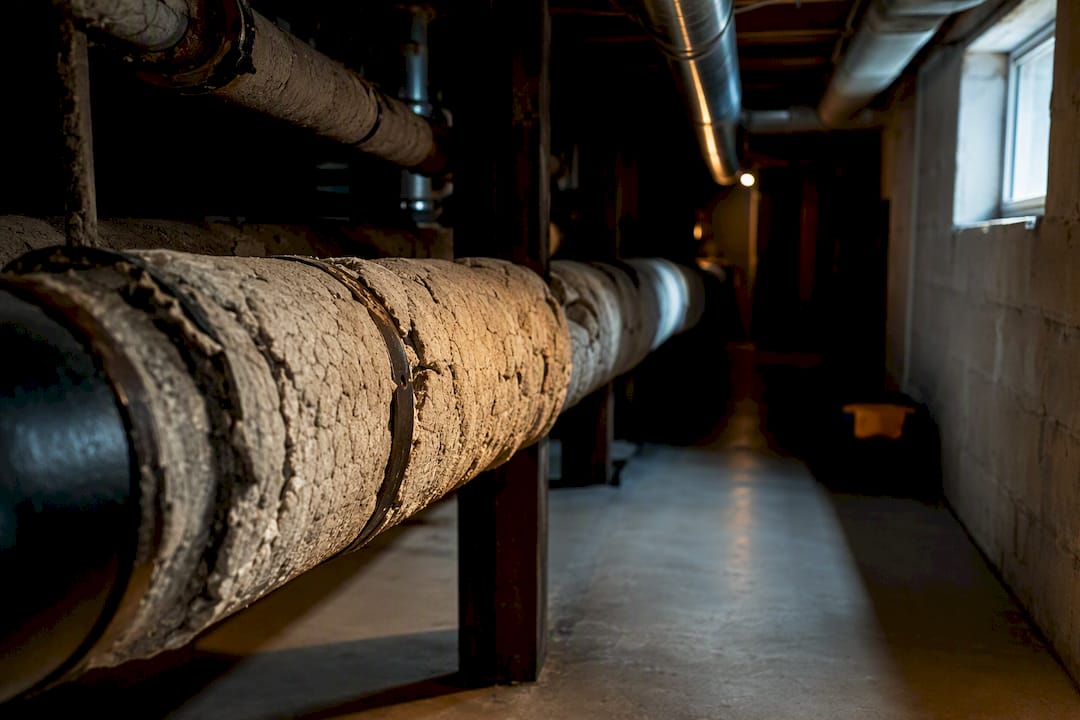
Most asbestos exposure today doesn’t happen on industrial job sites. It happens in basements, attics, and bathrooms during ordinary renovation projects in homes built before the 1990s.
The safety sequence that actually works:
- Test before you touch anything. Suspect materials like vermiculite insulation, old vinyl tile, or textured ceiling coatings should be lab-tested before any renovation work begins.
- Leave intact materials alone when possible. Undisturbed asbestos-containing material that isn’t damaged or friable often poses less risk left in place or properly encapsulated than it does removed.
- Never attempt vermiculite or friable material removal yourself. Health Canada is specific on this point: DIY removal, especially of vermiculite insulation, is one of the higher-risk mistakes homeowners make.
- Hire certified professionals for testing and abatement. A properly run job includes containment barriers, air monitoring during the work, and clearance testing once it’s finished.
A standard home inspection typically will not catch asbestos-containing materials, which is a gap worth knowing about before you start planning renovation work.
What a licensed abatement crew actually assesses on-site
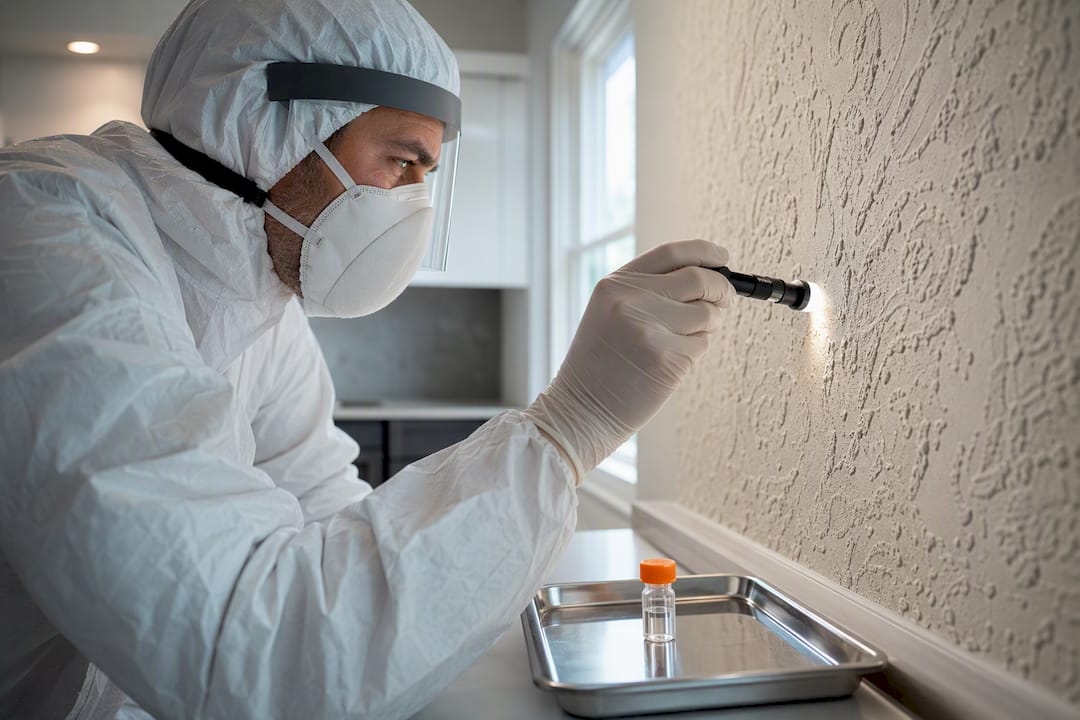
A licensed abatement team’s job starts with identifying suspect material, not guessing at it. That means a visual assessment of the area followed by lab-tested samples sent out for confirmed analysis, rather than assuming based on age or appearance alone.
It’s worth being clear about the boundary here: abatement removes or contains the hazardous material. It does not diagnose disease, and no reputable contractor will tell you otherwise. Those are two different professions solving two different problems.
What homeowners typically receive from a properly run project:
- A written, itemized estimate before any work begins
- A containment plan specific to the affected area
- Air monitoring during the abatement process
- Clearance testing confirming the space is safe once work is complete
- Documentation you can keep on file for future reference or resale
That paperwork trail matters more than most homeowners expect, particularly if you ever sell the property or need to reference the work years later.
Ruling out other respiratory conditions
Asbestos exposure symptoms overlap heavily with far more common respiratory conditions, and that overlap is precisely why self-diagnosis rarely works.
Chronic obstructive pulmonary disease produces the same exertional breathlessness and persistent cough seen in early asbestosis, but it’s driven by smoking or long-term irritant exposure rather than fibre inhalation. Ordinary pneumonia or bronchitis can cause chest discomfort and cough that mimic early pleural disease, but those typically resolve within weeks rather than persisting or slowly worsening. Heart failure causes breathlessness too, though it usually comes with swelling in the legs or ankles that asbestos-related lung disease does not produce. Even a straightforward respiratory infection can leave a lingering cough that worries people unnecessarily.
The distinguishing factor clinicians rely on isn’t the symptom itself. It’s the combination of exposure history, imaging findings, and how the symptom behaves over time. A cough that started after a cold and is improving week over week points away from asbestos-related disease. A cough with no clear trigger that’s been slowly building over months, especially in someone with a known or suspected exposure history, points toward further investigation.
This is also why doctors lean so heavily on high-resolution CT scans rather than X-rays alone when asbestos exposure is part of the history. CT imaging can distinguish patterns of scarring and pleural change that look nothing alike under close inspection, even when the symptoms reported by the patient sound identical on paper.
Why documentation matters even when you feel fine
The biggest misunderstanding I see is homeowners assuming that feeling healthy now means an old exposure is behind them. Given latency periods stretching past 20 years, that assumption doesn’t hold up.
The practical fix is simple: keep a written record. Dates of any renovation or occupational exposure, product names if you know them, prior chest imaging, and your smoking history. Bring all of it to your next physical. A five-minute conversation with that information in hand is worth more than months of self-diagnosis based on symptoms alone, and it costs you nothing to start the file today.
— Jason
If testing confirms asbestos in your home
Getting a positive test result is unsettling, but it’s also the point where the path forward becomes clear. Testing and confirmed lab results turn uncertainty into a defined scope of work, which is a far better position than wondering.

Certified abatement crews handle the material side of this problem with transparency, providing written, itemized quotes before work starts so you know what you’re paying for and why. If a small area needs sampling and confirmation, testing and lab analysis settles the question definitively rather than leaving you guessing based on age or appearance. Vermiculite attic insulation, one of the higher-risk materials homeowners encounter, should be removed under proper containment rather than by a DIY approach, which experts warn against. Small contained-area abatement jobs are handled with air monitoring and clearance documentation scaled appropriately to the space, as on larger projects.
None of this replaces a medical evaluation, and it isn’t meant to. It addresses the material sitting in your home, with lab-confirmed results and clearance paperwork you keep on file. If you’ve identified a suspect material or received a concerning test result, request a written estimate and get a clear scope of work before anything moves forward.
Where to find official guidance
For deeper detail beyond this guide, a few sources are worth bookmarking directly. Health Canada’s asbestos safety pages cover home risks and prevention basics. CCOHS details health effects in plain clinical language, while Ontario’s medical surveillance code outlines follow-up protocols for exposed individuals.
This article is general information, not a substitute for advice from a qualified doctor. Consult a qualified healthcare professional about your own circumstances before acting on anything here.
Sources
- Canada
- Asbestos - health effects (CCOHS)
- Asbestos clinical assessment (CDC/ATSDR archive)
- Medical surveillance code (Ontario regulation)
FAQ
What are the first signs of asbestos exposure?
Early signs are subtle: mild breathlessness during activity, an occasional dry cough, or slight chest tightness that’s easy to attribute to something else. These signs overlap heavily with common respiratory conditions, so they’re rarely recognized as exposure-related on their own.
What do I do if I was exposed to asbestos?
Stop disturbing the material immediately, keep others away from the area, and avoid sweeping or vacuuming any debris. Contact a qualified asbestos professional for testing and assessment, and seek medical care promptly if you develop severe breathing difficulty or other urgent symptoms.
How long does it take for asbestos exposure to affect you?
It varies by condition. Pleural changes can take about a decade to appear, while cancers like mesothelioma often take 20 to 40 years or more to develop after the original exposure.
What happens if I inhale a little asbestos?
A brief exposure doesn’t guarantee illness, but it isn’t automatically risk-free either. Some research on shorter exposures still shows elevated long-term risk, which is why documenting the exposure and mentioning it at future medical visits matters regardless of how minor it seemed at the time.
Can abatement testing tell me if I have asbestos-related disease?
No. Lab testing confirms whether a material contains asbestos fibres, but it cannot diagnose disease in a person. Only a medical evaluation involving exposure history, imaging, and lung-function testing can determine that.