
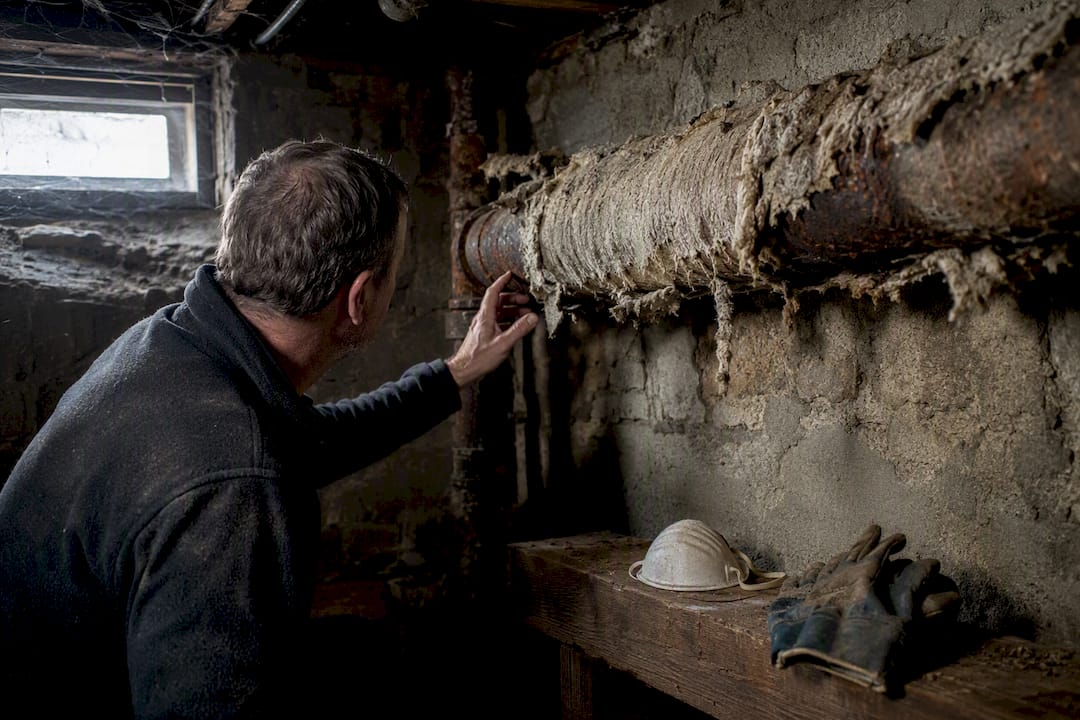
Do not attempt to remove asbestos pipe insulation yourself. Health Canada and CCOHS both direct homeowners toward licensed professionals because disturbing the material releases fibres linked to serious lung disease. If the insulation is intact, undisturbed, and confirmed by testing, leaving it in place under a management plan is often the safer short-term choice. If it is damaged or crumbling, isolate the area immediately and call a licensed abatement contractor.
TL;DR:
- If asbestos pipe insulation is intact and undamaged, it can often be safely managed in place under a documented plan rather than removed.
- Crumbling, water-stained, or mechanically damaged insulation almost always requires professional removal using regulated glove-bag procedures or full containment for larger jobs.
- Testing by a qualified technician, not visual inspection alone, is necessary to confirm the presence and type of asbestos before any removal decision.
- Costs vary significantly based on access, pipe size, containment level, and disposal fees, so get detailed, itemized quotes and verify licensure before hiring.
- Clearance testing and proper waste disposal documentation are critical to confirm the job was completed safely and thoroughly.
Table of Contents
- What does asbestos pipe insulation removal actually require?
- What should you do the moment you find asbestos-wrapped pipes?
- How do professionals handle asbestos pipe lagging removal?
- What drives the cost of asbestos pipe insulation removal?
- How do you choose a qualified abatement contractor?
- What should you expect once removal day arrives?
- Is encapsulation ever a substitute for removal?
- What actually matters when you’re staring at wrapped pipes in your basement
- Where to verify the regulations and guidance in this article
- Getting a straight answer on your pipe insulation
- Sources
What does asbestos pipe insulation removal actually require?
Whether asbestos-wrapped pipes need to come out depends on one word: friability. Friable material crumbles under light hand pressure and releases fibres into the air easily. Non-friable material stays bound together and poses far less risk as long as nobody disturbs it.
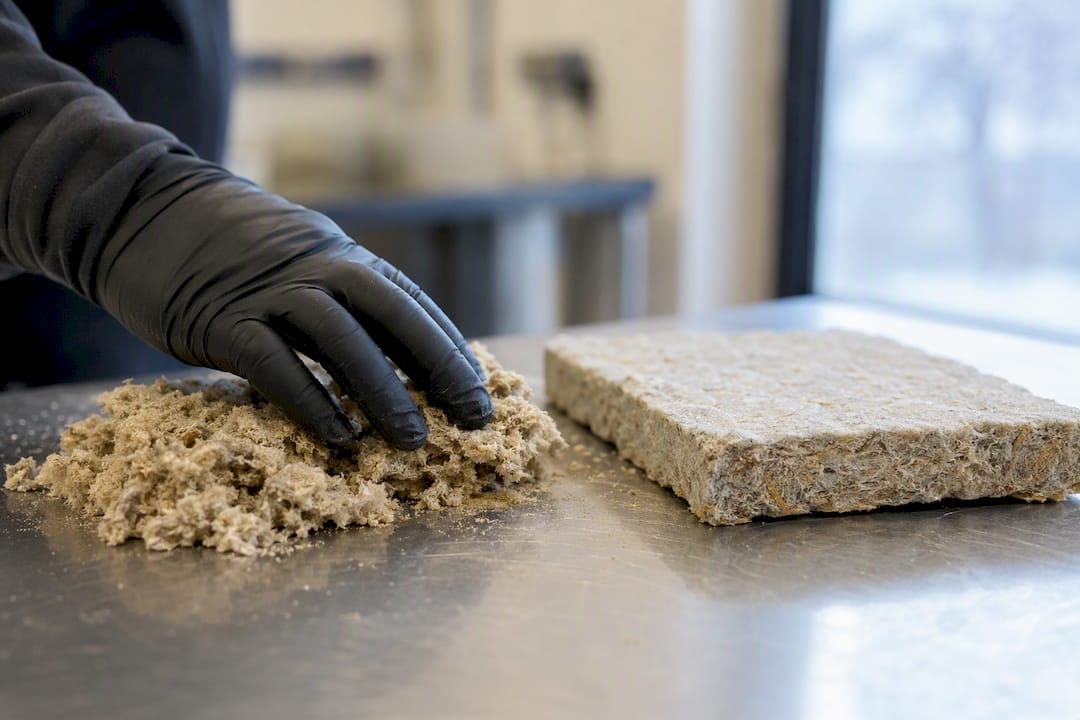
This distinction drives every decision that follows. Crumbling, water-stained, or mechanically damaged insulation, the kind you’d find after a plumber knocked a wrench against old pipe lagging, almost always needs professional removal. Insulation that’s still wrapped tight, sitting in a mechanical room nobody touches, and confirmed asbestos-free through lab sampling can often stay put under a documented management plan.
Here’s how to think through the decision:
- Remove it: crumbling texture, visible damage, water intrusion, or any spot where renovation work will disturb it
- Manage in place: intact, inaccessible, confirmed by sampling, and reviewed on a regular schedule
- Never guess: visual inspection alone can’t confirm asbestos content, only lab analysis can, according to provincial abatement guidance from Alberta
Homes built before roughly 1990 are far more likely to carry asbestos pipe lagging, according to HealthLinkBC, so age alone should raise your guard even before you spot obvious damage.
What should you do the moment you find asbestos-wrapped pipes?
Finding suspect pipe insulation during a basement project or home inspection tends to trigger panic. Slow down. The material has likely been there for decades without releasing meaningful fibres, so a few careful steps now matter more than speed.
- Stop whatever work you’re doing near the pipes immediately.
- Avoid touching, scraping, or bumping the insulation, even gently.
- Keep household members and pets out of the area.
- Close doors and limit access rather than trying to seal or bag anything yourself.
- Arrange sampling through a qualified technician and contact a licensed abatement contractor for an assessment.
Pro Tip: Never turn on nearby HVAC fans or forced-air systems until the area’s been assessed. Airflow can carry loose fibres into ductwork and spread them through the whole house. If you’re worried about that exact scenario, a licensed HVAC contractor can confirm whether isolation is needed before any abatement work starts.
How do professionals handle asbestos pipe lagging removal?
Licensed contractors follow a regulated sequence, and understanding it helps you judge whether a bid you receive actually meets the standard. For smaller, isolated pipe runs, the industry-standard method is glove-bag removal.
A technician seals a purpose-built plastic bag around the pipe section, inspects it for tears or weak seams, then wets the insulation inside the sealed bag to keep fibres from becoming airborne while cutting and removing it. Once the material is out, the bag itself gets evacuated with a HEPA-filtered vacuum before final removal, and every exposed surface gets wiped down. These steps aren’t optional best practices, they’re spelled out in COHSR section 10.26.5, which governs glove-bag procedures for federally regulated workplaces, and echoed in Canada’s technical guideline for asbestos exposure management.
- Glove bags suit short, accessible pipe runs with limited insulation volume
- Full containment with negative air and a decontamination unit becomes necessary for larger boiler rooms, extensive pipe networks, or heavily damaged material
- Negative-air containment keeps the work zone at lower pressure than surrounding rooms, so air flows in rather than fibres flowing out
Glove-bag work is a repeatable, well-defined technique precisely because it limits how much of the room needs full containment, but it only stays safe when every inspection and evacuation step happens in order. After removal, air monitoring and clearance testing by an accredited lab confirm the space is safe to re-enter. That paperwork isn’t a formality. It’s the only objective proof the job was done right.
What drives the cost of asbestos pipe insulation removal?
Quotes for the same-looking job can vary by hundreds or thousands of dollars, and the reasons usually come down to a handful of variables rather than one contractor simply charging more.
- Accessibility: pipes buried behind finished walls or crammed into tight crawlspaces take longer to reach safely
- Pipe diameter, length, and fittings: elbows and joints slow down glove-bag work considerably compared to straight runs
- Material type: hand-applied troweled insulation often behaves differently than pre-formed pipe wrap during removal
- Containment level required: a single glove-bag job costs far less than a full negative-air setup with a decontamination unit
- Testing and disposal fees: lab analysis, clearance air sampling, and licensed hazardous waste disposal all add line items
- Permits, notifications, and contractor insurance: proper licensing and hazardous-material coverage carry real overhead
A quote that comes in dramatically lower than others is worth questioning, not celebrating. When you review an itemized estimate, check that it explicitly lists sampling, containment method, lab fees, and waste manifesting, not just a single lump-sum “removal” line.
How do you choose a qualified abatement contractor?
Vetting a contractor doesn’t require special expertise, just the right questions asked in the right order.
- Ask for proof of licensing and hazardous-material insurance before discussing price.
- Request references from recent pipe insulation jobs, not general renovation work.
- Ask for a written, itemized work plan covering sampling, containment method, HEPA vacuum use, and disposal.
- Confirm they’ll provide clearance air test results and a waste disposal manifest after the job.
- Watch for red flags: reluctance to itemize costs, vague answers about disposal, or no mention of clearance testing at all.
Clearance testing and disposal documentation are two of the strongest signals you’re dealing with a legitimate operation, according to Alberta’s abatement manual, because they’re the parts a corner-cutting contractor is most likely to skip.
What should you expect once removal day arrives?
Timelines vary enormously by scope. A single glove-bag job on an exposed basement pipe run might wrap up in a day, including setup and teardown. A full boiler room with extensive lagging and full containment can stretch across several days once you factor in negative-air setup, the actual removal, decontamination, and clearance testing before anyone’s allowed back in.
Expect a defined containment zone, whether that’s a sealed glove bag around a short pipe section or a full negative-air enclosure with a decon unit for larger jobs. HVAC systems near the work zone should be isolated or shut down to prevent fibres from travelling through ductwork.
Once work finishes, ask for the full documentation trail:
- Pre-removal sample results confirming asbestos type and concentration
- Clearance air test reports from an accredited lab, showing the space meets safety thresholds
- A disposal manifest or certificate proving the waste went to a licensed hazardous waste facility
If a contractor can’t produce these documents, the job isn’t finished, regardless of what the workspace looks like.
Is encapsulation ever a substitute for removal?
Encapsulation involves coating intact asbestos material with a sealant designed to bind fibres in place, while enclosure means building a physical barrier, like a false wall or jacket, around it. Both differ sharply from painting over old pipe wrap, which CCOHS specifically warns against since the act of painting can disturb fibres rather than contain them.
A documented management plan can be appropriate when insulation is intact, inaccessible, and confirmed asbestos-free of damage through periodic inspection. That said, removing intact material can sometimes stir up more airborne fibres than leaving it alone, which is exactly why many guidance documents favour management over unnecessary removal.
- Removal: permanent solution, higher upfront cost, eliminates future monitoring
- Encapsulation/enclosure: lower initial cost, requires ongoing inspection, doesn’t solve the underlying issue if the material degrades later
What actually matters when you’re staring at wrapped pipes in your basement
Most guidance treats asbestos pipe insulation as an emergency the moment it’s spotted. That’s overcorrection. The real emergency is disturbance, not existence. A pipe that’s been quietly wrapped since 1975 and hasn’t been touched isn’t the same risk as one a contractor just cracked open with a hammer.
Where I think homeowners get it wrong is assuming “asbestos found” automatically means “removal required.” Sometimes it does, especially with anything damaged or slated for renovation. But plenty of intact, inaccessible runs are safer left alone and monitored than ripped out by someone rushing to feel like the problem’s solved. The riskiest move isn’t leaving good insulation in place, it’s a well-meaning DIY attempt at sealing, painting, or “just checking” that turns a stable situation into an airborne one.
What separates a contractor worth hiring from one to avoid isn’t price. It’s whether they can explain, clearly and specifically, why they’re recommending removal versus management for your exact pipes, and whether they can back that recommendation with sample results instead of a guess.
— Jason
Where to verify the regulations and guidance in this article
Read the primary sources directly rather than taking any contractor’s word for it. Health Canada summarizes health risks, COHSR 10.26.5 sets glove-bag rules, CCOHS covers home safety, and the Alberta manual details provincial abatement procedure.
Getting a straight answer on your pipe insulation
Hmjcontracting handles asbestos abatement the way this article recommends it should be handled: sampling first, an itemized plan second, and removal only when the assessment actually calls for it.

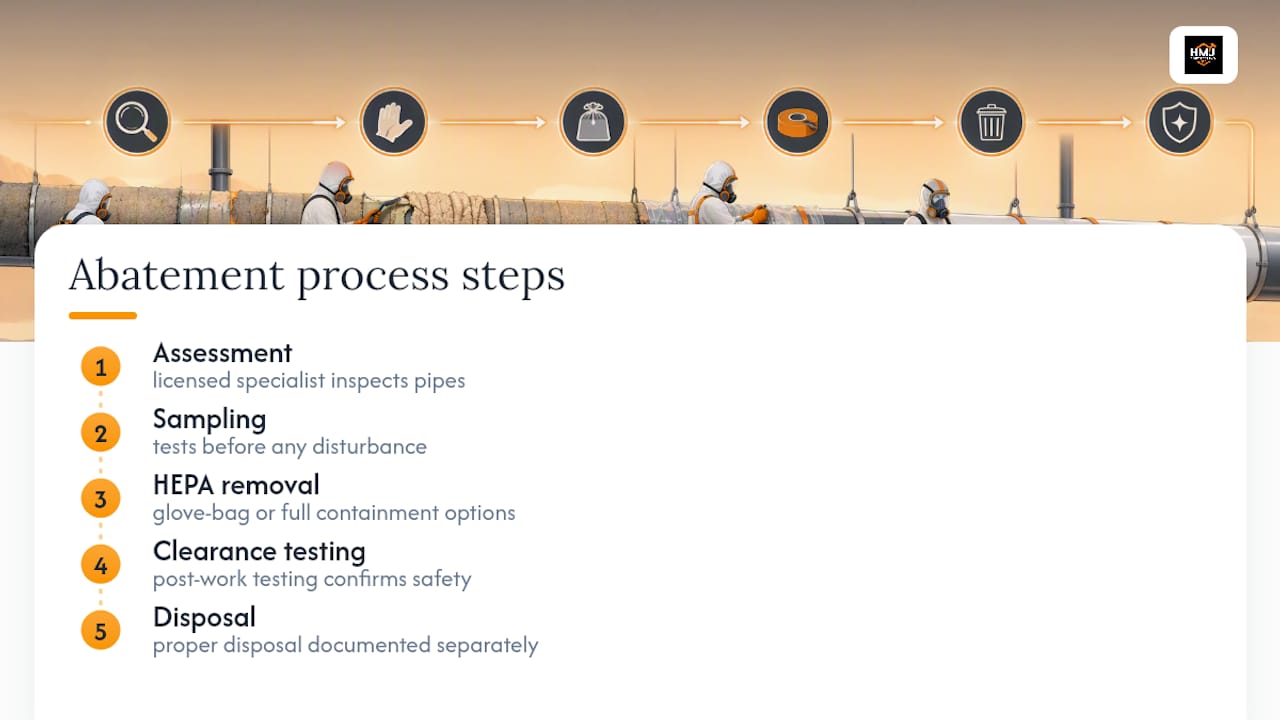
For Ottawa homeowners, that means a licensed abatement specialist assesses your pipes, tests before anyone touches anything, and walks you through a written quote that breaks down containment, testing, and disposal separately, not bundled into one vague number. Whether the right answer for your basement turns out to be glove-bag removal, full containment, or a documented management plan, you’ll know the reasoning behind it before any work starts. Hmjcontracting’s process runs through the same steps outlined here: assessment, sampling, HEPA-controlled removal, clearance testing, and proper disposal, backed by a 5.0-star record across hundreds of Ottawa-area jobs.
If you’ve spotted wrapped pipes and want a straight answer instead of a guess, request an abatement assessment and get an itemized quote before any work begins.
This article is general information, not a substitute for advice from a qualified doctor. Consult a qualified healthcare professional about your own circumstances before acting on anything here.
Sources
- Canada Occupational Health and Safety Regulations — section 10.26.5 (glove bags)
- Canada
- Alberta asbestos abatement manual (2019)
- CCOHS — Asbestos in the home