
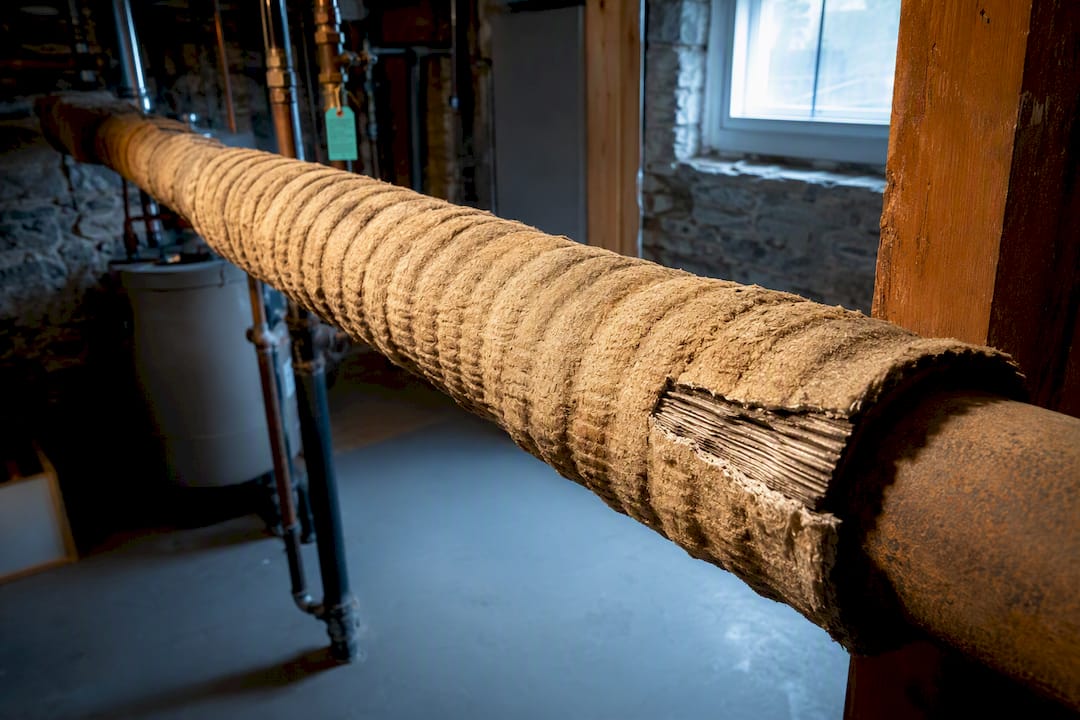
If the pipe insulation in your basement or crawl space looks like corrugated cardboard, chalky white plaster, or canvas-wrapped padding, treat it as asbestos until proven otherwise. Don’t touch it, don’t disturb it, and don’t run duct work near it. The only way to know for certain is a laboratory test, so your next call should be to a qualified inspector, not a hardware store.
TL;DR:
- Suspect asbestos pipe wrap often appears as corrugated paper, chalky plaster, fibrous blankets, vinyl jackets, or thick slabs, especially in buildings before 1990.
- The risk level depends on whether the material is friable, with crumbling edges or dust indicating higher danger, and testing by professionals is necessary for confirmation.
- Handling suspect wrap should be limited to containment by licensed contractors, with immediate steps including stopping work, avoiding disturbance, and documenting from a safe distance.
- Building age and location—basements, boiler rooms, pipes, and joints—are key indicators, with pre-1990 structures carrying a significantly higher asbestos risk.
- Only laboratory analysis confirms asbestos presence; visual identification and covered materials are unreliable, emphasizing the importance of professional testing and documented management.
Table of Contents
- Asbestos pipe wrap identification: what it actually looks like
- Where asbestos-wrapped pipes are usually found and why building age matters
- Friable versus non-friable wrap: reading the actual risk
- Testing and sampling: why only a lab can confirm asbestos pipe wrap
- Immediate safe steps to take if you find suspect pipe wrap
- Choosing a qualified asbestos professional
- What we see on real Ottawa jobs
- Legal regulations and your responsibilities as a homeowner
- Myths that get homeowners into trouble
- Health risks tied specifically to pipe wrap exposure
- Containment and encapsulation: when removal isn’t the only answer
- Why “just paint over it” advice keeps homeowners at risk
- Sources
Asbestos pipe wrap identification: what it actually looks like
Visual identification gets you to “suspect,” never to “confirmed.” That distinction matters for how you act, but it doesn’t stop you from recognizing the warning signs the moment you see them. Asbestos pipe wrap identification in older Ottawa-area homes and commercial buildings usually comes down to five recognizable material types, and each one shows up differently depending on age, moisture exposure, and whether someone has already disturbed it.
Corrugated “air-cell” paper wrap looks like layered cardboard, sometimes described as accordion-folded or ribbed paper wound tightly around a pipe. It was cheap, effective, and everywhere on hot water and steam lines from the 1930s through the 1970s. When this material is intact, you’ll see a tan or grey paper surface with a corrugated texture underneath a thin outer layer. When it’s damaged, the layers separate and you can see individual ridges pulling apart, sometimes with fine, hair-like fibres visible at the tears.
Plaster or magnesia cast insulation is a hard, white or off-white paste material, often described as looking like dried toothpaste or old cement. It was moulded directly onto pipes and fittings, especially at elbows and valves, then usually wrapped in canvas. If the canvas has torn away, the plaster underneath often looks chalky and can flake at the edges.
Fibrous batt or blanket insulation wrapped in canvas or cloth is common on larger diameter pipes and boiler surfaces. It sometimes carries a coat of paint from a previous owner’s touch-up job, which tells you nothing about what’s underneath. Painted insulation is still suspect insulation.
Vinyl-jacketed coverings are trickier. The exterior looks modern, smooth, and sometimes colourful, which leads a lot of homeowners to assume it’s safe. But older vinyl-jacketed pipe wrap frequently has an asbestos-containing core, and the shiny outer layer tells you nothing about what’s inside.
Boiler jackets and asbestos-cement slabs are thicker and more rigid than pipe wrap, often several centimetres deep, covering the boiler shell itself rather than the piping. These slabs feel more like a wall panel than a soft wrap.
Construction-sector guidance from the IHSA construction manual confirms that corrugated air-cell insulation, plaster or magnesia coatings, and canvas-wrapped fibrous batts were among the most common asbestos-containing products used on residential and commercial pipe systems.
Common visual cues to watch for, from a safe distance:
- Corrugated, cardboard-like texture under a paper or fabric outer layer
- Hard, chalky white paste at pipe joints, elbows, and valves
- Canvas or cloth wrapping, painted or unpainted, especially on larger pipes
- Smooth vinyl jacket on pipework installed before the 1990s
- Thick, slab-like panels on boiler surfaces rather than thin pipe wrap
Pro Tip: Take photos from a metre or two away using your phone’s zoom function instead of walking up close. You get the visual detail you need for a contractor’s assessment without disturbing dust or fibres.
Where asbestos-wrapped pipes are usually found and why building age matters
Basements and boiler rooms are the first place to check. Supply and return lines running along the ceiling, valves and elbow joints, and the boiler jacket itself are the highest-probability spots in any pre-1990 home or commercial building.
Beyond the mechanical room, suspect wrap commonly turns up in:
- Crawl spaces where original heating pipes run unfinished
- Between floors, inside joist cavities carrying old plumbing or heating lines
- Behind finished walls in additions or basement conversions that were never fully gutted
- HVAC ducts and pipe connectors, particularly at transition joints
- Older radiator systems and the piping that feeds them
- Commercial boiler rooms with larger diameter mains and multiple valve clusters
Building age is your best filter before you even pick up a phone. Asbestos was widely used in pipe and boiler insulation across Canada from the 1930s until the 1980s, and any building constructed or significantly renovated before 1990 carries meaningfully higher risk, according to guidance from Employment and Social Development Canada. A 1965 bungalow with original mechanical systems is a far more likely candidate than a 2005 build, but partial renovations complicate the picture. If a previous owner gutted the kitchen in 1995 but left the basement mechanical room untouched, the original pipe wrap down there is still exactly as old as the house.
Friable versus non-friable wrap: reading the actual risk
“Friable” means the material crumbles under light hand pressure and releases fibres into the air. Non-friable material stays bound together and doesn’t shed fibres unless it’s cut, sanded, or forcibly broken. This single distinction drives almost every safety decision that follows an identification.
Visual signs that wrap has become friable, or is heading that way, include:
- Crumbling edges or sections that have visibly fallen away from the pipe
- Dust or loose fibrous material on the floor or nearby surfaces
- Flaking or peeling at seams and joints
- Water staining, which weakens the binding material significantly
- Any mechanical damage from past renovation work, moving furniture, or pest activity
Intact, undisturbed wrap in good condition is generally lower immediate risk, but “lower risk” is not the same as “no action needed.” Health risk is directly tied to condition. Damaged or friable material releases fibres and creates real exposure risk, while intact insulation that hasn’t been disturbed poses less immediate danger but still needs to be documented and managed, per federal guidance on asbestos.
Once identification and testing confirm asbestos, property managers and larger buildings typically move toward an asbestos management program (AMP) rather than immediate removal, especially when the material is intact and in a low-traffic area. An AMP means scheduled monitoring, clear labelling, and a plan for what happens before any future renovation touches that pipe. Full abatement gets recommended when material is already friable, located in a high-traffic or high-disturbance area, or standing in the way of planned renovation work.
Pro Tip: If you’re buying an older property, ask directly whether the mechanical systems have ever been tested for asbestos. A seller who’s never had it tested isn’t lying to you. They likely just never asked the question either.
Testing and sampling: why only a lab can confirm asbestos pipe wrap
No visual method, however careful, confirms asbestos. There is no reliable way for a layperson, or frankly even an experienced contractor, to visually confirm asbestos content. Only laboratory analysis performed by qualified professionals settles the question, according to Asbestosexposure. Everything up to this point in your assessment is about deciding whether testing is worth arranging, not about reaching a verdict yourself.
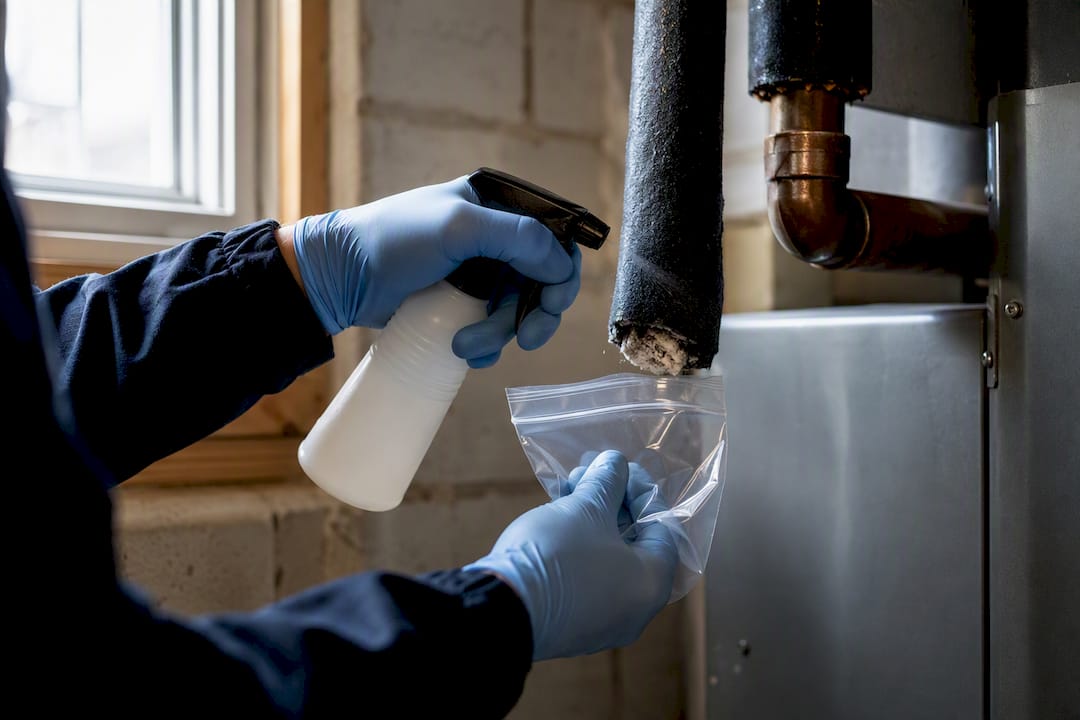
Qualified technicians collect samples using controlled, low-disturbance methods, wetting the material first to suppress fibre release, then sealing each sample in a labelled, sealed bag with documented chain of custody before it goes to an accredited lab. That paperwork trail matters if you ever need to prove the sampling was done properly, whether for insurance, a real estate transaction, or a regulatory inquiry.
You’ll sometimes hear contractors reference a “3 to 5 to 7” shorthand for how many samples to take of a given material. This isn’t a fixed national rule. Sampling counts vary by jurisdiction, by the size and homogeneity of the material, and by the scope of the survey, so treat any number a contractor gives you as guidance specific to your project rather than a universal standard.
A lab report typically tells you three things: whether asbestos is present, what type of fibre it is, and the approximate percentage by weight. That percentage matters practically. Materials with lower percentages sometimes qualify for different handling procedures than heavily concentrated ones, and different insulation types on the same property may need separate sampling entries in a full survey, since composition and risk vary by material and location, as the IHSA manual notes.
Immediate safe steps to take if you find suspect pipe wrap
The moment you suspect asbestos pipe wrap, your job is containment of the situation, not containment of the material itself. Leave that part to professionals. Here’s the order of operations:
- Stop whatever work triggered the discovery. If you were mid-renovation, mid-demolition, or just moving boxes in the crawl space, stop immediately and leave the area.
- Do not touch, brush, vacuum, or otherwise disturb the material, even to “just check” how solid it feels.
- Restrict access to the room or area, including pets and kids, and put up a simple physical barrier if you can do so without approaching the wrap.
- Turn off forced-air systems running through or near the affected area unless a professional specifically advises otherwise, since air movement can spread loose fibres further than you’d expect.
- Photograph the area from a safe distance, and note the building’s construction or renovation date along with the type of heating or plumbing system involved.
- Contact a qualified inspection or abatement contractor and share your photos and notes so they can scope the job before they even arrive.
Choosing a qualified asbestos professional
Not every contractor who says “I can handle asbestos” actually should. Look for documented training specific to asbestos handling, provincial licensing where your jurisdiction requires it, active liability insurance, and a track record you can verify through references or reviews.
A proper inspection and quote should include photographs of every suspect area, separate sampling for each distinct material type rather than one blanket sample for the whole job, an itemized scope of work, and the actual lab results before any abatement work begins. If a contractor skips straight from “looks like asbestos” to a price quote without sampling, that’s a problem.
Typical abatement steps include sealed containment of the work area, negative-pressure HEPA filtration to keep fibres from escaping, wet removal methods to suppress dust, licensed disposal of asbestos waste at an approved facility, and clearance air testing before the containment comes down. That last step confirms the air is safe before you’re allowed back into the space.
- Refusal to sample before quoting a price
- No written scope of work or abatement plan
- No mention of clearance testing after the job
- A quote noticeably lower than every other bid you’ve received
Pro Tip: Ask every contractor for their asbestos-specific certification number, not just a general contractor’s licence. The two are not the same thing, and only one of them means anything for this particular job.
What we see on real Ottawa jobs
We specialize in certified abatement for asbestos, lead, and mould in Ottawa-area properties, and one pattern shows up constantly: homeowners who found suspect pipe wrap months or years earlier and simply left it alone, unsure of what to do next. Leaving it alone when it’s intact isn’t wrong. Leaving it unmanaged and undocumented is where the risk creeps in.
A transparent quote should break down sampling, containment, disposal, and clearance testing as separate line items, not one lump figure. That itemized detail helps you compare bids honestly and understand exactly what you’re paying for at each stage. Site documentation, including dated photos and lab results, becomes part of your property’s paper trail, useful for future renovations, insurance, or resale.
If you’re weighing a DIY fix against a professional contractor, it’s safer to choose licensed abatement specialists. Painting over suspect wrap or wrapping it in plastic yourself doesn’t solve the underlying problem, and it can make the eventual professional job harder and more expensive.
Legal regulations and your responsibilities as a homeowner
Canada prohibits the import, sale, and use of asbestos and most asbestos-containing products, a ban enforced under federal environmental and health regulations, according to Environment and Climate Change Canada. That ban applies to new materials going forward. It does nothing to remove the asbestos already installed in buildings constructed decades before the ban took effect, which means legacy pipe wrap in your basement is entirely legal to leave in place, provided it’s managed responsibly.
As a homeowner, your core legal responsibility is disclosure and reasonable care rather than mandatory removal. If you’re selling a pre-1990 property, buyers and their agents increasingly expect disclosure about known asbestos-containing materials, and insisting on documentation or sampling is now a standard part of due diligence on older homes. If you’re a landlord or property manager, workplace safety obligations toward tenants, contractors, and maintenance staff apply once asbestos is identified or suspected, which generally means restricting access and arranging proper testing rather than ignoring the issue.
None of this requires panic. It requires a paper trail: know what’s in your building, document its condition, and don’t let a renovation crew disturb it without a plan.
Myths that get homeowners into trouble
The biggest misconception is that asbestos identification is something you can nail down by eye. It isn’t. Even experienced contractors can’t visually distinguish asbestos-containing insulation from its fibreglass or mineral wool replacements with total confidence, which is exactly why lab testing exists.
The second myth is that painted or covered material is automatically safe. Covering asbestos with paint, drywall, or a new jacket doesn’t remove the hazard. Professionals treat covered or painted insulation as suspect until it’s tested, not as cleared, per CCOHS guidance.
A third myth: “It’s old, so it’s already released everything it’s going to release.” Asbestos fibres don’t degrade or deplete over time in any meaningful way. A 70-year-old piece of pipe wrap that’s never been disturbed can be just as hazardous the day someone finally cuts into it as it would have been decades ago.
Finally, some homeowners assume a small, contained job doesn’t need the same rigour as a big one. A single damaged elbow joint releases the same fibre type as an entire boiler room, just at a smaller scale. Size affects the scope of the cleanup. It doesn’t change whether the material is dangerous.
Health risks tied specifically to pipe wrap exposure
Asbestos fibres from pipe wrap are microscopic, and that’s precisely what makes them dangerous. They’re small enough to be inhaled deep into lung tissue and durable enough that the body can’t break them down or clear them out effectively. Health Canada links inhalation exposure to serious, well-documented conditions including asbestosis, a scarring of lung tissue that reduces breathing capacity, along with lung cancer and mesothelioma, a cancer specifically associated with asbestos fibre exposure, according to Health Canada.
The risk with pipe wrap specifically comes from disturbance events: cutting into a pipe for a plumbing repair, renovation demolition, pest damage, or simple deterioration from decades of heat cycling and moisture. Each of those releases fibres into breathable air, and the effects of exposure often don’t show up for many years, sometimes decades, after the initial contact. That latency is part of why so many homeowners underestimate the stakes of a “quick peek” at old insulation.
There’s no dose threshold that professionals consider automatically safe, which is part of why guidance consistently favours minimizing any disturbance rather than trying to calculate an acceptable exposure level for a home renovation.
Containment and encapsulation: when removal isn’t the only answer
Full removal isn’t always the right first move, particularly for intact material in a low-disturbance area like an unused crawl space. Containment and encapsulation give property owners a middle path.
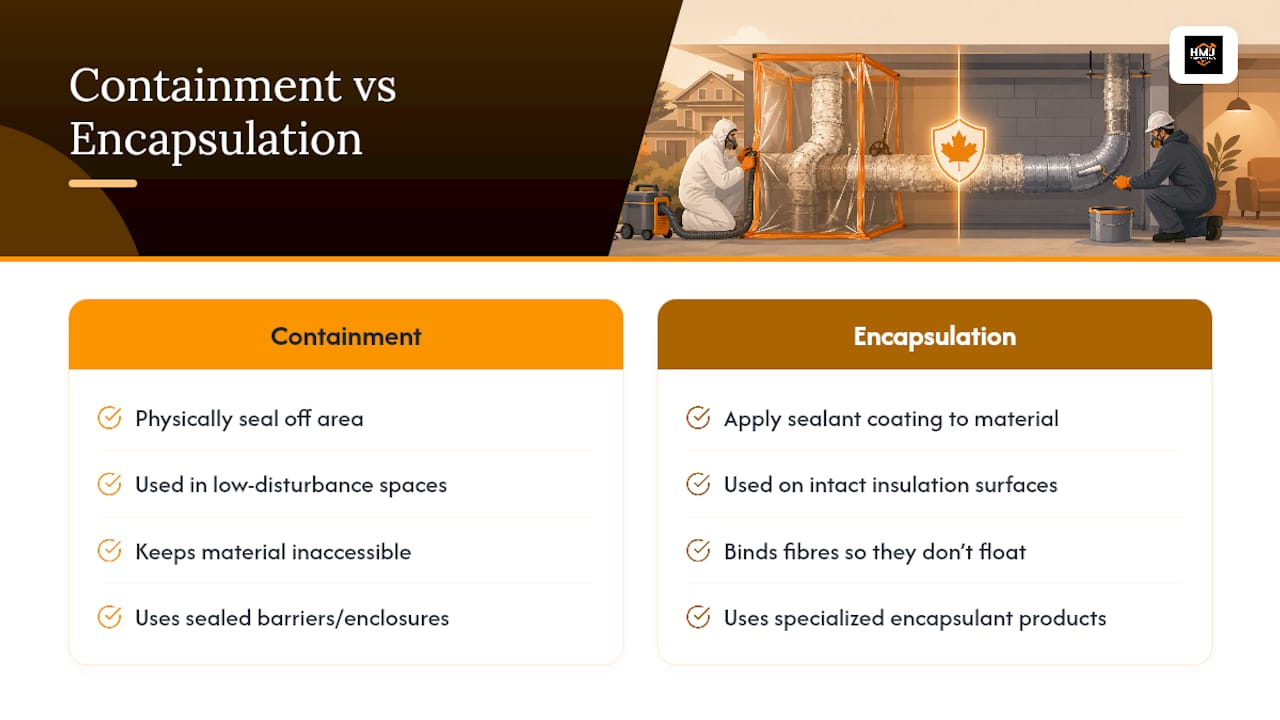
Containment means physically sealing off the area where asbestos-containing material exists, often with sealed barriers or dedicated enclosures, so the material stays undisturbed and inaccessible during normal building use. Encapsulation involves applying a specialized sealant coating directly to intact asbestos-containing insulation, binding the fibres in place so they can’t become airborne even if the surface is lightly touched or vibrated.
Both approaches require professional application and ongoing monitoring. This isn’t a one-time fix. Encapsulated or contained material needs to be tracked as part of a building’s asbestos management program, checked periodically, and clearly documented so future renovation crews know exactly what’s behind that wall or under that jacket before they start cutting.
Encapsulation and containment are legitimate, professionally recognized strategies. They are not substitutes for the kind of DIY paint-over job some homeowners attempt on their own, which industry guidance explicitly warns against, since amateur sealing attempts can loosen fibres rather than bind them, per CCOHS. The distinction between a professionally applied encapsulant and a can of basement paint is the entire difference between a safety measure and a liability.
Why “just paint over it” advice keeps homeowners at risk
The conventional advice on asbestos pipe wrap tends to swing between two extremes: blind panic that demands immediate, expensive removal of anything old-looking, or casual dismissal that assumes intact material poses no real concern. Neither extreme serves you well. The research consistently supports a narrower, more useful judgment: identification tells you what to suspect, condition tells you how urgently to act, and only a lab tells you what’s actually there.
Where I think most homeowner guidance falls short is in treating visual identification as a finish line rather than a starting point. Recognizing corrugated wrap or chalky white plaster is genuinely useful. It gets you to the phone call. It doesn’t get you to a decision about removal, encapsulation, or doing nothing at all.
If you take one thing from this, prioritize documentation over speed. Photograph what you find, note your building’s age, and get a proper sampling plan before you get a removal quote. That order protects you from paying for work you didn’t need, and from underestimating work you genuinely do.
— Jason
This article is general information, not a substitute for advice from a qualified doctor. Consult a qualified healthcare professional about your own circumstances before acting on anything here.
Sources
For readers who want to dig into the primary guidance behind this article, Employment and Social Development Canada outlines federal workplace asbestos rules, while Health Canada covers health effects in detail. The IHSA construction manual is the industry reference contractors themselves use for sampling and abatement protocols, and AsbestosExposure.ca explains why lab testing remains the only definitive confirmation method available to homeowners.
- Asbestos — Employment and Social Development Canada
- Asbestosexposure
- Asbestos - In the Home — CCOHS
- Asbestos controls — IHSA construction manual