
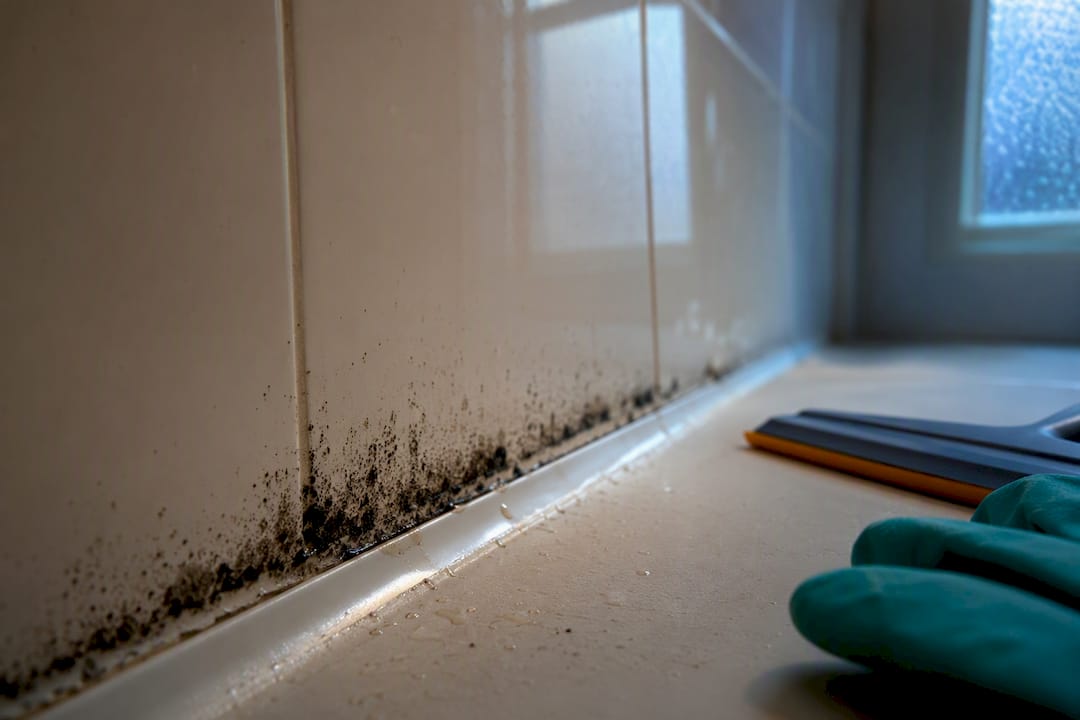
If you see black mould in your bathroom, remove it and fix the moisture causing it. Patches smaller than roughly 1 square metre are usually safe to clean yourself with an N95 respirator, gloves, and household cleaners. Larger, recurring, or hidden mould calls for a licensed remediation contractor, and Health Canada advises against disturbing bigger infestations without proper containment.
TL;DR:
- Mould smaller than one square metre can usually be cleaned by homeowners with proper protective gear, but larger or recurring infestations require professional help.
- Seeing different colours of mould does not indicate varying risks; focus on the size, growth duration, and moisture levels rather than colour.
- Regular inspections should involve checking for dampness, peeling paint, or condensation, and porous materials contaminated with mould must be discarded.
- DIY cleaning involves soap, vinegar or hydrogen peroxide, and proper ventilation, but never mix oxidizers with bleach or ammonia-based cleaners to avoid toxic gases.
- Professional remediation is necessary when mould exceeds one square metre, keeps returning, or is hidden inside walls or caused by leaks or flooding.
Table of Contents
- Is black mould in the bathroom actually dangerous?
- How to inspect your bathroom and judge how bad it is
- Step-by-step safe removal for small patches (under 1 m²)
- When to hire a licensed remediation contractor
- Practical prevention: keeping mould out of the bathroom for good
- Why licensed remediation matters once bathroom mould gets serious
- Get a professional mould assessment for your bathroom
- Sources
Is black mould in the bathroom actually dangerous?
Health Canada has never set a safe exposure limit for indoor mould of any colour, and that absence of a threshold is the whole point: there’s no dose considered fine. The agency’s guidance is simple. If you can see it, deal with it, and control the moisture feeding it.
Exposure to damp, mouldy bathrooms is linked to eye, nose, and throat irritation, coughing, wheeze, shortness of breath, and worsened asthma. Children, older adults, people with weakened immune systems, and anyone with asthma or severe allergies face the highest risk.
Mould colour tells you almost nothing about danger. A black patch on shower grout isn’t automatically more hazardous than a green or white one. What matters is how much of it there is, how long it’s been growing, and how much moisture keeps feeding it. Treat every visible patch the same way: as something to remove, not diagnose by colour.
How to inspect your bathroom and judge how bad it is
Start with your eyes and nose. Musty odours near the tub, dark speckling along grout lines, peeling paint, loose tiles, or condensation pooling on the ceiling above the shower are the usual tells. A shower ceiling that stays damp for hours after you bathe is prime mould territory.
Next, figure out what you’re dealing with:
- Surface type matters. Non-porous surfaces like tile, glass, and sealed grout can usually be cleaned and disinfected. Porous materials, drywall, unsealed wood, and insulation, typically can’t be cleaned effectively once mould sets in and need to be removed.
- Size decides your path. Patches under roughly 1 square metre are generally safe for a homeowner to clean. Anything larger, or anything that keeps coming back after you’ve cleaned it, points to a moisture problem bigger than the surface stain suggests.
- Watch for exceptions. Mould behind tile from a slow leak, staining after a flood, or mould in a household with an immunocompromised occupant all justify calling a professional regardless of visible size.
One thing you can skip: air testing. Sampling for mould spores rarely changes what you should actually do, and the National Collaborating Centre for Environmental Health notes it’s typically of little value for either health risk assessment or guiding cleanup. Spend that money on fixing the moisture instead.
Step-by-step safe removal for small patches (under 1 m²)
Once you’ve confirmed the patch is small, non-porous, and isolated, cleaning it yourself is straightforward. Here’s what to gather and how to work.
Supplies and protective gear:
- N95 respirator (a dust mask isn’t enough)
- Safety goggles
- Rubber gloves
- Unscented soap or detergent
- Hydrogen peroxide or white vinegar
- A stiff brush, rags, and a garbage bag for waste
The removal sequence:
- Close the bathroom door and open a window or run the exhaust fan to ventilate while you work.
- Wipe away standing water or excess moisture around the affected area.
- Wash the surface first with plain soap and water to lift loose spores and debris.
- Apply hydrogen peroxide or white vinegar directly to the stained area.
- Let it sit for 10 to 15 minutes so the solution can penetrate the mould.
- Scrub firmly with your brush until the staining lifts.
- Rinse thoroughly with clean water.
- Dry the surface completely with a towel or fan. Trapped moisture just invites the mould back.
If any porous material touched the mould, a bath mat, caulking, or drywall, bag it and discard it rather than trying to salvage it. Health Canada’s own cleaning guidance confirms bleach isn’t required for this kind of cleanup, soap, water, and a mild oxidizer do the job without the fumes.
Pro Tip: Never mix bleach with ammonia-based cleaners or vinegar. The combination produces toxic gas, and there’s no cleaning benefit worth that risk.
When to hire a licensed remediation contractor
Some bathroom mould problems are beyond a weekend project, and knowing the line saves you money and health risk in the long run.
Call a professional when:
- The affected area is at or above roughly 1 square metre.
- Mould keeps returning after you’ve cleaned it more than once.
- You suspect mould hidden behind tile, under flooring, or inside walls from a slow leak.
- The bathroom has flooded or suffered sustained water damage.
- Anyone in the household is immunocompromised, elderly, very young, or has severe asthma.
Professional remediation looks different from a bottle of vinegar and a scrub brush; what is mold remediation involves containing the work area, removing moisture damaged materials, repairing the actual source of the water problem, and a final verification step to confirm the job’s actually done. It typically involves containing the work area, removing moisture damaged materials, repairing the actual source of the water problem, and a final verification step to confirm the job’s actually done. Air sampling still isn’t the priority here; a properly trained contractor is chasing the moisture source, not chasing spore counts.
Fixing the leak or ventilation problem that caused the mould matters more than any cleaning product you use on the stain itself. Remove the mould without solving the moisture, and you’ll be back here in a few months.
Hmjcontracting handles licensed abatement work across Ottawa and Renfrew County, with itemized quotes that spell out exactly what’s being done and why. That kind of transparency matters more once you’re past the DIY range, because remediation work without a clear scope is where costs and disputes tend to start. If you’re weighing options, this breakdown of remediation versus simple removal walks through why size changes the whole approach.
Practical prevention: keeping mould out of the bathroom for good
Cleaning mould without changing the conditions that grew it is a temporary fix. Prevention comes down to moisture management, and most of it is habit, not renovation.
- Run the bathroom exhaust fan, one vented outdoors, not into the attic, for at least 15 minutes after every shower.
- Squeegee the shower walls and wipe down the tub after use; wet surfaces left overnight are exactly what mould wants.
- Launder bath mats and towels regularly instead of leaving them damp on the floor.
- Fix dripping taps and slow leaks as soon as you notice them, not after the drywall softens.
- Reseal grout and caulking when it cracks or discolours, since gaps let moisture behind the tile.
- Skip carpet in bathrooms entirely. It holds humidity that hard flooring sheds.
- Insulate cold water pipes and exterior walls where condensation forms, since dripping condensation behaves exactly like a slow leak over time.
The 48-hour rule is worth memorizing: any wet material, drywall, subflooring, insulation, that stays damp longer than 48 hours has a real chance of growing mould. Dry it fast or replace it.
Pro Tip: A window cracked open helps, but it’s a poor substitute for a properly vented exhaust fan. Fans that vent into an attic or crawl space instead of outdoors can actually worsen condensation problems inside the house.
Why licensed remediation matters once bathroom mould gets serious
Homeowners often treat mould removal as a cleaning task, and for small patches, it is. Where I think conventional advice falls short is in how casually it treats the grey zone, the water stain that keeps reappearing, the musty smell with no visible source. That’s not a cleaning problem anymore. It’s a moisture problem hiding behind a wall, and scrubbing the visible surface just buys you a few months before it resurfaces.
Hmjcontracting approaches bathroom mould as a moisture investigation first, cleanup second. Certified abatement work, itemized quotes instead of vague estimates, and follow-through into the actual repair, retiling, drywall replacement, ventilation fixes, means the mould doesn’t just come back once the paint dries. DIY is genuinely fine for a small patch. It stops being fine the moment you’re guessing what’s behind the tile.
— Jason
Get a professional mould assessment for your bathroom
If your bathroom mould is spreading past a small patch, keeps returning, or you’re simply not sure what’s behind the tile, that’s the point where a professional assessment saves you more than it costs. Hmjcontracting is a licensed, insured option for Ottawa and Renfrew County homeowners who want a straight answer instead of a guess, backed by a 5.0 star Google rating built on hundreds of completed jobs.

The process is straightforward: an inspection to confirm the extent of the mould and find the moisture source, a written itemized quote before any work starts, containment and removal of affected materials, and repair of whatever’s actually causing the problem, whether that’s a failed exhaust fan, cracked grout, or a slow pipe leak. Small, contained patches on tile are still yours to clean with soap, water, and a bit of peroxide. Once you’re dealing with hidden moisture, recurring stains, or a bathroom that’s flooded, book a mould remediation assessment and get a clear, documented plan instead of another round of scrubbing that doesn’t fix the real issue.
This article is general information, not a substitute for advice from a qualified doctor. Consult a qualified healthcare professional about your own circumstances before acting on anything here.