
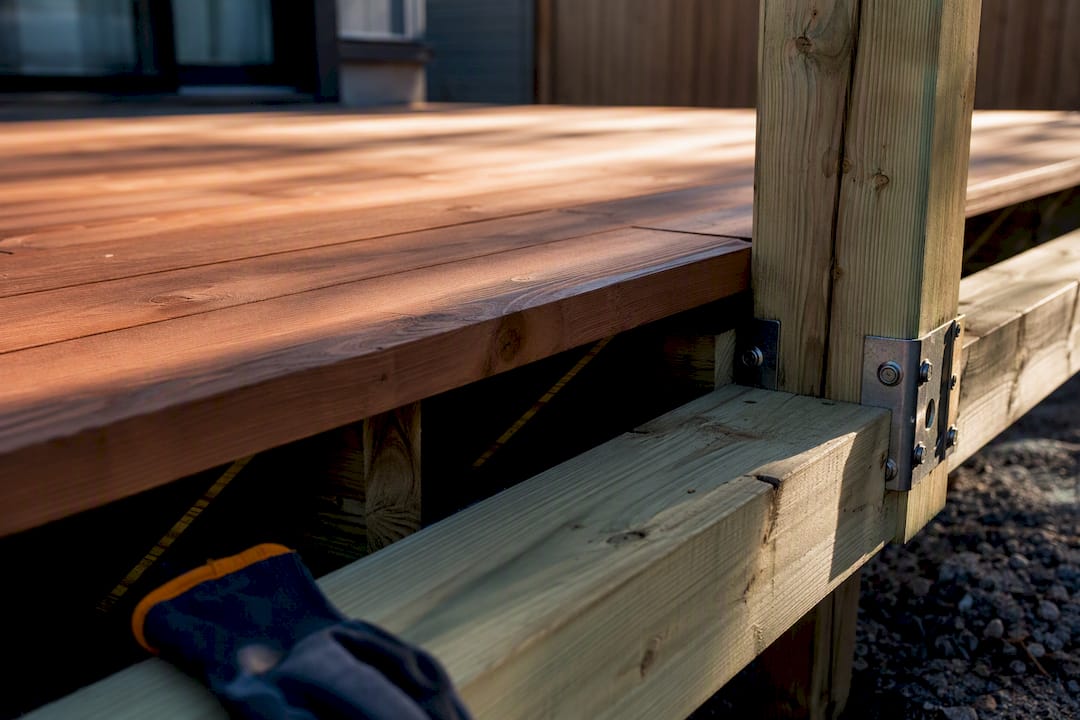
Choose cedar when appearance, natural aromatics, and lighter handling matter more than price. Choose pressure-treated wood when the piece touches the ground, budget is tight, or you need structural strength in a fence post or deck footing. Both can last 15 to 25 years with regular care, but the National Building Code requires preservative treatment for anything in ground contact, which settles the choice for you in many cases.
TL;DR:
- Pressure-treated wood is more cost-effective initially and requires fewer resealing cycles over 20 years, especially for larger decks.
- Cedar’s lifespan and durability are comparable to pressure-treated lumber when properly maintained, but it is more vulnerable to weathering without frequent sealing.
- Building code mandates preservative treatment for any wood in ground contact or within 150 millimeters of soil, limiting cedar’s use below ground level.
- Pressure-treated wood uses copper-based preservatives today, making it safer for residential use than older arsenic-based options, but caution is advised with older lumber.
- Combining pressure-treated framing with cedar decking is recommended to balance structural durability and aesthetic appeal while optimizing long-term costs.
Table of Contents
- Cedar vs pressure treated: cost, lifespan, and best uses at a glance
- What does a cedar or pressure-treated project actually cost?
- How long will each wood actually last?
- How much maintenance does each wood need to look good?
- Does cedar or pressure-treated wood look better on a deck or fence?
- Is pressure-treated wood safe, and what does code require?
- How do you decide between cedar and pressure-treated wood?
- What does HMJ Contracting recommend on real job sites?
- Get your deck or fence built right the first time
- The gap between what cedar promises and what it actually delivers
- Sources
Cedar vs pressure treated: cost, lifespan, and best uses at a glance
Homeowners weighing cedar vs pressure-treated lumber usually care about four things: what it costs, how long it lasts, how much upkeep it demands, and where it performs best. Here’s the short version before you get into specifics:
- Price: Pressure-treated lumber costs less upfront. Cedar decking boards run roughly 1.5 to 2 times more per board.
- Lifespan: Both typically last 15 to 25 years with consistent maintenance, though the use category of the treated wood matters more than the species comparison itself.
- Maintenance: Cedar needs resealing more often to hold its colour. Pressure-treated wood needs less frequent attention once it’s fully seasoned.
- Best use: Cedar shines on visible surfaces, railings, and fence pickets. Pressure-treated wood belongs in footings, posts, and anything within 150 millimetres of the ground.
A hybrid build, pressure-treated substructure with cedar decking on top, is common practice among installers because it puts each material where its strengths actually matter. Vancouver-area deck builders recommend this pairing specifically to balance structural durability against appearance without paying a cedar premium on parts nobody sees.
What does a cedar or pressure-treated project actually cost?
The sticker price on lumber only tells part of the story. Pressure-treated wood wins the initial quote almost every time, but the real comparison happens over 20 years, once you factor in staining, sealing, and eventual board replacement.
Cedar’s price premium comes from supply and grading. Clear or select-grade cedar costs more than knotty or utility grades, and both cost more than any pressure-treated equivalent of the same dimension. Labour is roughly similar for both, since the fastening and framing process barely changes. Where the budget shifts is in permits, deck size, and whether you’re building new or replacing an existing structure.
| Factor | Pressure-treated | Cedar |
|---|---|---|
| Upfront board cost | Lower | 1.5–2× higher |
| Typical maintenance cycle | Every 2–3 years | Every 1–2 years |
| 20-year cost outlook | Narrows once maintenance is added | Narrows once maintenance is added |
| Best cost scenario | Large decks, tight budgets | Smaller, visible-surface projects |
A total-cost comparison that accounts for sealing schedules and expected board replacement tends to narrow the gap between the two materials considerably. The cedar premium you pay in year one gets partially offset by pressure-treated wood’s slightly shorter maintenance intervals over two decades. Deck size changes everything here. A 400-square-foot deck in cedar can cost thousands more than the same footprint in pressure-treated lumber, simply because the price difference compounds across every board.
How long will each wood actually last?
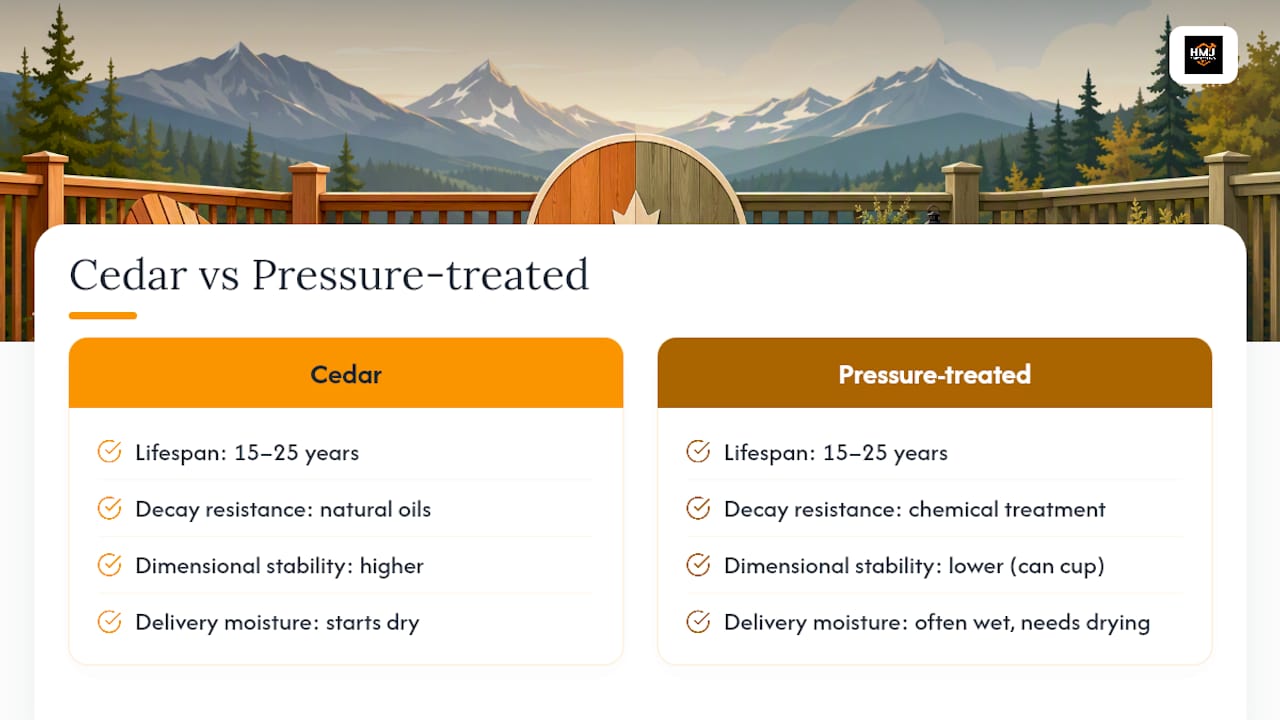
Cedar and properly maintained pressure-treated lumber land in similar lifespan ranges, generally 15 to 25 years, but they fail differently and for different reasons.
Cedar’s natural oils resist insects and decay without chemical treatment, and its dimensional stability tends to reduce cupping and warping compared to pressure-treated boards. Freshly treated lumber often arrives wet from the treatment process, and it needs months to dry out fully. During that drying period, boards can check, twist, or cup, especially in direct sun. Cedar avoids most of that because it starts dry and stays more stable through temperature swings.
Where pressure-treated wood pulls ahead is structural durability in wet or ground-contact conditions. Specifying use-category-rated lumber, UC4.1 or UC4.2 for ground or freshwater contact, protects footings and framing from rot in a way untreated cedar simply can’t match underground. That’s why cedar performs best above grade, where it dries reliably after rain, while pressure-treated wood is the right call anywhere moisture sits against the wood long term.
How much maintenance does each wood need to look good?
Keeping either material presentable comes down to a predictable rhythm. Skip it, and both cedar and pressure-treated wood grey out, splinter, and eventually rot faster than they should.
- Clean the surface with a deck wash or mild detergent and a stiff brush, removing dirt, mildew, and algae buildup.
- Inspect for damage, checking for popped fasteners, soft spots, or splintering boards before they spread.
- Sand rough or splintered areas lightly to smooth the surface and prep it for finish.
- Apply a penetrating semi-transparent stain or water repellent, working with the grain and covering end grain fully.
- Reseal on schedule: cedar every one to two years, pressure-treated wood every two to three years once it’s fully seasoned.
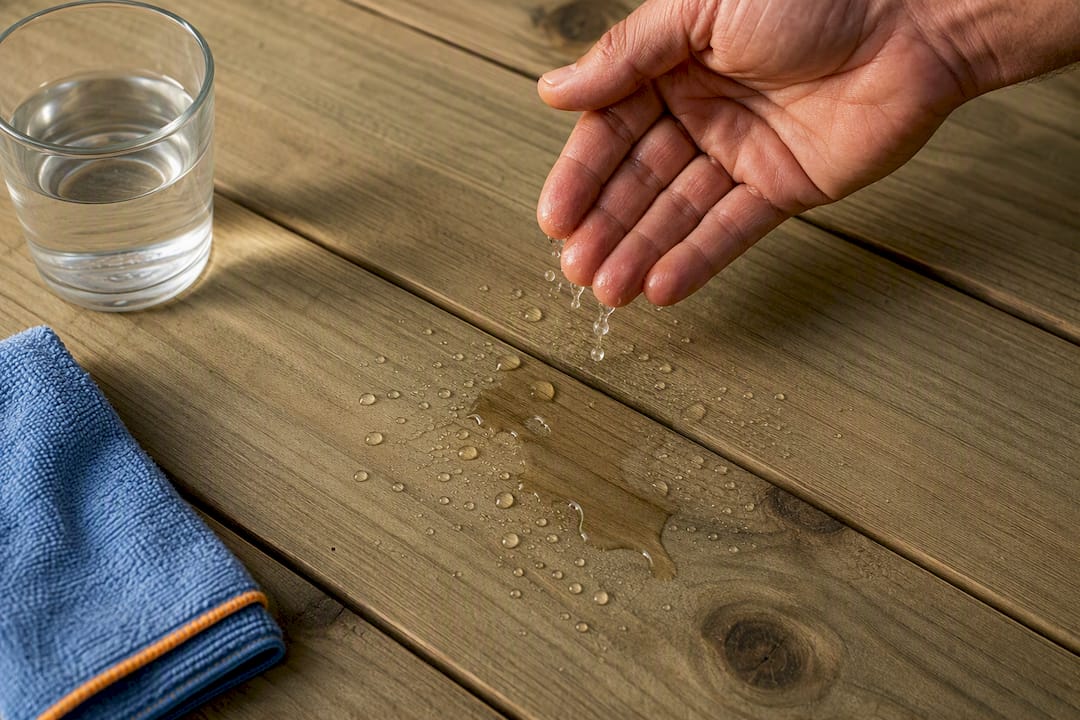
New pressure-treated boards need time to dry before they’ll accept stain properly. Installer guidance typically recommends waiting several months, sometimes a full season, before applying any finish, since sealing wet wood traps moisture underneath and defeats the purpose.
Pro Tip: Test if pressure-treated wood is ready for stain by splashing water on the surface. If it beads up, wait longer. If it soaks in within a few minutes, it’s dry enough to finish.
Does cedar or pressure-treated wood look better on a deck or fence?
New cedar has warm, reddish-brown tones that age into a soft silver-grey if left unfinished. It’s a look plenty of homeowners want on purpose. Pressure-treated wood starts with a greenish or brownish tint from the preservative, and it doesn’t weather nearly as gracefully without a finish.
You can stain pressure-treated wood to mimic cedar tones once it’s dried, and a semi-transparent stain lets the grain show through on either material. Cedar tends to take stain more evenly because its grain is finer and more consistent. On bare feet, cedar feels smoother and splinters less than rough-sawn pressure-treated lumber, which matters if you’re barefoot on the deck all summer. A good finish narrows that gap, but it never closes it completely.
Is pressure-treated wood safe, and what does code require?
Modern pressure-treated lumber sold for residential use isn’t the same product it was decades ago. Health Canada confirms that CCA-treated wood, the older arsenic-based formulation, is no longer available for residential use. Today’s treatments use ACQ or CA-B copper-based preservatives instead, with a different safety profile.
If your fence or deck was built before the early 2000s, treat it with more caution. Health Canada recommends sealing older CCA lumber and taking basic precautions around it rather than assuming it matches current standards.
150 mm is the ground-clearance threshold that triggers mandatory preservative treatment under Canadian building code for structural wood members.
The National Building Code requires preservative treatment for any wood member in ground contact or within that distance, which is why footings, posts, and ledger boards are almost always pressure-treated regardless of what decking sits on top. When cutting or sanding treated lumber, wear gloves, eye protection, and a dust mask, and never burn the offcuts. Burning treated wood releases the preservative compounds into the smoke.
How do you decide between cedar and pressure-treated wood?
Match the material to the job, not the other way around. A few questions narrow the decision fast:
- Does this piece touch the ground or sit within 150 mm of it? If yes, pressure-treated is your only code-compliant option.
- Is this a visible surface people will touch or walk on barefoot? Cedar’s comfort and colour usually win here.
- What’s your maintenance appetite? If you want fewer resealing cycles, lean pressure-treated. If colour retention matters more, plan for cedar’s shorter maintenance window.
- How long do you plan to own the property? Shorter ownership horizons often favour the lower upfront cost of pressure-treated.
For most decks, the hybrid approach wins: pressure-treated framing and footings, cedar decking and railings where people actually see and touch the wood. If your project involves structural spans, permit questions, or anything touching soil, check local permit requirements before you buy a single board.
What does HMJ Contracting recommend on real job sites?
On most decks we build, pressure-treated lumber handles the substructure, footings, and posts, while cedar goes on the decking and railings when a client wants that warmer look and is ready for the upkeep it takes. That split follows both code and common sense: treated wood where moisture lives, cedar where eyes and feet land. Every site has its own soil, drainage, and exposure conditions, so if you want advice specific to your yard, our crew is happy to walk it with you.
Get your deck or fence built right the first time
Between the code requirements, the drying timelines, and the fastener choices that avoid corrosion on copper-based treated lumber, a lot can go sideways on a DIY deck or fence build. Hmjcontracting handles the material selection, the permit paperwork, and the installation itself, so you’re not the one figuring out use categories or waiting on a building inspector’s callback. Our decking and fencing services cover everything from a pressure-treated substructure to full cedar finishing, built to current code from the footings up.

If your project touches damp soil, low grading, or an older structure that might still carry legacy CCA lumber, our abatement and renovation team can assess it alongside the build. Request a free, itemized quote and we’ll walk your site, confirm what the ground conditions call for, and give you a straight answer on cedar, pressure-treated, or the hybrid mix that fits your budget.
The gap between what cedar promises and what it actually delivers
Cedar gets sold as the premium choice, and in a lot of ways it earns that reputation. But the industry rarely mentions that a poorly maintained cedar deck ages worse than a well-maintained pressure-treated one. The wood itself isn’t the deciding factor nearly as often as homeowners think. Maintenance discipline is.
I’ve seen the opposite assumption trip people up too: that pressure-treated wood is somehow the compromise choice, the thing you settle for. That’s backwards for anything touching the ground. Code doesn’t require pressure-treated lumber near soil because it’s cheaper. It requires it because cedar, for all its charm, doesn’t hold up against sustained ground moisture the way a properly rated UC4.2 board does. Treat that requirement as a shortcut, not a downgrade.
The real mistake homeowners make is treating this as a binary choice instead of a material allocation problem. You’re not picking one wood for the whole project. You’re deciding where each material’s strengths actually apply, and that’s a more useful question than “which wood is better” ever was.
— Jason
Sources
- Canadian Wood Council — codes and standards
- Health Canada — staying safe around treated wood
- Specifier guide: Lumber and timber in building construction (WPC) — 2025
- DeckMath — cedar vs pressure-treated decking (2026)