
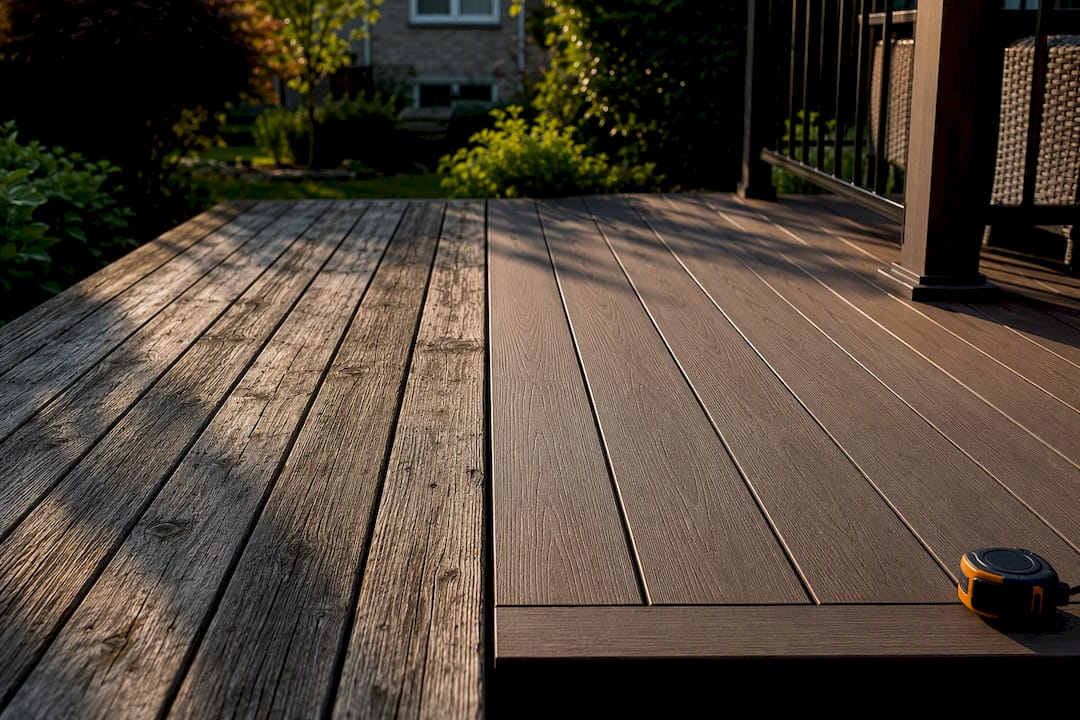
Choose composite if you plan to stay in your home more than 10 years and want to trade upfront cost for decades of low maintenance. Choose wood, typically pressure-treated or cedar, if you’re on a tighter budget, plan to sell within five to eight years, or want a deck you can refinish and customize by hand. Product grade matters as much as material: a budget uncapped composite can underperform a well-built cedar deck.
TL;DR:
- Composite decks typically last 25 to 30 years with minimal maintenance, while pressure-treated wood needs repairs or replacement within 12 to 18 years.
- Over a decade, composite decks usually break even on costs compared to wood, as they require significantly less ongoing upkeep.
- Proper installation, including joist spacing and ventilation, is more critical to deck longevity than the choice of material itself.
- Composite decks can become uncomfortably hot in direct sunlight, especially in dark colors, unlike wood which remains cooler but risks splinters.
- Insect and rot resistance is higher with composite due to its plastic shell, while wood depends on treatment and species, making it more vulnerable over time.
Table of Contents
- Composite decking pros and cons vs wood: the quick comparison
- What does composite vs wood decking cost over 10 to 25 years?
- How long does each decking material actually last?
- Does composite decking get too hot to walk on?
- What installation details actually determine how long a deck lasts?
- How do I decide between composite and wood, and what should I ask a contractor?
- Practical inspection notes from a working contractor’s perspective
- Does your deck choice affect resale value?
- Which material has a smaller environmental footprint?
- Are composite or wood decks more resistant to insects and rot?
- How does weathering change a deck’s appearance and structure over time?
- When I’d recommend composite over wood, and when I wouldn’t
- Getting your deck inspected and quoted the right way
- Sources
Composite decking pros and cons vs wood: the quick comparison
Every deck material trades something for something else. Composite decking generally means less weekend labour, but you pay for that convenience upfront and live with a few quirks you can’t sand away.
Composite decking:
- Low maintenance: occasional washing replaces annual staining
- Long warranties, often 25 to 50 years on capped and PVC products, though labour to replace boards is usually excluded from that coverage
- Higher installed cost per square foot than wood
- Can run noticeably hotter underfoot in direct sun, especially in dark colours
- Resists scratching less well than people expect, and gouges can’t be sanded out
- Performance varies enormously by grade: capped composite and PVC hold up well; uncapped budget composite fades and stains fast
Wood decking (pressure-treated and cedar):
- Lower upfront cost, particularly for pressure-treated lumber
- Natural grain and texture that many homeowners still prefer visually
- Cooler to the touch on hot afternoons
- Easier to refinish, repair, or replace a single board without matching a discontinued colour run
- Requires regular staining, sealing, and fastener checks to avoid rot and splitting
- Cedar costs more than pressure-treated but resists insects and decay somewhat better on its own
The gap between a premium composite board and a bargain one is often bigger than the gap between composite and wood overall. That’s the detail most comparison charts skip.
What does composite vs wood decking cost over 10 to 25 years?
Sticker price tells only half the story. Installed cost for pressure-treated wood typically runs $45 to $65 per square foot, while composite commonly lands at $65 to $95 per square foot once labour and hardware are included. On a 300 square foot deck, that’s roughly $13,500 to $19,500 for wood versus $19,500 to $28,500 for composite before any maintenance costs enter the picture.
The break-even math: Wood decks typically need $150 to $400 a year in staining, sealing, and board repairs, adding up to $1,500 to $4,000 over a decade. Composite maintenance is largely limited to washing, often under $50 a year. Based on those gaps, composite tends to break even against wood somewhere around year six to eight, after which the wood deck keeps costing money while the composite deck mostly doesn’t.
A few variables shift that break-even window in either direction:
- DIY labour value: if you stain your own deck and enjoy the work, wood’s ongoing costs shrink and the break-even point stretches further out
- Warranty coverage: a strong material warranty reduces your risk on composite, but remember labour usually isn’t included if a board needs swapping
- Climate: freeze-thaw cycles accelerate wood fastener failure and plank cupping, which pulls composite’s break-even earlier in colder regions
- Product grade: a premium capped composite justifies its price far better than a discount uncapped version, which can approach wood-like maintenance within a few years
Owners who plan to stay put for 10, 15, or 25 years consistently come out ahead with composite, and regional cost comparisons back that pattern up when subframes are healthy enough to support a straightforward re-deck rather than a full rebuild.
How long does each decking material actually last?
Lifespan numbers get thrown around loosely, so here’s what they mean in practice. Capped composite decking typically lasts 25 to 30 years or more with minimal upkeep, while pressure-treated wood commonly needs major repairs or full replacement somewhere between 12 and 18 years. Cedar and other hardwoods land in a wide 15 to 30 year range depending on species, climate exposure, and how consistently the owner maintains the finish.
Maintenance isn’t a one-time task, it’s a recurring cadence:
- Wood: wash annually, restrain or reseal every 1 to 3 years depending on sun exposure, inspect and replace loose fasteners each spring
- Composite: wash once or twice a year, check hidden fasteners and board ends for movement, no staining required
- Both: inspect ledger boards and joists for moisture damage after freeze-thaw seasons
Freeze-thaw climates are hard on wood fasteners and can cause cupping or splitting as boards absorb and release moisture repeatedly. Composite handles that cycle better structurally, though the boards still expand and contract with temperature and need the gaps to accommodate it.
Pro Tip: Walk your deck barefoot in early spring after the first thaw. Soft spots, popped nail heads, or boards that flex more than they used to are early warnings worth acting on before a full season of use makes them worse.
Does composite decking get too hot to walk on?
Wood weathers gradually, silvering or greying over years, and you can sand and refinish it to look new again. Composite doesn’t weather the same way. Its colour stays stable for decades, but that stability cuts both ways: you can’t sand out a deep gouge or a burn mark the way you can with a wood plank.
Heat is the trade-off people underestimate. Composite can get significantly hotter than wood in direct sun, and dark colours make it worse, sometimes hot enough to be uncomfortable for bare feet or pets on a summer afternoon. Lighter composite tones, heat-resistant product lines, and simple shading (pergolas, umbrellas) all help. Wood stays cooler underfoot but carries a real splinter risk as it ages and dries out, something composite eliminates entirely.
What installation details actually determine how long a deck lasts?
The material matters less than the frame underneath it and the person building it. Manufacturers stress that correct subframe work and joist spacing prevent most composite problems, and installers report that most composite failures trace back to incorrect spacing or a weak subframe, not the boards themselves.
- Composite framing: many capped products require tighter joist spacing, often 12 to 16 inches on centre depending on the manufacturer, plus defined expansion gaps and adequate ventilation underneath to prevent moisture buildup.
- Hidden fastener systems: most composite installs use clip-based hidden fasteners rather than face screws, which affects both appearance and how boards handle thermal movement.
- Wood framing: standard joist spacing (typically 16 inches on centre) usually works fine, and fastener choices are simpler since wood doesn’t expand and contract the same way.
- Subframe assessment: if your existing joists are sound, straight, and correctly spaced, re-decking with composite over that structure can cost far less than a full rebuild.
Our guide on PVC versus composite performance in Ottawa conditions covers installer-specific rules in more depth if you’re comparing capped composite to full PVC boards.
How do I decide between composite and wood, and what should I ask a contractor?
Ownership horizon drives this decision more than any other factor. Homeowners planning to stay 10 or more years generally come out ahead with composite, while those selling within five to eight years, or working with a tighter budget, often do better sticking with wood and investing the savings elsewhere.
Before signing a contract, ask:
- What does the warranty actually cover, materials only or labour too, and for how many years?
- What joist spacing does this specific product require, and does the quote reflect it?
- Can I see a sample board in the actual colour under real sunlight, not a showroom light?
- Is the quote itemized by material, labour, fasteners, and permit costs, or bundled into one number?
- What fastener system will you use, and is it rated for this product line?
Pro Tip: If a quote is a single lump sum with no material or labour breakdown, ask for an itemized version before you sign. Vague pricing is one of the most common red flags in deck contracts, and a contractor confident in their work will break it down without hesitation.
Practical inspection notes from a working contractor’s perspective
Deciding between re-decking and full replacement starts with the joists, not the boards. A proper inspection checks for rot at ledger boards and rim joists, measures deflection and camber across each span, and confirms spacing meets the tighter tolerance composite products require. A sound subframe that passes those checks can often support a composite re-deck at a fraction of full rebuild cost.
The installation mistakes that cause the most callbacks: undersized joist spacing for the composite product chosen, missing expansion gaps, and inadequate ventilation underneath the deck. Hmjcontracting builds every deck to the manufacturer’s specified spacing and fastener system, with an itemized quote so homeowners see exactly what they’re paying for before work starts.
Does your deck choice affect resale value?
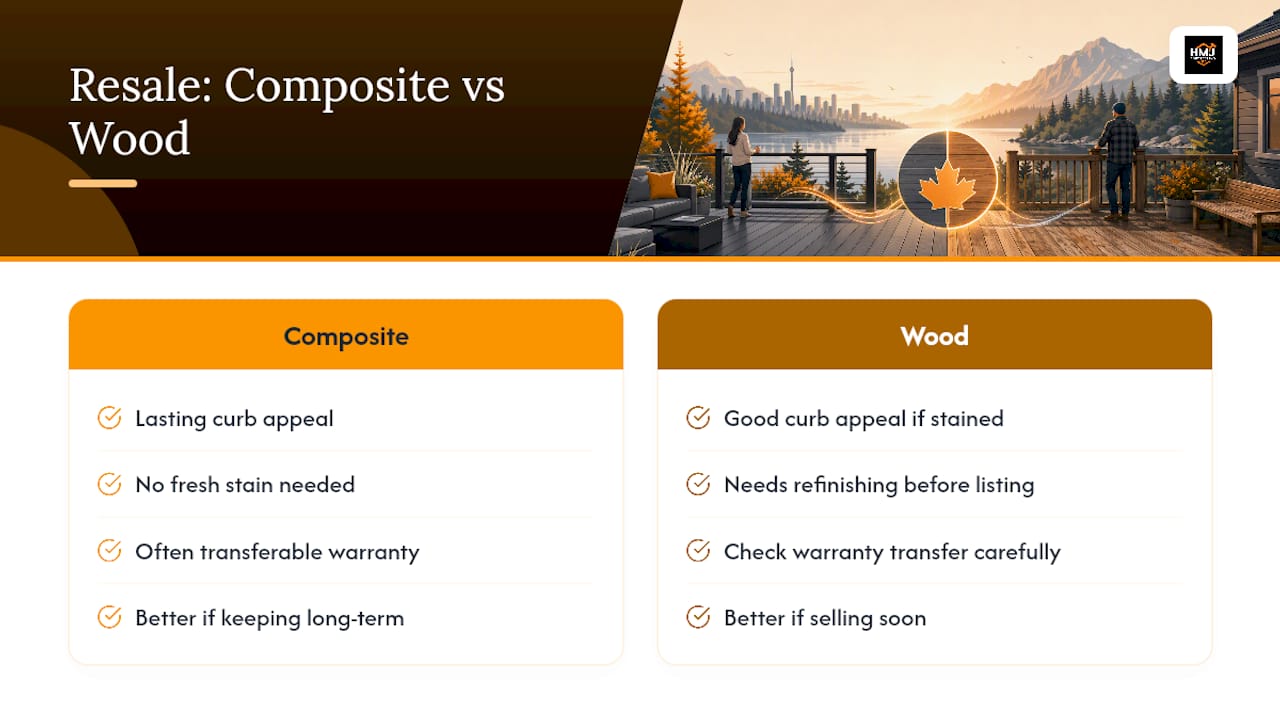
Real estate agents and appraisers generally treat a well-built deck as a value-add regardless of material, but composite tends to hold its curb appeal longer through a sale timeline simply because it doesn’t need fresh stain to look presentable. A wood deck that’s overdue for refinishing can read as deferred maintenance to a buyer, even if the structure underneath is perfectly sound.
Warranty transferability matters here too. Many composite manufacturers allow warranties to transfer to a new owner within a set window after the sale, which can be a selling point worth highlighting in a listing. Read the fine print, though: transferred warranties sometimes carry shorter remaining terms or require registration within a set number of days of the closing date.
If you’re planning to sell within the next few years, a wood deck freshly stained a season before listing photographs can look just as strong on a listing page as composite, at a lower total spend. The math shifts back to composite when you’re the one living with the deck for the next decade rather than staging it for someone else.
One underappreciated point: a deck with visible rot, loose boards, or an undocumented DIY build can actually hurt a sale, regardless of material. Buyers and their inspectors notice subframe problems fast, which is part of why an itemized inspection before listing is worth the cost either way.
Which material has a smaller environmental footprint?
Neither material comes out clean, and the honest answer depends on what you weigh most. Composite decking is typically made from recycled wood fibre and recycled plastic, which diverts material from landfills, but it’s difficult to recycle again at end of life since it’s a bonded blend rather than a single material.
Wood is a renewable resource, and cedar in particular comes from a naturally rot-resistant species that requires less chemical treatment than pressure-treated lumber. Pressure-treated wood, though, is chemically treated to resist decay and insects, and disposal guidelines for treated lumber are stricter than for untreated wood or composite in most municipalities.
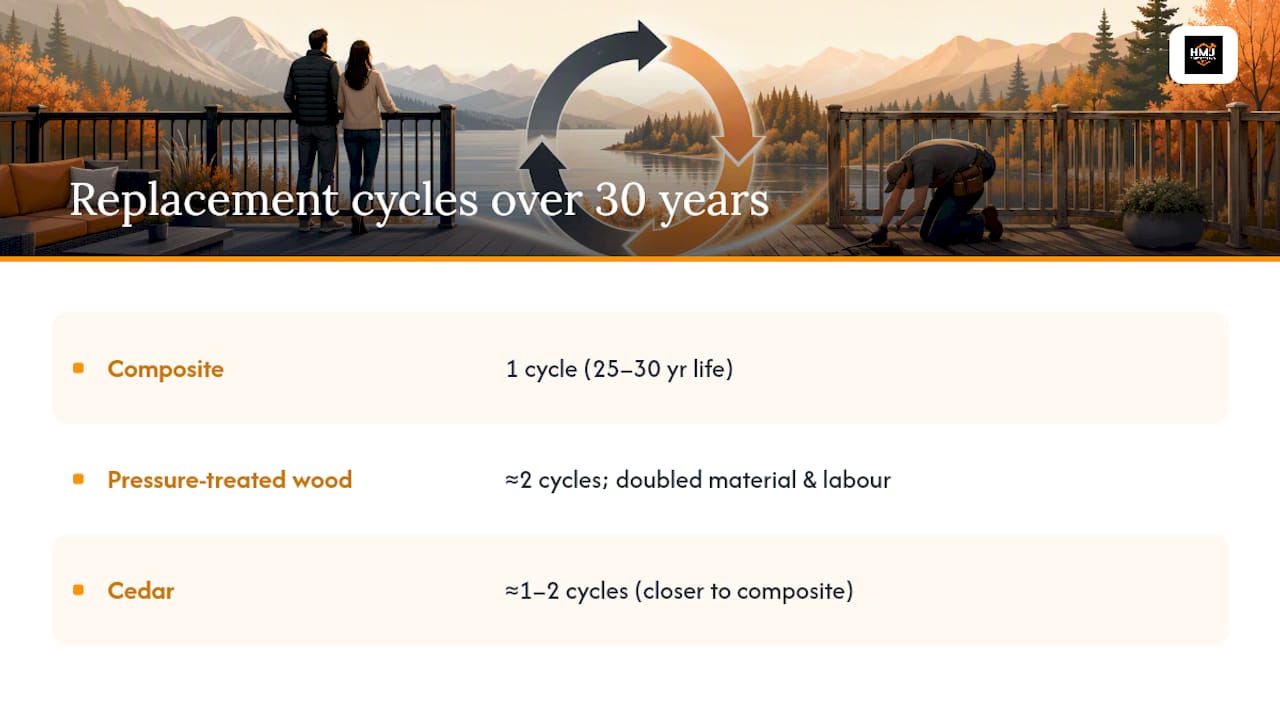
Longevity plays into the sustainability math too. A composite deck lasting 25 to 30 years means one manufacturing and installation cycle, while a pressure-treated deck needing major repair or replacement by 12 to 18 years effectively doubles the material and labour footprint over the same span. Cedar, if well maintained, can close that gap somewhat by lasting closer to composite’s range.
If sustainability is a priority, ask suppliers directly about recycled content percentages in composite products and about sourcing certifications for wood, since claims vary widely between manufacturers and aren’t always disclosed upfront in a standard quote.
Are composite or wood decks more resistant to insects and rot?
This is one area where composite has a clear structural edge. Composite boards contain no organic wood fibre exposed to the elements, since the plastic shell (in capped products) seals it off, so termites, carpenter ants, and fungal rot have essentially nothing to feed on at the surface.
Wood is a different story, and the risk varies by species and treatment. Pressure-treated lumber resists insects and decay reasonably well thanks to its chemical treatment, but any cut end, screw hole, or scratch that exposes untreated wood underneath becomes a vulnerable point. Cedar contains natural oils that deter insects and slow decay better than most softwoods, which is part of why it costs more, but it isn’t immune, particularly in humid or coastal climates where moisture sits against the wood longer.
Rot in wood decks usually starts where you can’t see it: at the ledger board connection to the house, underneath joists where ventilation is poor, or at fastener holes where water pools. That’s exactly why the inspection checklist in the earlier decision-making section focuses so heavily on joists and ledger boards rather than the visible boards on top.
Uncapped composite deserves a caveat here too. Without a protective outer shell, some budget composite products can absorb moisture at cut edges and develop mould growth over time, closing some of the gap that makes capped composite the stronger choice for insect and rot resistance.
How does weathering change a deck’s appearance and structure over time?
Wood’s weathering process is visible and gradual. Left untreated, it greys as UV exposure breaks down surface lignin, and without regular sealing, that greying is followed by surface checking, small cracks that run with the grain, and eventually splintering. Structurally, weathering combined with moisture cycling is what drives the rot and fastener failure that shortens pressure-treated wood’s lifespan toward that 12 to 18 year range.
Composite weathers differently and, in most capped products, far more slowly. Colour fade is minimal over the warranted period, and the material doesn’t crack or splinter the way wood does. But composite isn’t immune to change: boards expand and contract with temperature swings, and over enough freeze-thaw cycles, poorly installed boards without correct expansion gaps can buckle, bow, or pull away from fasteners. That’s a structural problem rooted in installation, not the material’s inherent weathering.
The practical difference is that wood shows you its wear plainly, giving you a visual cue to refinish or repair before a small problem becomes structural. Composite hides wear better on the surface, which means the joists and fasteners underneath deserve more attention during a routine inspection since the boards themselves won’t necessarily tell you something’s wrong.
When I’d recommend composite over wood, and when I wouldn’t
Composite earns its premium for families settling in long term, especially with kids or pets who’ll use the deck hard for a decade or more. Wood still makes sense for a starter home, a tight budget, or an owner who genuinely enjoys the seasonal ritual of staining. Either way, get the subframe inspected and read the warranty’s labour exclusions before you sign anything.
— Jason
Getting your deck inspected and quoted the right way
Whether you’re leaning composite or wood, the deciding factor is usually what’s happening under the boards, not on top of them. Hmjcontracting is the practical alternative to guessing at a deck’s condition from photos or a quick walk-around: our team inspects joists, ledger boards, and spacing against manufacturer specs before recommending a re-deck or a full rebuild, and every quote is itemized so you see materials, labour, and fasteners broken out separately.

An on-site estimate covers structural assessment, product grade recommendations based on your budget and timeline, and a written warranty summary so you know exactly what’s covered and what isn’t. If moisture or rot shows up at the ledger board during inspection, our team can flag it early, since ledger rot left unaddressed sometimes points to broader moisture and mould concerns worth checking before new boards go down. Homeowners weighing a full renovation alongside their deck project can also review permit requirements for Ottawa deck builds ahead of time. Contact Hmjcontracting through our decking and fencing services page to book a free, itemized estimate.
Sources
- Consumer Reports — Decking buying guide
- Local
- Composite Deck Guide: What Brands Won’t Tell You
- Composite vs Wood Deck Toronto: 25-Year Cost Comparison | RenoHouse