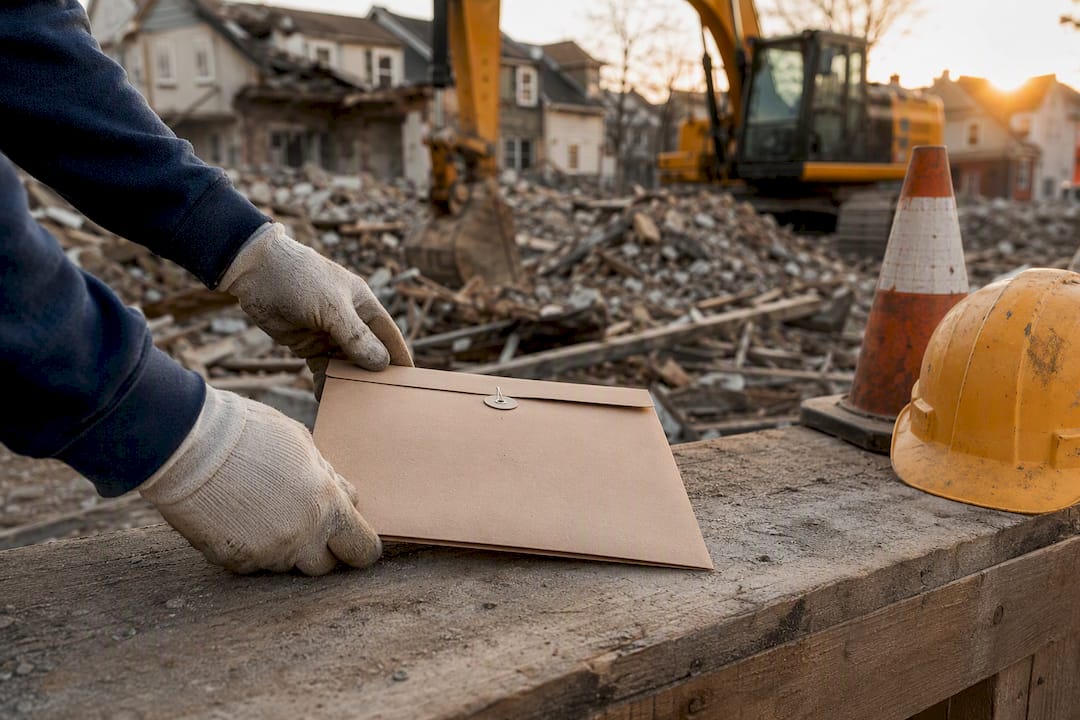
Yes, you need a permit to demolish a building in Ottawa. The Ontario Building Code Act requires a Permit to Construct or Demolish before any building or structure comes down or gets relocated, and the City of Ottawa’s Building Code Services enforces that rule inside city limits.
The owner or an authorised agent applies through MyServices Ottawa, and the City typically processes complete applications within ten business days.
- A permit is required for demolition or relocation of virtually any building or structure.
- Applications go through MyServices Ottawa, submitted by the property owner or their authorised representative.
- If you’re unsure whether your project qualifies, stop work and call 3-1-1 before you touch a wall.
Pro Tip: Don’t assume a small structure is exempt just because it’s cheap to tear down. Confirm with the City first. A wrong guess costs far more than a phone call.
Key Takeaways
A demolition permit in Ottawa requires a complete application, the right clearances, and professional coordination to move through City review in 10 business days instead of getting rejected and reset.
| Point | Details |
|---|---|
| Permit is mandatory | The Ontario Building Code Act requires a Permit to Construct or Demolish for nearly any teardown or relocation. |
| Demolition Control adds a step | Removing residential units without a replacement permit often triggers a separate, higher-fee approval process. |
| Complete files move fastest | Missing clearance forms or site plans are the top reason applications get rejected and delayed. |
| Budget for real fees | Base cost starts at $117 for 5,000 sq ft; Demolition Control and heritage reviews cost significantly more. |
| Professional help removes bottlenecks | Hmjcontracting coordinates abatement clearances, engineered drawings, and utility disconnects to keep applications on track. |
This article is general information, not a substitute for advice from a qualified lawyer. Consult a qualified legal professional about your own circumstances before acting on anything here.
Table of Contents
- When do you actually need a demolition permit in Ottawa?
- What is Ottawa’s Demolition Control area, and when does it apply?
- How do you apply for a demolition permit in Ottawa?
- What does a demolition permit cost, and how long does approval take?
- What safety and inspection requirements apply to demolition projects?
- What happens if you demolish without a permit?
- When should you bring in a licensed contractor or abatement specialist?
- Need help with your demolition permit or abatement work?
- Sources
When do you actually need a demolition permit in Ottawa?
The trigger is simple: any demolition or relocation of a building or structure requires a Permit to Construct or Demolish under the Ontario Building Code Act. That covers houses, garages, additions, and commercial buildings alike. It also covers situations that surprise a lot of owners, like removing a dwelling unit from a duplex or triplex, which can pull in Demolition Control rules even without a full teardown.
Some structures fall outside this requirement, including certain farm buildings and small accessory structures that don’t meet the threshold for a building permit in the first place. The line between “exempt” and “not exempt” isn’t always obvious, and the City has final say, not a rule of thumb you picked up from a neighbour or a contractor’s guess.
- Full demolition of a house, garage, or commercial building: permit required.
- Removing residential dwelling units without a replacement permit: often triggers Demolition Control review.
- Certain farm buildings and minor accessory structures: may be exempt, but confirm before assuming.
- Partial interior demolition tied to a larger renovation: usually folded into the renovation permit process rather than a standalone demolition permit.
Pro Tip: Before you file anything, check whether your property sits inside a designated Demolition Control area. If it does, call Planning early. That one call can save you weeks of back-and-forth later.
What is Ottawa’s Demolition Control area, and when does it apply?
Demolition Control is a separate approval layer that kicks in when a residential property loses dwelling units and no replacement building permit has been issued. The Demolition Control By-law defines the geographic area where this applies, and it exists to stop rental housing from disappearing without a plan to replace it.
- Demolition Control approval is required when residential units come down with no replacement permit on file.
- Fees for these applications sit at a higher tier than a standard demolition permit.
- Heritage-designated properties add another layer of review on top of Demolition Control.
- Ward councillors can request public committee review when a file raises community concerns.
Ward councillors hold real procedural weight here. Talking to Planning and your local councillor before you submit, not after a hold lands on your file, is what keeps a routine demolition off the committee agenda.
How do you apply for a demolition permit in Ottawa?
Getting the paperwork right the first time is the single biggest factor in how fast your permit moves. Here’s the sequence that works:
- Create or log into your MyServices Ottawa account, the City’s portal for submitting applications, documents, payments, and inspection bookings.
- Complete the Application to Construct or Demolish, the core form for any teardown.
- Attach the Demolition Review Form and the Demolition Permit Clearances form, both mandatory.
- Upload a current, fully dimensioned plan of survey or site plan.
- Add engineered drawings if your project needs them (see below).
- Submit and pay through the portal, then track inspections and status updates from the same dashboard.
Beyond the forms, you’re responsible for arranging clearances before demolition starts:
- Disconnection confirmations for water, sewer, gas, and electrical service.
- Cancellation of private services like propane tanks or septic systems, where applicable.
- Confirmation the property is rodent free, which some clearance reviews require.
- An encroachment (right-of-way) permit if you’re staging equipment or storing debris on the road allowance. Reach the Right of Way Permits office at row_permit_office@ottawa.ca, 613-580-2424 ext. 16000, or 3-1-1.
Taller buildings, larger footprints, work below existing footings, or any use of explosives generally require a demolition brief and stamped drawings from a Professional Engineer. Those documents need to show the demolition method, sequencing, and how adjacent structures will be protected. File everything together rather than trickling documents in one at a time. Reviewers process complete packages faster than partial ones.
What does a demolition permit cost, and how long does approval take?
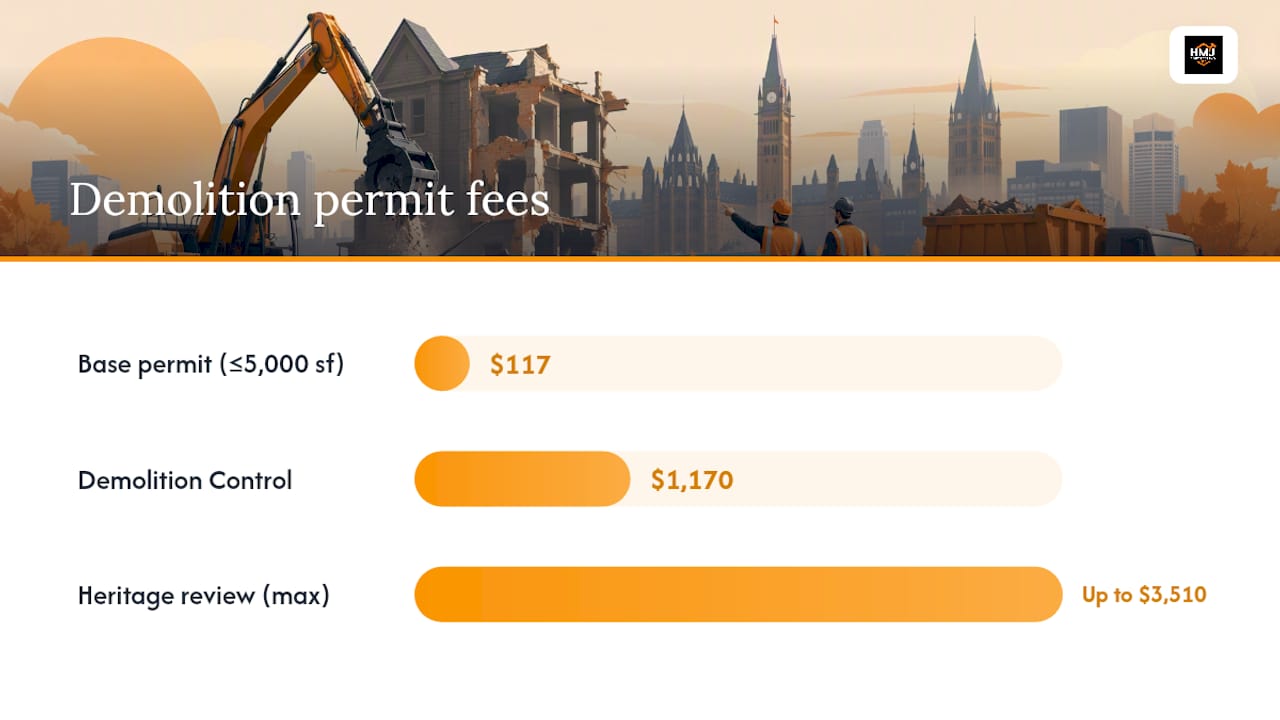
Budget around the base fee structure set out in Building By-law No. 2014-220. A standard Permit to Demolish starts at $117 for the first 5,000 square feet (or 4,645 square metres) of building area, with $12.75 charged for each additional 1,000 square feet or portion of it.
Demolition Control applications require a higher fee, and heritage-related demolition reviews involve an even higher fee level depending on the scope of assessment.
- Base permit: $117 for the first 5,000 sq ft, plus incremental charges beyond that.
- Demolition Control application: $1,170.
- Heritage-related demolition review: up to $3,510.
- Target processing window: 10 business days for a complete application.
The 10-day target only holds if your file is complete on the first pass. Missing clearance forms, an outdated site plan, or absent engineered drawings are the most common reasons a file sits longer than expected, and each round of corrections effectively restarts the clock.
What safety and inspection requirements apply to demolition projects?
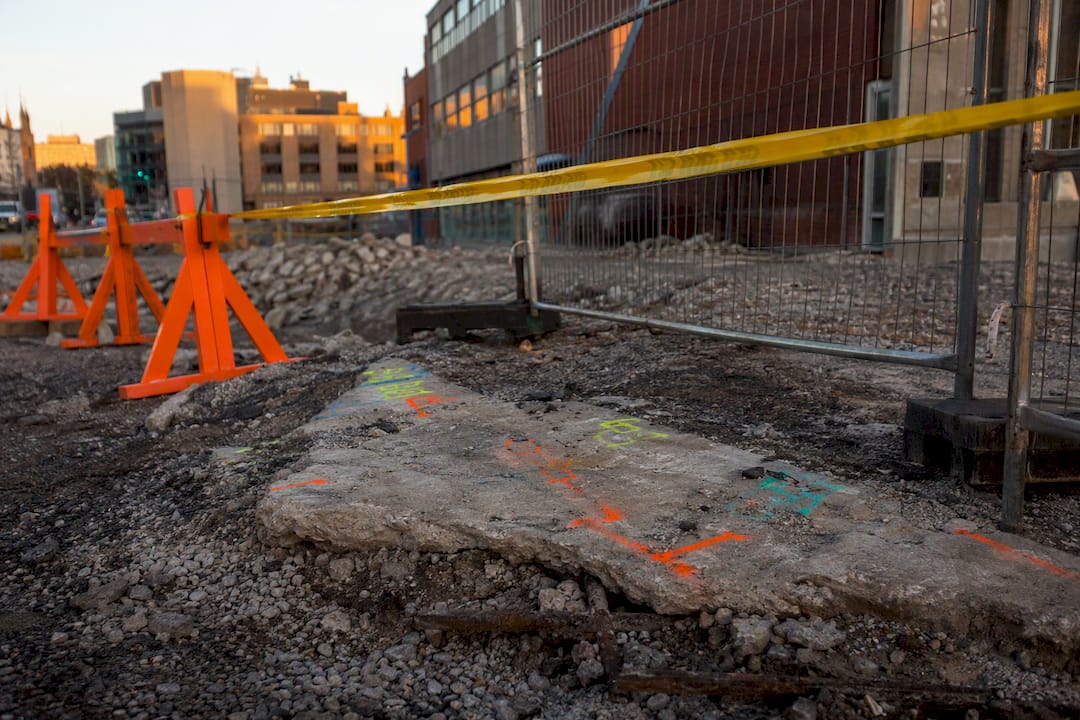
Expect inspections before work starts, at key milestones during demolition, and once the site is cleared, all booked through MyServices Ottawa. Building Code Services checks that the site matches what was approved, and that hazardous materials have been dealt with properly before crews start swinging equipment.
Older Ottawa properties, especially anything built before the 1990s, often contain asbestos, lead paint, or mould that needs certified abatement before demolition can proceed safely. Skipping this step doesn’t just create health risk. It can stall your permit review outright, since the City expects documentation showing hazardous materials were identified and removed by qualified professionals.
- Pre-demolition inspection to confirm site conditions match the application.
- Mid-demolition checkpoints for larger or more complex projects.
- Final inspection to close out the permit.
- Structural sign-off from a P.Eng when height, footprint, or proximity to neighbouring foundations demands it.
Pro Tip: Order your abatement testing and clearance documentation before you submit your permit application, not after. Reviewers move faster when hazardous-material clearance is already on file.
What happens if you demolish without a permit?
Starting demolition before your permit is issued triggers a non-refundable administrative surcharge, on top of whatever retroactive fees apply once the City catches up with the paperwork. Inspectors also expect notification of completed unpermitted work quickly, and skipping that step compounds the problem.
Most rejected applications fail for avoidable reasons:
- Incomplete Demolition Review or Clearance forms.
- Missing utility disconnection confirmations.
- No current site plan or plan of survey attached.
- Missing engineered drawings where the project scope requires them.
- Check every form for completeness before you submit, not after a rejection notice arrives.
- Confirm utility disconnections in writing with each provider.
- Call Planning early if your property is in a Demolition Control or heritage area.
When should you bring in a licensed contractor or abatement specialist?
Larger or more complex demolitions benefit from professional coordination well before the application goes in. A licensed demolition contractor or abatement firm handles the pieces that most often stall a file: preparing the engineered demolition brief, scheduling utility disconnections, arranging the encroachment permit if the road allowance is involved, and completing clearance forms with the detail Building Code Services expects.
Certified abatement contractors carry particular weight for older Ottawa homes. Their asbestos, lead, or mould documentation gives reviewers exactly what they need to confirm hazardous materials were handled to code, which removes one of the most common causes of a stalled file.
On a two-unit teardown near Westboro, bundling the abatement clearance, utility disconnect confirmations, and engineered drawings into a single submission meant the file moved through review on the first pass instead of bouncing back for missing paperwork. That’s the difference between a 10-day approval and a 10-day reset.
A note from someone who’s watched this process up close
Handling abatement and demolition work across Ottawa properties for years teaches you one thing fast: the permit stage is where projects lose the most time, not the demolition itself. Check the Demolition Control map, call Planning if you’re unsure, and open your MyServices Ottawa account before you touch anything else.
Need help with your demolition permit or abatement work?
Hmjcontracting cuts out the permit guesswork that trips up most Ottawa demolition projects. Rather than piecing together clearance forms, abatement reports, and engineered drawings on your own, Hmjcontracting’s licensed team handles the hazardous-material testing, documentation, and coordination the City expects to see on a complete file, the same paperwork that determines whether your application clears in 10 business days or bounces back for corrections.

With over 25 years of Ottawa-area experience and a 5.0-star Google rating, Hmjcontracting pairs certified asbestos, lead, and mould abatement with full demolition and renovation services, so you’re not juggling separate contractors for testing, removal, and teardown. If your project involves an older property, a Demolition Control area, or a heritage overlay, get a free, itemized quote before you submit your permit application. It’s the fastest way to know exactly what documentation your file needs from day one.
Sources
- Application for demolition permit (City of Ottawa application package)
- Demolition Control (City of Ottawa)