
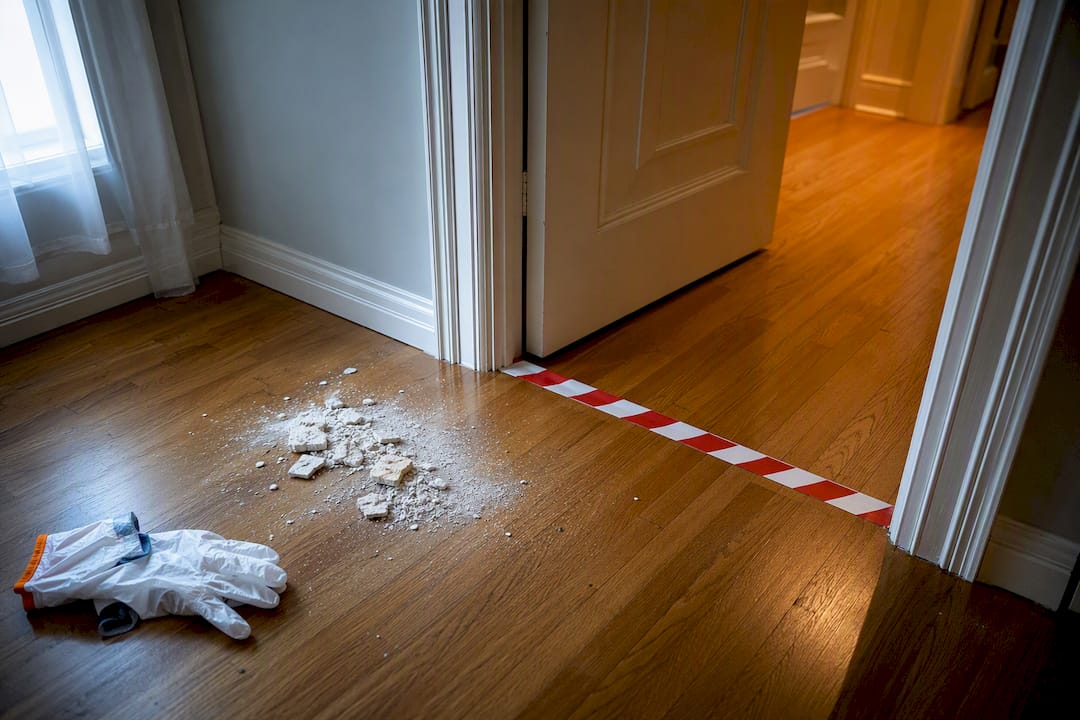
Stop what you’re doing, leave the room, and keep everyone (and pets) out. Do not sweep, vacuum, or use compressed air on the debris. If dust is heavy or more than one person was exposed, close off the space and call a licensed asbestos professional, and consider a check-in with a physician.
TL;DR:
- Do not attempt to sweep, vacuum, or blow dust as these actions can spread airborne asbestos fibres and worsen contamination.
- Small, contained disturbances such as torn vinyl flooring can be managed with wet cleaning methods before a professional assessment, but larger or friable areas require immediate professional intervention.
- Call a licensed abatement company if the disturbed area is larger than a small patch, the material is crumbly, or HVAC systems circulated dust during the incident.
- Keep records of the disturbance, including photos and lab results, and seek medical advice if anyone experienced symptoms or heavy exposure.
- Quick action within ten minutes, including sealing the space and contacting professionals, prevents airborne fibres and limits long-term health risks.
Table of Contents
- Disturbed asbestos: what to do right now
- What short-term cleanup can you safely do?
- When should you call a professional abatement company?
- How worried should you be about exposure?
- Getting the material tested and keeping records
- Why HMJ Contracting handles this the right way
- What actually goes wrong in these situations
- Get a licensed assessment before you do anything else
- Where to read the original guidance
- Sources
- FAQ
Disturbed asbestos: what to do right now
The next ten minutes matter more than anything else you’ll do about this incident. Asbestos becomes dangerous only when its fibres are airborne and inhaled, so your job is to stop that from happening, not to start cleaning.
Work through these steps in order, without skipping ahead:
- Stop the work immediately. Put down tools, turn off any power equipment, and step away from the material.
- Get everyone out of the room. Kids, pets, coworkers, anyone nearby needs to leave. Close the door behind you.
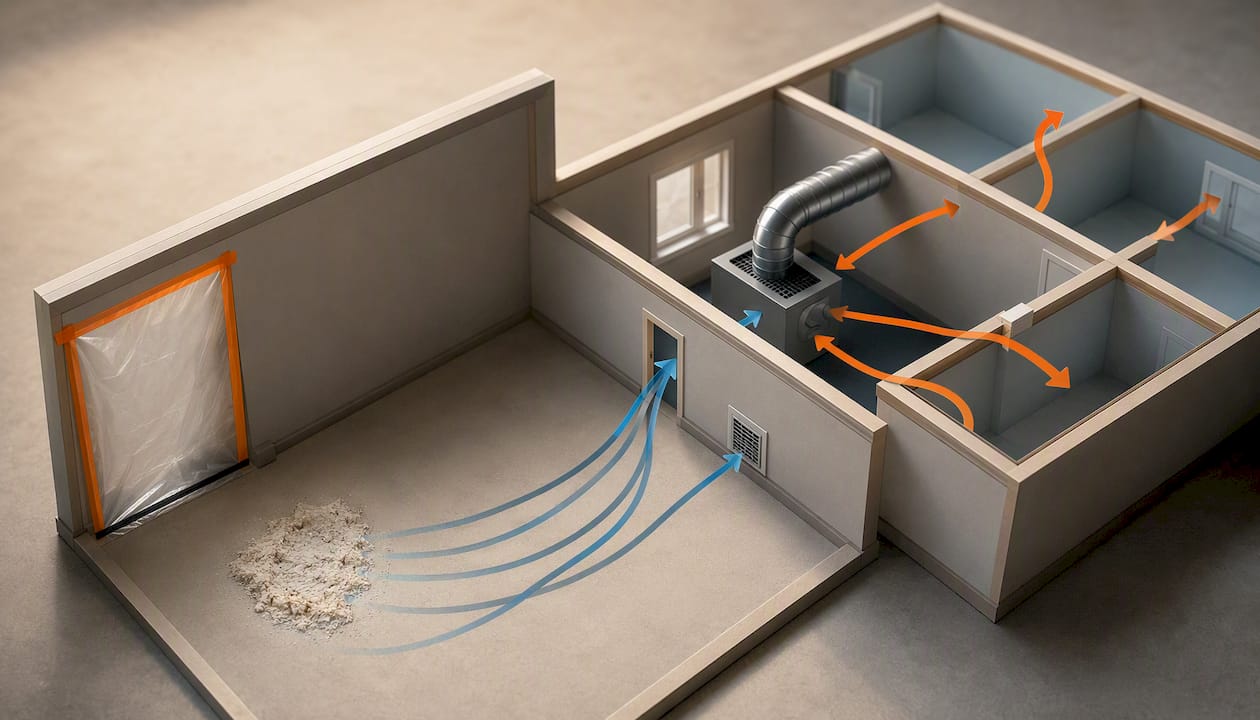
- Shut off forced-air heating or cooling. A running furnace or AC unit can pull fibres through the ductwork and distribute them to other rooms.
- Cover any vents in the affected room with plastic sheeting or even a garbage bag taped over the grille, if you can do it without re-entering repeatedly.
- Post a simple warning on the door, a sticky note that says “do not enter, possible asbestos,” so nobody wanders in while you’re calling for help.
- Do not sweep, dust, or vacuum. A standard household vacuum, even a shop vac, forces fine fibres into the air rather than capturing them. Health Canada is explicit that cleaning with compressed air or a non-HEPA vacuum is prohibited for exactly this reason.
- Leave contaminated tools and clothing where they are, or bag them. Don’t carry a dusty drop cloth through the living room to the laundry.
Pro Tip: Take two or three photos of the disturbed material and the room before you close the door. You’ll want them later for the contractor’s assessment and, if it comes to it, an insurance claim.
The instinct to grab a broom is strong. Resist it. A pile of dust sitting still on a floor is far less dangerous than the same dust stirred into the air you’re breathing. Containment buys you time to bring in the right equipment; cleaning without it just spreads the problem to rooms that were never contaminated in the first place.
What short-term cleanup can you safely do?
If the disturbance is small, a torn edge of vinyl floor tile, a small chunk of dislodged ceiling texture, there are a few limited steps you can take before a professional arrives; for example, you might explore home repairs you should do before listing for sale to address minor issues safely and effectively while coordinating with asbestos professionals. The principle behind all of them is simple: keep fibres wet and contained, never dry and airborne.
- Lightly mist visible debris with water from a spray bottle before touching anything; wet material is far less likely to release fibres than dry material.
- Wet-wipe the debris with a damp disposable cloth. Never dry-sweep or dry-wipe.
- Place the debris and the wipe directly into a heavy plastic bag, seal it, and label it “asbestos waste” with tape and marker.
- Leave the sealed bag in the isolated room rather than carrying it through the house to an outdoor bin.
- Remove your outer clothing before leaving the contaminated area, bag it separately, and shower as soon as possible.
- Leave shoes and tools in the sealed zone rather than walking them through hallways or carpeted rooms.
Provincial guidance from Alberta Health Services backs this approach: sealing the area, wetting materials, and staying out until an assessment happens drastically limits how far fibres can travel.
There’s a hard line, though, and it matters more than any cleanup tip. DIY handling is inappropriate once the material is friable (crumbly, powdery, easily broken by hand), once the disturbed area is larger than an area larger than a small patch, or once you suspect the HVAC system already circulated dust. In those cases, stop touching anything and go straight to calling a professional. Homeowners who attempt DIY cleanup on anything beyond a tiny, contained spot often enlarge the contamination, which ends up costing more to fix properly than if a licensed crew had handled it from the start.
When should you call a professional abatement company?
Certain conditions take the decision out of your hands. If any of these apply, stop trying to manage it yourself:
- The disturbed material is crumbly or powdery rather than a solid intact piece.
- The affected area covers more than a small patch, roughly the size of a dinner plate.
- Your furnace, ductwork, or return air vents were running during or after the disturbance.
- More than one person was in the room when the material was disturbed.
- You genuinely aren’t sure what the material is. Visual identification is unreliable, since fibreglass, mineral wool, and other common building materials can look almost identical to asbestos-containing product.
Once a licensed abatement crew is on site, the process follows a fairly consistent sequence:
- Assessment and sampling to confirm what the material actually is.
- Containment, sealing the work area with plastic sheeting and negative-pressure barriers.
- HEPA filtration, using negative-air machines that trap fibres down to a fraction of a micron rather than a standard filter.
- Removal or encapsulation, followed by disposal in sealed, labelled containers as regulated waste.
- Clearance air testing to confirm the space is safe before anyone re-enters.
Federal guidance on asbestos prevention and control lays out this containment-and-clearance sequence as the accepted standard, and it’s worth asking any contractor you call whether their process matches it. A licensed abatement firm will document the work plan, provide a waste manifest showing where the material went, and issue a clearance certificate once air testing confirms the space is safe.
When you call, ask directly for proof of licensing and insurance, how many similar jobs they’ve completed, what disposal facility they use, and how they’ll protect the rest of your home during the work. A contractor who answers these without hesitation is one worth hiring.
How worried should you be about exposure?
Visible dust on a floor doesn’t equal an immediate health crisis. Airborne fibres inhaled into the lungs are the real hazard, and even then, asbestos-related disease typically develops after cumulative or repeated exposure over years, not from a single short incident. That said, a single incident is still worth taking seriously, especially if the dust cloud was heavy or several people were in the room.
See a physician or an occupational health clinic if any of the following apply:
- You or someone else was in a visibly dusty room for more than a few minutes.
- Anyone is coughing, short of breath, or reports throat or eye irritation afterward.
- The incident happened in a workplace setting with multiple people present.
- You want a documented baseline in your medical file in case of future concern.
A doctor may simply note the incident for your file, or refer you to occupational health depending on severity. Either way, write down the date, what happened, who was present, and how long the exposure lasted. That short note becomes useful later, both for your own peace of mind and for anyone assessing risk down the line.
Getting the material tested and keeping records
Don’t guess by eye. A qualified tester should sample the material rather than you trying to identify it visually, since testing is the only way to confirm whether asbestos is present and whether it’s a friable or non-friable form.
Keep these records together in one folder or a phone album:
- Photos of the disturbed material and the room, taken before cleanup.
- The lab report confirming presence (or absence) of asbestos.
- Any contractor proposals, work plans, and the waste disposal manifest.
- Receipts for testing and remediation work.
If you rent, tell your landlord immediately. If this happened at work, notify your employer or workplace safety representative, since occupational exposure often triggers separate reporting obligations.
Why HMJ Contracting handles this the right way
Homeowners dealing with a disturbed asbestos scare need a contractor who treats containment as seriously as public-health guidance demands, not one who shows up with a shop vac and a shortcut. Hmjcontracting was built around that standard.
- Hmjcontracting provides licensed, certified abatement services for asbestos, lead, and mould, with detailed, itemized quotes so you know exactly what you’re paying for.
- The company pairs licensed abatement work with years of local Ottawa renovation experience, documenting projects with air quality testing and waste manifests.
- The company holds a perfect 5.0 star rating on Google across hundreds of client reviews.
- This guide was written by a contributor who covers asbestos and renovation safety for the company’s blog.
That combination, certified process plus documented paperwork, is exactly what you want backing you up after an accidental disturbance.
What actually goes wrong in these situations
The mistake I see most often isn’t ignorance, it’s panic-cleaning. Someone disturbs a bit of old vinyl tile, gets nervous, and grabs a vacuum to make the mess disappear before anyone notices. That single decision does more damage than the original disturbance ever would have.
Containment first, always. A sealed room with dust sitting still is a manageable problem. A vacuumed room with fibres now embedded in the carpet fibres and drifting through the HVAC system is a much bigger, more expensive one. Realistic abatement, once it’s properly scoped, usually takes a few days for a contained area, not weeks, and most households can still live in the rest of the home during the work.
— Jason
Get a licensed assessment before you do anything else
There are other paths here, calling a general handyman, waiting it out, hoping it’s not really asbestos, but none of them get you a documented, cleared, and legally defensible resolution the way a licensed abatement crew does. Hmjcontracting handles the whole chain: coordinating qualified testing, running licensed abatement work with HEPA containment, and providing the paperwork you’ll want on file afterward.

When you call, have a few things ready: where in the home the disturbance happened, photos if you took them, whether your HVAC system was running, and whether anyone reported symptoms. They quote every job with itemized detail up front, no vague estimates, and document clearance testing before you are told it’s safe to go back in. If the same incident stirred up hidden mould behind a wall or under flooring, mould remediation is worth asking about at the same time. Reach out for an assessment today and get a straight answer on what’s actually needed.
Where to read the original guidance
- Health Canada: health risks of asbestos
- CCOHS: asbestos in the home
- Alberta Health Services: asbestos guidance
This article is general information, not a substitute for advice from a qualified doctor. Consult a qualified healthcare professional about your own circumstances before acting on anything here.
Sources
- Health Canada — Health risks of asbestos
- CCOHS — Asbestos: in the home
- Alberta Health Services — asbestos information and emergency guidance
FAQ
What should I do if I disturb asbestos?
Stop working immediately, leave the room, keep others and pets out, and avoid vacuuming or dusting the area. Seal the space and call a qualified asbestos professional to assess it.
Is a little bit of asbestos exposure okay?
Brief, low-level exposure carries far less risk than repeated or heavy exposure, since disease typically results from cumulative fibre inhalation over time, but any incident involving visible dust is still worth taking seriously and documenting.
What happens if asbestos gets disturbed?
Disturbance releases microscopic fibres into the air, which can be inhaled and, without containment, spread through HVAC systems, clothing, and foot traffic to other parts of the home.
What should I do if I’m exposed to asbestos?
Leave the contaminated area, remove and bag your outer clothing, shower if dust was heavy, and see a physician if you experienced heavy exposure, symptoms, or were one of several people in the room.