
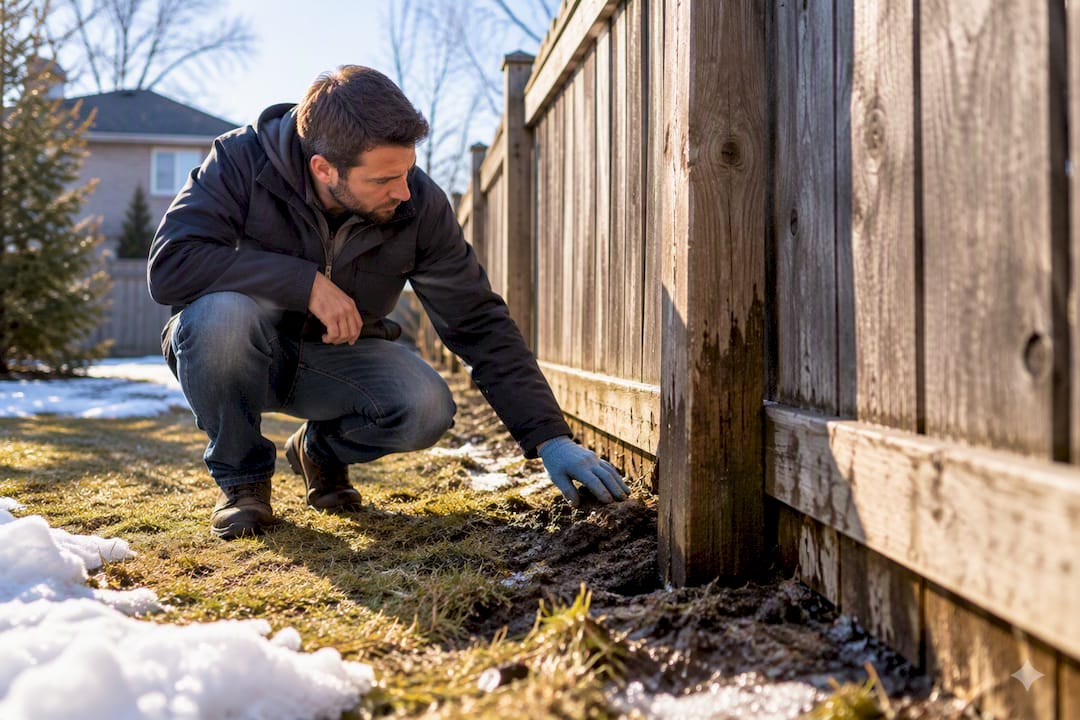
Keep any fence standing straight and looking good with three recurring habits: inspect posts and hardware, clean surfaces before dirt and salt settle in, and protect wood or metal with the right seal, stain, or touch-up paint. Spring is for inspection after thaw, summer for cleaning and stain touch-ups, fall for sealing before freeze, and winter for watching how snow and ice sit against the fence line. If you spot a leaning post, wide rot, or a cracked frame, that’s a job for a contractor, not a weekend project.
TL;DR:
- Regularly inspect fence posts after spring thaw to detect shifts caused by freeze-thaw cycles that can lead to leaning or structural failure.
- Keep vegetation and grass away from the fence line to prevent moisture trapping and accelerate rot in wooden fences.
- Reapply sealant or stain on wood fences every few years, and avoid high-pressure washing or harsh cleaners on vinyl and metal fences to prevent damage.
- Address rust and damage on metal fences promptly, especially around scratches and cut ends, to prevent further corrosion.
- Hire a professional for posts that shift excessively, rot that spreads, or sections that lean more than a few degrees, with contractors providing detailed quotes before work begins.
Table of Contents
- Seasonal fence maintenance checklist for every quarter
- Material-specific fence care: wood, vinyl, aluminium, and chain link
- How to inspect posts, gates, and hardware properly
- Common fence repairs and when to call a professional
- What I’ve learned watching fences fail
- Get a professional fence repair or replacement quote
- Sources
- FAQ
Seasonal fence maintenance checklist for every quarter
A fence doesn’t fail all at once. It loosens a hinge in October, takes on moisture in November, and by March the post you never checked is leaning two inches off plumb. Working through the seasons in order catches small problems while they’re still small.
- Spring: Walk the entire perimeter and push-test every post, since freeze-thaw cycles commonly cause hidden post movement that only shows up after thaw. Clear away salt residue and winter debris, tighten any loose screws or bolts, and give panels a first clean of the year.
- Summer: Re-check fasteners that heat and humidity may have loosened, and apply stain or UV protection if your last coat is looking chalky or faded. Inspect for pests around post bases and touch up any scratches before they turn into bare wood or exposed metal.
- Fall: Clear leaves and organic matter from the fence line before they trap moisture against the wood. Re-seal if you skipped it in summer, lubricate gate hinges before cold weather stiffens them, and plan how you’ll manage snow load before the first storm.
- Winter: Avoid piling shovelled snow against fence panels, since sustained weight and moisture soften wood fibres and stress metal joints. Use plastic shovels and skip salt-based de-icers near the fence line, and check gate hardware for ice buildup after every major storm.
Pro Tip: Photograph your fence each season and keep a simple log of what you did and when. Many manufacturers tie their warranty coverage to documented routine maintenance, and that log also helps a future buyer see the fence has been looked after.
If you’re prepping the whole yard, not just the fence, a broader fall property maintenance checklist can help you sequence outdoor tasks before the ground freezes.
Material-specific fence care: wood, vinyl, aluminium, and chain link
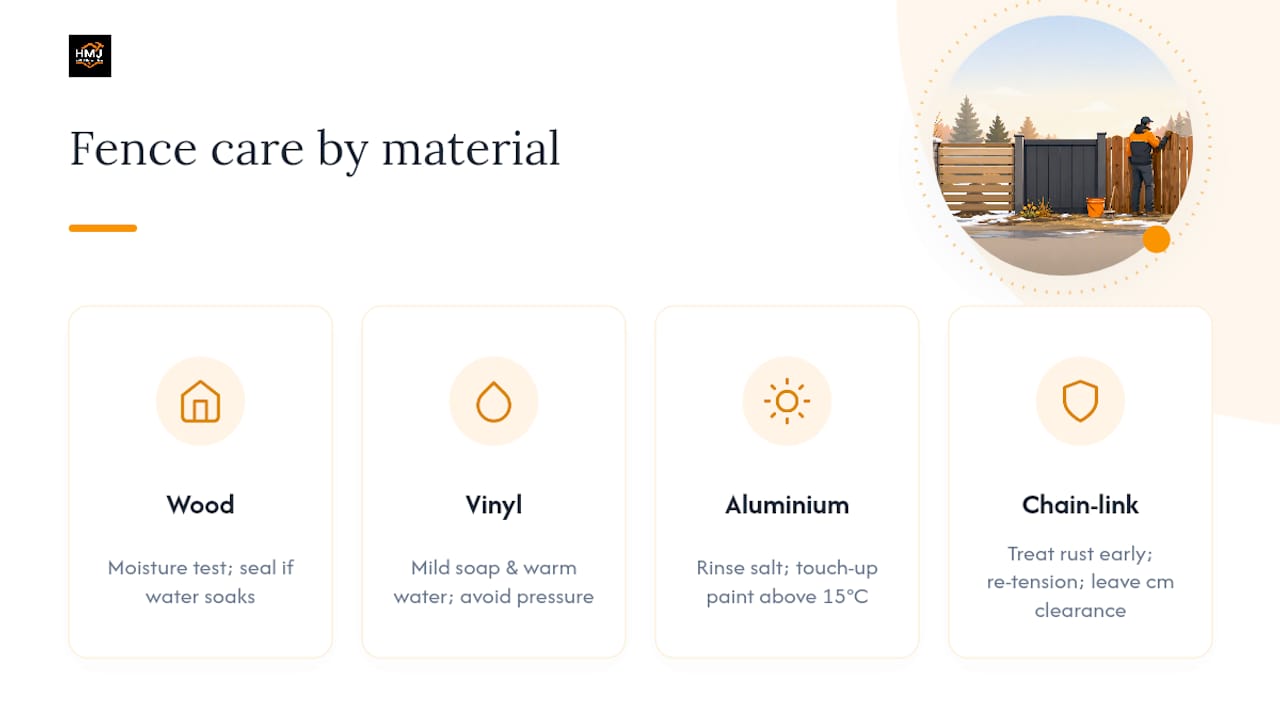
Every fence material asks for a different kind of attention, and treating them all the same is where most maintenance plans go wrong.
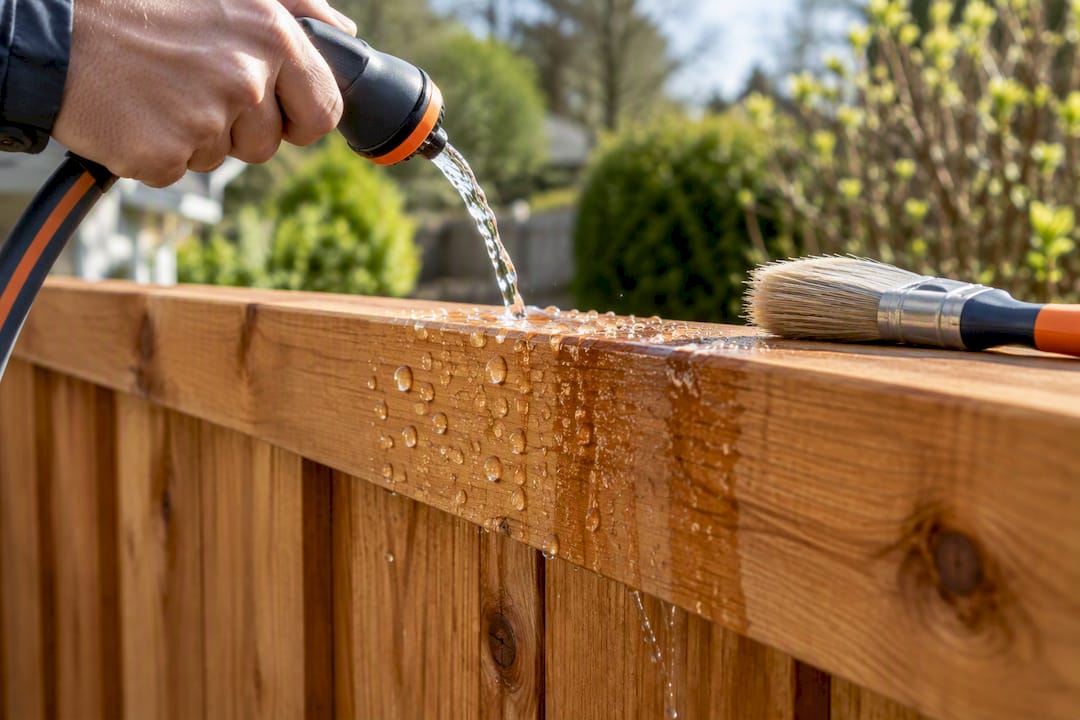
Wood needs the most hands-on care of the four. Do a water bead test: splash a little water on the surface, and if it soaks in within a few minutes rather than beading up, the wood is due for a fresh coat of sealant. Professionals often check with a moisture meter first, since surface dryness can be misleading. Wood that feels dry to the touch may still hold high internal moisture, and sealing over that traps water in rather than out. Most cedar and pressure-treated fences generally require restaining on a multi-year cycle depending on sun exposure. Keep shrubs and grass clear of the fence line, since vegetation contact traps moisture against the boards and accelerates rot. If you’re weighing wood against a lower-maintenance option, this comparison of vinyl and wood fence lifespans in cold climates breaks down the tradeoffs.
Vinyl is the easiest to keep clean. Mild soap, warm water, and a soft brush handle most grime, and you should skip high-pressure washing and solvent-based cleaners, which can crack the surface or strip its finish over time.
Aluminium and other metal fencing need a spring rinse to remove salt residue left from winter de-icing. Touch-up paint only bonds properly when applied above 15°C on a dry surface, so don’t rush a chip repair on a cool, damp morning. Avoid bleach on powder-coated finishes; a diluted vinegar solution cleans just as well without the risk of discolouration.
Chain link holds up well structurally but rusts at scratches and cut ends. Treat rust spots as soon as you see them, re-tension sagging sections with a fence stretcher, and keep at least a few centimetres of clearance under the bottom rail so grass and moisture don’t sit against the wire.
How to inspect posts, gates, and hardware properly
A five-minute inspection twice a year catches most problems before they become repairs.
- Push each post firmly from the top. A slight wobble of a centimetre or two is normal settling; several centimetres of movement, or a post that rocks at the base, signals footing failure.
- Hold a level against gate posts and long fence runs. Anything more than a slight lean from vertical is worth watching over the following weeks.
- Check gate hinges and latch hardware for rust or stiffness, and lubricate anything that resists smoothly. A gate that’s hard to swing often just needs the same preventative attention as a stiff garage door hinge.
- Before staining or sealing wood, confirm the surface is genuinely dry rather than just dry to the touch, and hold off if a moisture meter reads high.
- When clearing snow, stick with a plastic shovel near the fence line and skip salt-based de-icers, which corrode metal and discolour finishes over time.
Pro Tip: Do your push-test inspection right after the first thaw, not in midsummer. That’s when frost heave has finished shifting footings for the season, so any movement you find is real, not just seasonal give.
Common fence repairs and when to call a professional
Some jobs are a Saturday afternoon with a cordless drill. Others need a contractor with proper footing equipment.
- DIY-friendly repairs: Tighten loose screws and carriage bolts, replace a single cracked picket, sand and re-stain a weathered section, and touch up small paint chips on metal once temperatures clear 15°C.
- Red flags for a professional: Posts that keep shifting after every thaw, rot spreading across more than one or two boards, a section leaning more than a few degrees, or a gate frame that’s twisted or pulling away from its posts.
- What a contractor actually does: A proper visit includes digging out and replacing the post footing rather than just bracing it, checking for compliance issues on shared property lines, and backing the repair with a workmanship warranty.
What I’ve learned watching fences fail
The mistakes I see most often aren’t dramatic. They’re a shrub left touching the boards for three summers, a wobbly post ignored until it snaps in a windstorm, or a metal shovel scraping paint off the same three feet of fence every winter. None of these show up overnight, which is exactly why they get ignored.
My honest advice: inspect right after spring thaw, and write down what you find, even briefly. That single habit catches more problems than any product you could buy, and it pays off if you ever need a warranty claim or sell the house.
— Jason
Get a professional fence repair or replacement quote
If your inspection turns up a leaning post, spreading rot, or a gate that’s beyond a hinge oiling, a professional contractor handles fence repair and replacement with itemized, line-by-line quoting so you know exactly what you’re paying for before work starts.

A typical service call starts with a physical inspection and photographs of the problem areas, followed by a written estimate that breaks out labour, materials, and any footing or post replacement separately. They install both pressure-treated fencing and cedar fencing, and can also handle a full post replacement with proper footing depth rather than a surface patch that fails again next thaw. If you’re planning ahead for warmer months, this guide to privacy fencing options built for Ottawa winters is worth a look before you commit to a material. Request a free estimate through the fencing and decking services page and get a written quote back within 24 hours.
Sources
- What temperature to stain fence — CanadaTempFence
- Calgary
- Seasonal aluminum fence maintenance checklist for Canadian homeowners — Medallion Fence
- How to maintain a wood fence in Winnipeg — Bulger Brothers Landscape
FAQ
How can you maintain a fence so it lasts longer?
Inspect posts and hardware each spring, clean surfaces before grime builds up, and reapply protective stain, seal, or paint on schedule. Fences that get this three-part routine every year typically outlast ones that only get attention when something breaks.
What are common fencing mistakes to avoid?
The biggest ones are letting vegetation touch the fence line, ignoring a wobbly post until it fails outright, and using metal shovels or salt-based de-icers near the fence in winter. Each of these seems minor in the moment but compounds into structural or cosmetic damage over a season or two.
What is the best oil to use on fences?
There’s no single universal product; the right choice depends on the wood species and whether you want a clear, tinted, or opaque finish. What matters more than brand is timing: apply it only when a moisture meter confirms the wood is genuinely dry inside, not just on the surface.
What is the most effective way to clean a fence?
For wood and vinyl, mild soap, warm water, and a soft brush handle most dirt without damaging the surface. Skip high-pressure washing on both, and on aluminium or powder-coated metal, use diluted vinegar instead of bleach to avoid discolouring the finish.
When should I hire a contractor instead of doing it myself?
Call a professional when you see a post that keeps shifting after thaw, rot spreading across multiple boards, or a section leaning more than a few degrees. Hmjcontracting quotes fence repair and post replacement work with itemized pricing so you know the scope before anything starts.