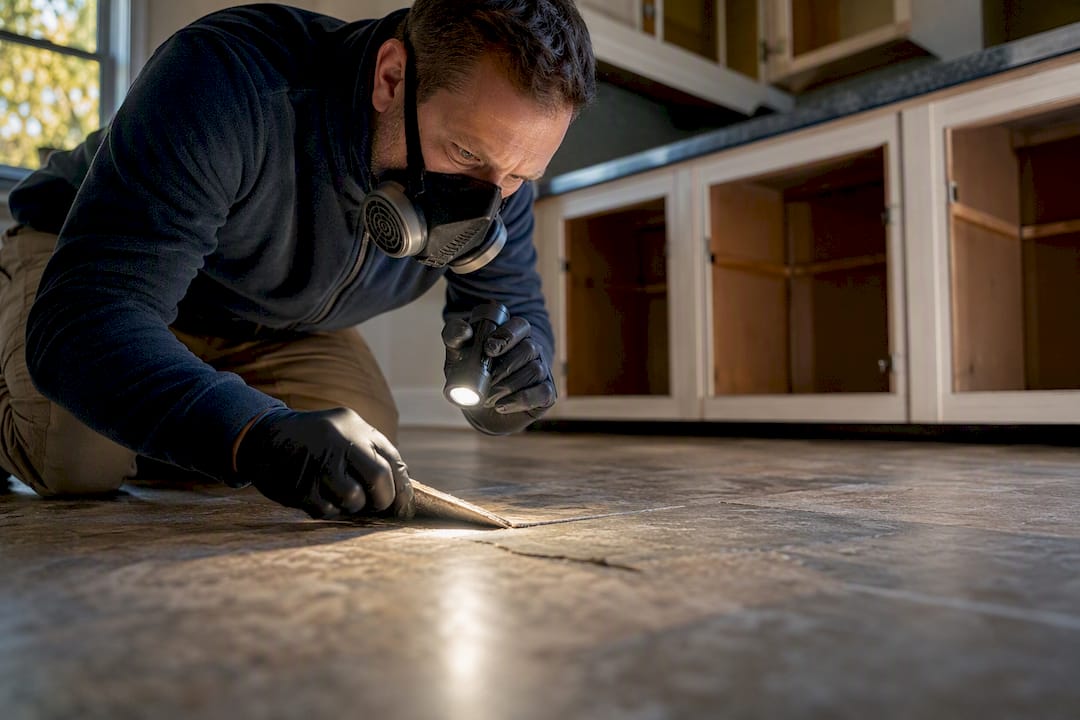
A standard home inspection does not reliably check for asbestos. Inspectors can flag suspect materials like popcorn ceilings or old floor tiles, but only laboratory testing confirms whether asbestos is present. Before you renovate, book a professional inspection with bulk sampling on anything suspect, and if results come back positive, hire a licensed abatement contractor rather than touching the material yourself.
TL;DR:
- A home inspection only identifies suspect materials; laboratory analysis is necessary to confirm asbestos presence in bulk samples.
- Ontario law mandates asbestos inspections for certain renovation projects, requiring a detailed written report with location and condition details before work begins.
- Proper sampling involves trained technicians using protective protocols, with results typically available within a few days, and a threshold of 0.5% asbestos content determines if material is classified as asbestos-containing.
- Management options after testing include in-place encapsulation, containment, or licensed removal, with clearance testing required before re-occupying the space.
- Vetting contractors involves verifying lab accreditation, reviewing documentation upfront, confirming clearance procedures, and ensuring proper licensing and insurance.
Table of Contents
- What does an asbestos check actually look for?
- When does Ontario require an asbestos examination?
- How does professional inspection and testing actually work?
- What do the lab results mean, and what happens next?
- How do you vet an asbestos tester or abatement contractor?
- Why testing first is the smarter renovation strategy
- How HMJ Contracting handles testing, abatement, and cleanup together
- Sources
- FAQ
What does an asbestos check actually look for?
A general home inspector’s walkthrough is a starting point, not a diagnosis. Most standard inspections note visible red flags but stop short of testing, because only laboratory analysis can confirm asbestos content. You cannot tell asbestos-containing material from a harmless look-alike by sight, texture, or age alone. Two ceilings that look identical can have completely different fibre content.
That is why a real asbestos check has two parts: a visual survey to identify suspect materials, and representative bulk sampling sent to an accredited lab. In older Ottawa-area homes, inspectors and testers typically flag:
- Popcorn or textured ceilings installed before the 1990s
- 9x9 inch vinyl floor tiles and their black mastic adhesive
- Pipe wrap and boiler insulation in basements and mechanical rooms
- Vermiculite attic insulation, often grey pebble-like fill
- Textured plaster and some older drywall joint compounds
Labs use polarized light microscopy (PLM) as the standard method, reporting the percentage of asbestos and the specific mineral type found. Transmission electron microscopy (TEM) comes into play for trickier samples. Turnaround for PLM results from an accredited lab commonly takes a few days after the lab receives the samples, though you should always confirm timing with your provider before scheduling demolition crews.
When does Ontario require an asbestos examination?
Ontario does not leave this to homeowner discretion in every situation. Under O. Reg. 278/05, an owner must have an examination and a written report completed before requesting tenders or arranging any demolition, alteration, or repair work, unless a specific exemption applies. This applies whether you are hiring a general contractor for a kitchen gut or bringing in a specialist for a basement finish.
The report itself is not a casual checklist. It has to state clearly whether the material in question is asbestos-containing, describe its condition and how friable it is (how easily it crumbles or releases fibres), and include drawings or specifications showing exactly where the material sits in the building.
Quick reference: If your renovation plan involves any of the following, treat it as a legal trigger point for an examination and report, not just a good idea:
- Removing or disturbing ceilings, especially textured or popcorn finishes
- Pulling up older floor tiles or their adhesive
- Accessing or removing attic insulation, particularly vermiculite fill
- Cutting into or removing pipe or boiler insulation
- Any demolition or alteration work likely to disturb material you have not tested
An owner’s report under O. Reg. 278/05 is not optional paperwork. It is the legal record that protects you if a dispute arises later over exposure, disclosure, or contractor liability.
How does professional inspection and testing actually work?
A competent asbestos check follows a fairly consistent sequence, and knowing the steps helps you evaluate a quote or spot a shortcut before it becomes your problem.
- Pre-inspection planning. The tester walks the property and groups similar materials into “homogeneous areas,” since sampling one section of a ceiling is meant to represent the whole ceiling, not just that one patch.
- Sampling protocol. Technicians wear proper PPE, use contamination controls to avoid spreading dust between rooms, and collect a minimum number of samples per homogeneous area, with larger and more numerous samples for materials like vermiculite because asbestos content in vermiculite varies widely across the same pile.
- Chain of custody. Each sample gets logged, sealed, and tracked from the property to the accredited lab, so the results can hold up if a dispute or sale ever puts them in question.
- Lab analysis. PLM handles most routine samples quickly and affordably. TEM comes in when asbestos percentages are low or when a material like vermiculite needs a more sensitive method to rule out trace contamination.
Pro Tip: If a company offers to let you collect your own samples to save money, treat that as a warning sign, not a discount — consider consulting a nationwide demolition & excavating contractor experienced in asbestos considerations to avoid costly mistakes. Disturbing suspect material yourself risks releasing fibres into your air, and DIY sampling can undermine the chain of custody that regulators and future buyers may rely on.
What do the lab results mean, and what happens next?
Getting the report back is only half the job. The number that matters most is the percentage of asbestos by dry weight, because Ontario guidance applies a 0.5% threshold for homogeneous material areas: if even one representative sample meets or exceeds that level, the entire homogeneous area gets treated as asbestos-containing material, not just the specific spot tested.
From there, your path splits into three realistic options:
- Manage in place. If the material is intact, low-friability, and won’t be disturbed by your renovation plans, encapsulation or monitoring may be reasonable.
- Contain and encapsulate. Sealing the material rather than removing it can work for some ceilings and pipe insulation where full removal isn’t necessary yet.
- Schedule licensed abatement. Anything friable, damaged, or directly in the path of your renovation should go to a licensed removal contractor.
If you go the removal route, expect the contractor to enclose the work area and run clearance air testing before declaring it safe to re-occupy. Clearance testing typically uses PCM Method 7400, with an example pass threshold of 0.01 fibres per cubic centimetre of air, and TEM Method 7402 when a lower detection limit is required. Keep the lab report, the owner’s report drawings, and any clearance certificates permanently. A future buyer’s lawyer, or your own contractor two years from now, will want to see them.
How do you vet an asbestos tester or abatement contractor?
Not every company that shows up with a swab kit and a van is equally qualified, and the gap between a good one and a bad one shows up fastest when something goes wrong.
- Check the lab, not just the contractor. Ask which accredited laboratory analyzes the samples, and confirm the contractor uses trained personnel with proper PPE and decontamination procedures for bulk sampling work.
- Ask for the paperwork upfront. A serious provider will explain their sampling protocol, chain of custody, expected lab turnaround, and will produce a written report with drawings, not a verbal summary.
- Confirm the clearance plan before work starts. Ask specifically which method they’ll use for clearance testing and what pass criteria apply, so there’s no ambiguity once removal is finished.
- Verify insurance and licensing. Ask for proof of liability insurance and any relevant certifications, and ask how many similar jobs they’ve completed in the past year.
Pro Tip: If a company asks you to collect your own samples, hands you a report with no location drawings, or can’t name the lab doing the analysis, walk away. Those are the three fastest signs of a shortcut operation.
Why testing first is the smarter renovation strategy
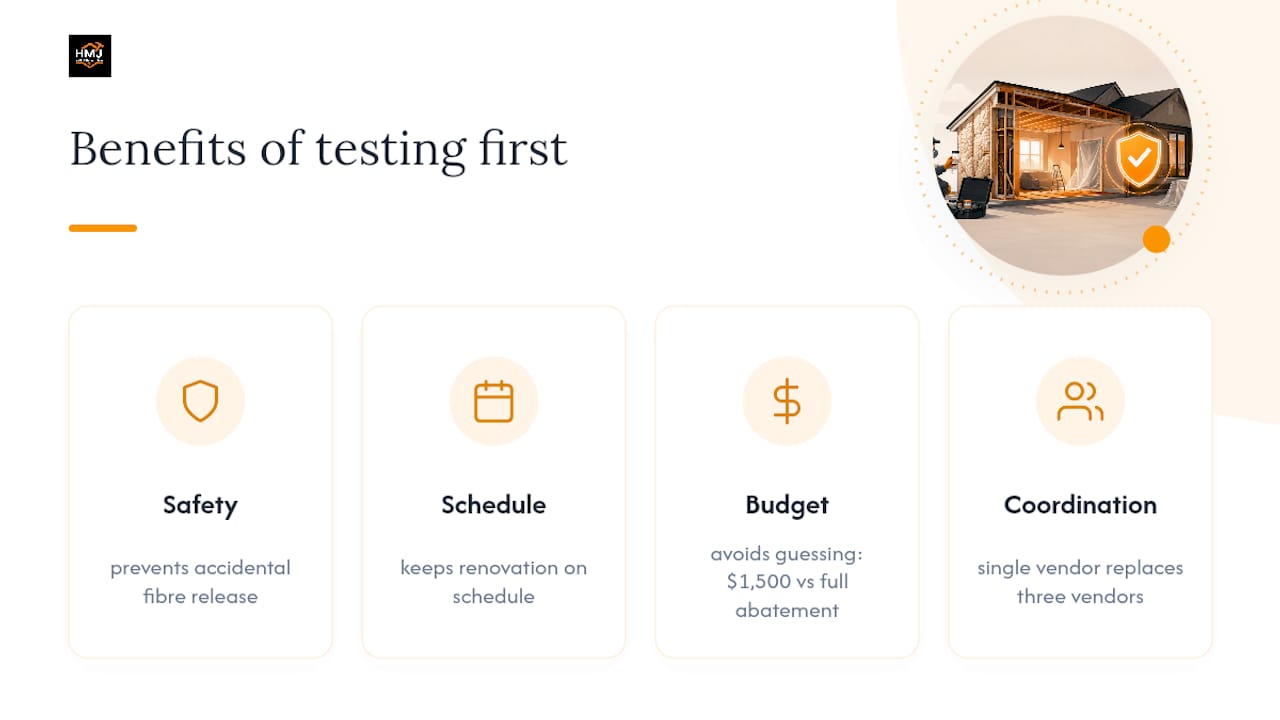
Testing before you swing a hammer isn’t just a compliance formality. It’s the single decision that prevents accidental fibre release, keeps your renovation schedule intact, and limits your liability if a dispute ever surfaces down the line. A clear lab report and owner’s report also give you something practical: a real number to budget against, instead of a guess about whether you’re looking at a $1,500 containment job or a full abatement.
For Ottawa homeowners planning a renovation, coordinated testing and abatement through HMJ Contracting removes the guesswork of managing testers, lab logistics, and a separate abatement crew as three disconnected vendors.
— Jason
How HMJ Contracting handles testing, abatement, and cleanup together
Most homeowners end up juggling three separate vendors for a single asbestos issue: a tester, a lab, and an abatement crew, each with their own timeline and paperwork. Some contractors run sampling coordination, licensed removal, and clearance testing as one contract, so your renovation doesn’t stall while multiple companies wait on each other’s schedules.
You get a detailed, itemized quote before work starts, not a vague estimate that grows once the walls are open. HMJ documents every step, including the testing and lab analysis results and the final clearance certificate, so you have the same paperwork a future buyer’s lawyer will ask for. Whether you’re dealing with a small Type 1 job or a full vermiculite attic removal, the same crew that handles abatement can move directly into your kitchen or basement renovation once the space is cleared, keeping the whole project under one roof. If a demolition-heavy project is on the table, it’s also worth understanding how a licensed contractor manages the abatement process before you request tenders. Book a free estimate with a licensed abatement team to get sampling scheduled and a written quote in hand before you touch a single tile.
Sources
- CCOHS — Asbestos: In the home
- O. Reg. 278/05 — Asbestos on construction projects and in buildings and repair operations
- Canada — asbestos exposure management programs (clearance testing reference)
This article is general information, not a substitute for advice from a qualified doctor. Consult a qualified healthcare professional about your own circumstances before acting on anything here.
FAQ
Do home inspections check for asbestos?
Standard home inspections may flag suspect materials visually, but they don’t confirm asbestos. That requires separate lab testing through bulk sampling.
What happens if asbestos is found during a home inspection?
If a material is flagged as suspect, don’t disturb it. Arrange professional bulk sampling and, if lab results confirm asbestos, hire a licensed abatement contractor for removal or containment.
How much does asbestos testing cost?
Testing and lab analysis through HMJ Contracting typically runs $300 to $600, depending on the number of samples and materials involved.
What is the asbestos removal process after a positive test?
A licensed contractor encloses the work area, removes or contains the material following safety protocols, then runs clearance air testing using PCM or TEM methods before the space is cleared for re-occupancy.
Can I test for asbestos myself?
You can buy DIY test kits, but collecting samples yourself risks releasing airborne fibres and can undermine the chain of custody needed for regulatory or legal purposes. Hiring a trained sampler is the safer route.