
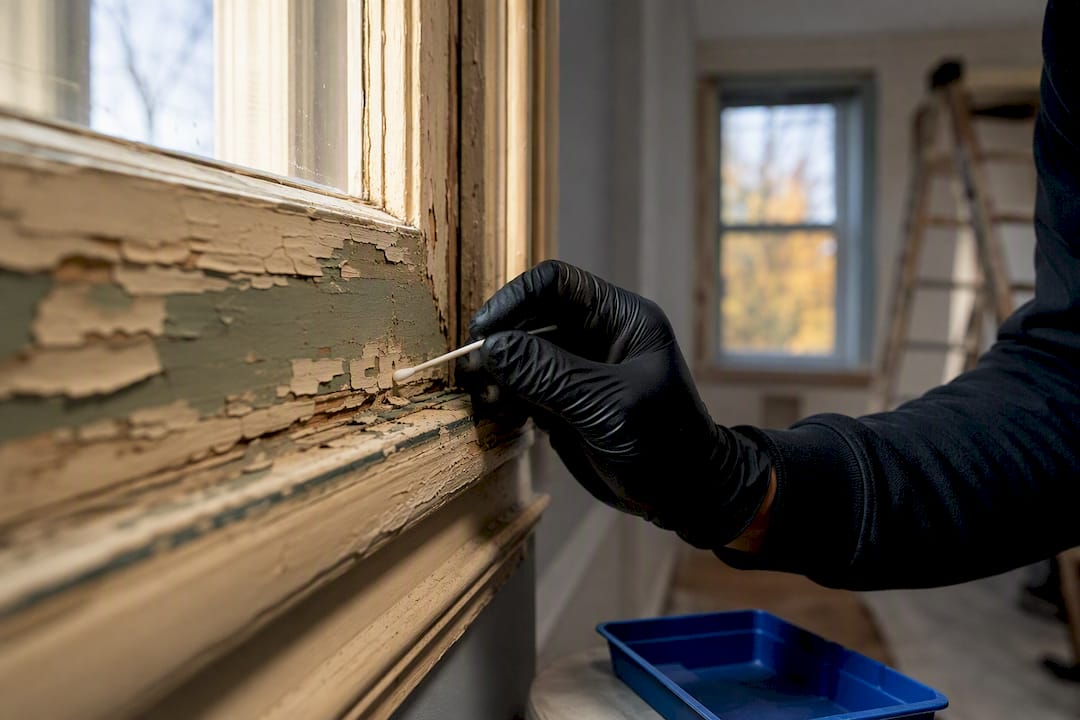
Abatement is the right call when paint is peeling, flaking, or chewed on, when a child in the home has tested with elevated blood lead levels, or when a public health authority orders it. Lead-safe renovation is enough when paint is intact, the work is small in scope, and the crew uses containment, wet methods, and HEPA cleanup. The deciding factor isn’t the size of your project. It’s the condition of the paint and who’s living in the house.
TL;DR:
- Lead abatement involves permanent removal, encapsulation, or enclosure of lead hazards, requiring specialized equipment like negative-air machines and HEPA filters.
- Lead-safe renovation aims to minimize dust during routine projects, especially on intact surfaces away from friction points or children’s reach, using wet methods and containment.
- Full abatement usually ends with strict clearance testing and documentation, while renovation relies on cleanup records without formal clearance certificates.
- The decision between abatement and renovation depends on the condition of paint and potential health risks, with peeling or chewed surfaces needing full abatement.
- Hiring trained specialists is essential, as unqualified contractors often lack proper containment, filtering, and documentation practices for lead hazard control.
Table of Contents
- Lead abatement vs. renovation: what makes abatement different
- What counts as lead-safe renovation?
- How do abatement and renovation actually differ?
- When should you choose abatement over renovation?
- What happens once work actually starts?
- What should you ask before hiring a contractor?
- How an abatement contractor actually decides
- Ready to figure out which approach your home actually needs?
- Sources
- FAQ
Lead abatement vs. renovation: what makes abatement different
Abatement means permanently getting rid of a lead hazard, not just working around it. Contractors do this three ways: full removal of the lead-coated material, encapsulation with a specialized sealant, or enclosure behind a new solid barrier. Health Canada’s guidance on lead-based paint treats abatement as the response for hazards that can’t just be managed during a renovation. Why does this require specialists instead of a general contractor? Because the engineering controls are more demanding than most renovation crews carry as standard equipment.
- Full containment sealing off the work area from the rest of the house
- Negative-air machines that keep contaminated air from escaping the containment zone
- HEPA-filtered vacuums for all surface and debris cleanup
- Crews trained specifically in lead-hazard control procedures
Abatement typically gets triggered by peeling or flaking paint, a child’s blood test, or a regulatory order tied to a rental unit or daycare.
What counts as lead-safe renovation?
Lead-safe renovation isn’t about eliminating lead from a house. It’s about keeping the dust down while you do the work you were already planning, whether that’s a kitchen reno, a window swap, or a bathroom tear-out. CCOHS frames this as a hierarchy of controls, and the practices below reflect that order.
- Test the paint before you touch it, especially in homes built before 1990.
- Use wet methods (misting surfaces before sanding or scraping) to keep dust from becoming airborne.
- Set up plastic containment around the work zone and seal HVAC vents.
- Clean with HEPA-filtered vacuums, never a household shop vac or broom.
- Skip dry sanding, open-flame torches, and heat guns entirely; CMHC research found these tools generate airborne lead levels that ordinary containment can’t handle.
Lead-safe renovation has real limits. If the paint is already deteriorating or the surface gets chewed or rubbed daily, like a windowsill or stair rail, dust-minimization steps aren’t enough on their own.
How do abatement and renovation actually differ?
The gap between the two comes down to intent, not effort. Renovation crews doing lead-safe work are trying to limit disturbance during a project that has nothing to do with lead. Abatement crews are hired specifically because a hazard needs to be gone for good.
- Intent: abatement permanently removes or seals the hazard; lead-safe renovation minimizes dust while other work happens.
- Outcome standard: abatement typically ends with certified clearance testing confirming the space is safe to re-occupy; renovation ends with a daily cleanup routine and no formal clearance step.
- Liability: a landlord or property manager who skips abatement on a documented hazard carries more legal exposure than one who used proper lead-safe methods on intact paint.
- Documentation: abatement generates lab clearance results and waste manifests; lead-safe renovation should still produce photos, a written scope, and cleanup records, but rarely a formal clearance certificate.
For property managers, that documentation gap matters at resale, at tenant turnover, and if a health inspector ever asks for proof of what was done.
When should you choose abatement over renovation?
Not every older home needs abatement. The paint’s condition, not the home’s age alone, tells you which path applies. Health Canada notes that intact lead paint away from friction or chewable surfaces is often safer left alone or encapsulated than disturbed unnecessarily.
Abatement is the right call when:
- Paint is visibly peeling, chipping, or flaking anywhere in the home
- A child living in or regularly visiting the home has tested with elevated blood lead levels
- The surface is a high-friction area: windowsills, door frames, stair rails, or anything a young child could chew
- You’re planning large-scale demolition that will disturb painted surfaces throughout the structure
Lead-safe renovation is usually sufficient when:
- The painted surface is intact and shows no wear
- The project is small in scope, like replacing one fixture or patching drywall
- The surface isn’t a friction point and isn’t accessible to children
Pre-work checklist: test suspect surfaces, walk the home to flag friction and chewable areas, confirm whether children or pregnant occupants live there, and check municipal or provincial rules that might apply to your project.
Pro Tip: Even if you think the paint looks fine, a lab swab test is a cost-effective way to determine lead presence. Homes built before 1960 carry the highest odds of lead paint, and some exterior coatings from 1960 to 1990 can still contain it.
What happens once work actually starts?
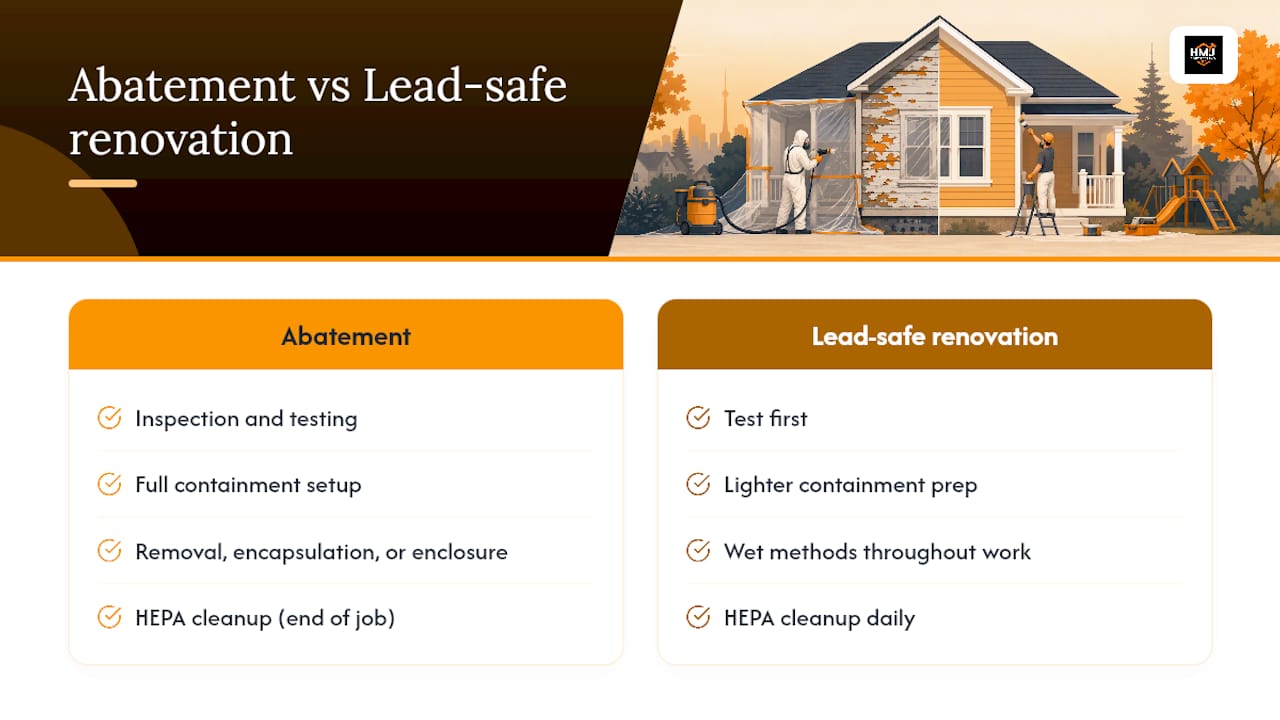
Abatement typically follows this sequence: inspection and testing, full containment setup, the abatement work itself (removal, encapsulation, or enclosure), HEPA cleanup, and a final clearance test before anyone re-occupies the space.
Lead-safe renovation follows a lighter version: test first, prep the containment, use wet methods throughout the work, and run HEPA cleaning at the end of every single day, not just when the job wraps.
Timelines and cost depend on the same variables in both cases: square footage affected, number of layers of old paint, and whether the crew hits complications like rot or asbestos-containing materials hiding underneath. Waste disposal differs too. Abatement debris usually needs to go to a facility equipped for hazardous waste, while lead-safe renovation debris that tests below the 90 mg/kg surface-coating limit can often follow standard construction waste routes, though local rules vary. If you’re weighing dust control methods more broadly, low-dust replacement techniques used in other trades follow the same wet-method logic.
What should you ask before hiring a contractor?
Retail staff at hardware stores aren’t the people to ask about lead hazard planning. Health Canada points homeowners toward trained specialists instead, and that advice holds for both abatement and lead-safe renovation jobs.
- Ask what certification or training the crew has for lead-hazard control specifically.
- Ask how they’ll contain the work area and whether they use negative-air equipment.
- Confirm they use HEPA-filtered vacuums exclusively, never a standard shop vac.
- Request a written scope of work, an itemized quote, and proof of how debris will be disposed of.
- For abatement jobs, ask for clearance test results once work is finished.
Watch for red flags: a contractor who won’t test before starting, one who mentions dry sanding or heat guns, or one who gives vague answers about cleanup instead of a documented process.
How an abatement contractor actually decides
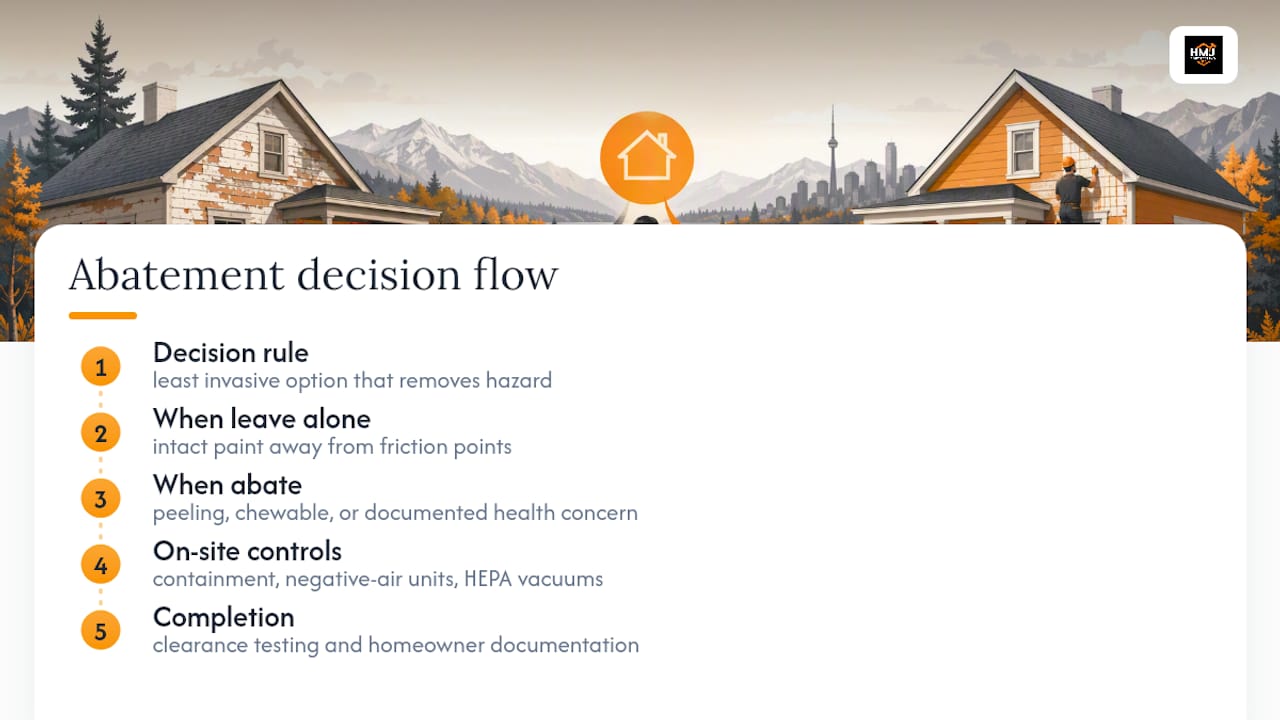
The rule Hmjcontracting applies on every project is simple: choose the least invasive option that still eliminates the hazard. Intact paint away from friction points often gets encapsulated or left alone. Peeling paint, chewable surfaces, or a documented health concern gets abated, full stop, because partial measures don’t hold up to inspection or to a family’s health.
On site, that means containment, negative-air units, and HEPA vacuums as standard practice rather than an upsell. Every abatement job ends with clearance testing and a paper trail: test results, waste disposal records, and a written scope the homeowner can keep. That documentation is what protects a homeowner or property manager if a question ever comes up later, whether from a buyer’s inspector, a tenant, or a health unit.
— Jason
Ready to figure out which approach your home actually needs?
A licensed abatement provider is the direct route to a straight answer, not a guessing game between a hardware store aisle and a general contractor who doesn’t handle lead. As a licensed and insured abatement provider serving Ottawa-area homes, this company runs testing, certified abatement, and lead-safe renovation work under one roof, backed by itemized quotes and a documented process from inspection to final cleanup.

An initial inspection covers surface testing, a walkthrough of friction and chewable areas, and a written recommendation on whether your project calls for full abatement or lead-safe renovation practices. You’ll get an itemized quote before anything starts, and clearance documentation once the work wraps, so there’s a paper trail if you ever need one. If your renovation also touches mould concerns in an older property, that gets flagged during the same visit. Book an inspection through Hmjcontracting’s services page to get a scope and quote specific to your home.
This article is general information, not a substitute for advice from a qualified doctor. Consult a qualified healthcare professional about your own circumstances before acting on anything here.
Sources
- Canada
- Dealing with lead-based paints during renovations (CMHC research)
- Lead on construction projects - CCOHS
- SOR/2016-193 - Surface coating materials regulation (Justice Laws)
FAQ
What is considered lead abatement?
Abatement is any process meant to permanently eliminate a lead hazard, including full removal, encapsulation with a sealant, or enclosure behind a solid barrier, typically involving containment, negative-air equipment, and HEPA cleanup.
Is demolition the same as renovation?
No. Demolition tears down or removes structural elements entirely, while renovation updates or repairs existing structures; demolishing painted walls or trim in an older home still requires the same lead-safe precautions as a smaller renovation.
What is the difference between lead abatement and remediation?
The terms are often used interchangeably, but abatement specifically refers to permanent hazard elimination, while remediation is a broader term that can include interim controls like encapsulation or ongoing maintenance of intact paint.
What is the most effective way to remove lead paint?
There’s no single method that works for every surface, but CMHC research points to chemical strippers with strong ventilation and HEPA cleanup as safer than dry sanding or heat guns, which generate hazardous airborne dust.