A mold remediation certificate is a post-remediation clearance report that documents the work performed and confirms the treated area meets agreed clearance criteria. It follows IICRC S520 guidance for post-remediation verification and typically carries real weight with insurers, real estate lawyers, and cautious buyers. The strongest version comes from an independent inspector, not the remediation crew itself.
TL;DR:
- Independent verification by a qualified inspector provides more credible clearance than remediator self-checks, especially for insurance or real estate transactions.
- A valid certificate must detail the scope of work, testing methods, lab accreditation, inspector credentials, and clear pass or fail statements referencing Condition 1.
- Testing usually involves air spore counts compared to outdoor samples and dust analysis, with no universally defined safe spore level, relying instead on comparative judgment.
- Proper clearance requires agreeing on criteria and documentation before remediation begins, fixing the moisture source, and scheduling retests if necessary.
- Regional regulations vary, making it essential to confirm that samples and standards meet local health authority and insurer requirements to avoid disputes.
Table of Contents
- What a valid post-remediation certificate includes
- Who can issue clearance and why independent verification matters
- How do inspectors decide a space has passed?
- Step-by-step: getting a trustworthy clearance certificate
- Reading the certificate and what happens if it fails
- What does a mold remediation certificate cost?
- Common pitfalls that derail a valid clearance
- Do clearance standards vary by region?
- HMJ Contracting’s take on getting clearance right
- Ready for certified mould remediation in Ottawa?
- Sources
What a valid post-remediation certificate includes
A one-page letter saying “job done” is not a clearance certificate. A report that holds up with insurance adjusters or a real estate lawyer needs specific, verifiable content.
Look for these elements before accepting a report as complete:
- Scope of work describing exactly what was remediated and where.
- Tests performed, including method (air spore trap, surface swab, dust sample) and sample locations.
- Laboratory name and accreditation, plus sample collection and analysis dates.
- Inspector’s signature and credentials, ideally an Indoor Environmental Professional (IEP) independent from the remediation crew.
- A clear pass or fail statement, referencing whether the space has returned to what IICRC S520 calls Condition 1.
Watch for what the report leaves out. A certificate that only covers the containment area but skips an adjacent room with the same moisture source is incomplete, even if every test inside the containment passed. Insurers and buyer’s agents read these reports closely, and a vague or partial scope can trigger follow-up questions that delay a claim or a closing. A detailed clearance test report protects you later, when you’re not around to explain what actually happened on site.
Who can issue clearance and why independent verification matters
Under IICRC S520, there’s a meaningful distinction between the remediator’s own quality checks and formal post-remediation verification performed by an independent IEP. The remediation company can and should check its own work as it goes. But when it comes to signing off that the job is done, that same company grading its own test carries an inherent conflict of interest.
Insurance companies and buyers who read the fine print usually push back on remediator-issued clearance for exactly that reason. Independent verification, done by a third-party inspector unaffiliated with the remediation firm, creates documentation that carries weight precisely because the person signing it has no financial stake in the outcome.
A few situations where each approach makes sense:
- Remediator self-check is reasonable for small, contained jobs with no insurance claim, no pending sale, and no history of chronic moisture issues.
- Independent IEP verification is worth insisting on whenever an insurance claim, a real estate transaction, or a tenant dispute is involved.
- Independent verification is close to mandatory if the remediation followed water damage from a burst pipe or a failed sump pump, where recurrence risk is higher.
Pro Tip: Ask for the inspector’s name and licence details before work begins, not after. If your remediation contract already names an independent IEP for final clearance, you avoid the awkward conversation about who pays for a second inspection later.
How do inspectors decide a space has passed?
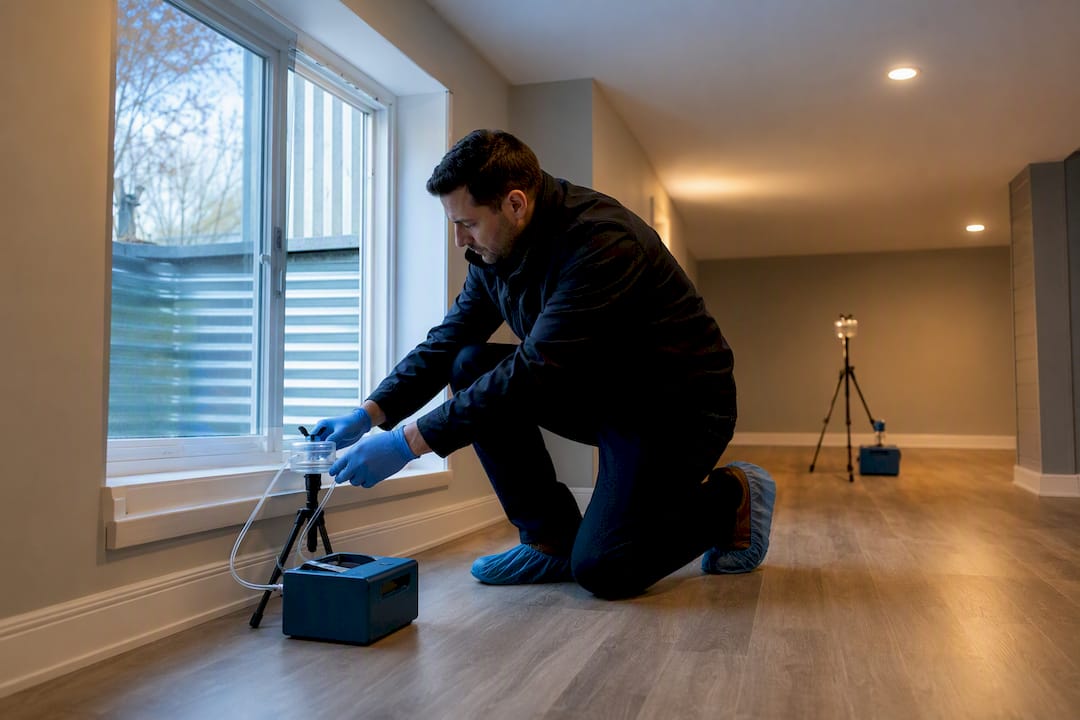
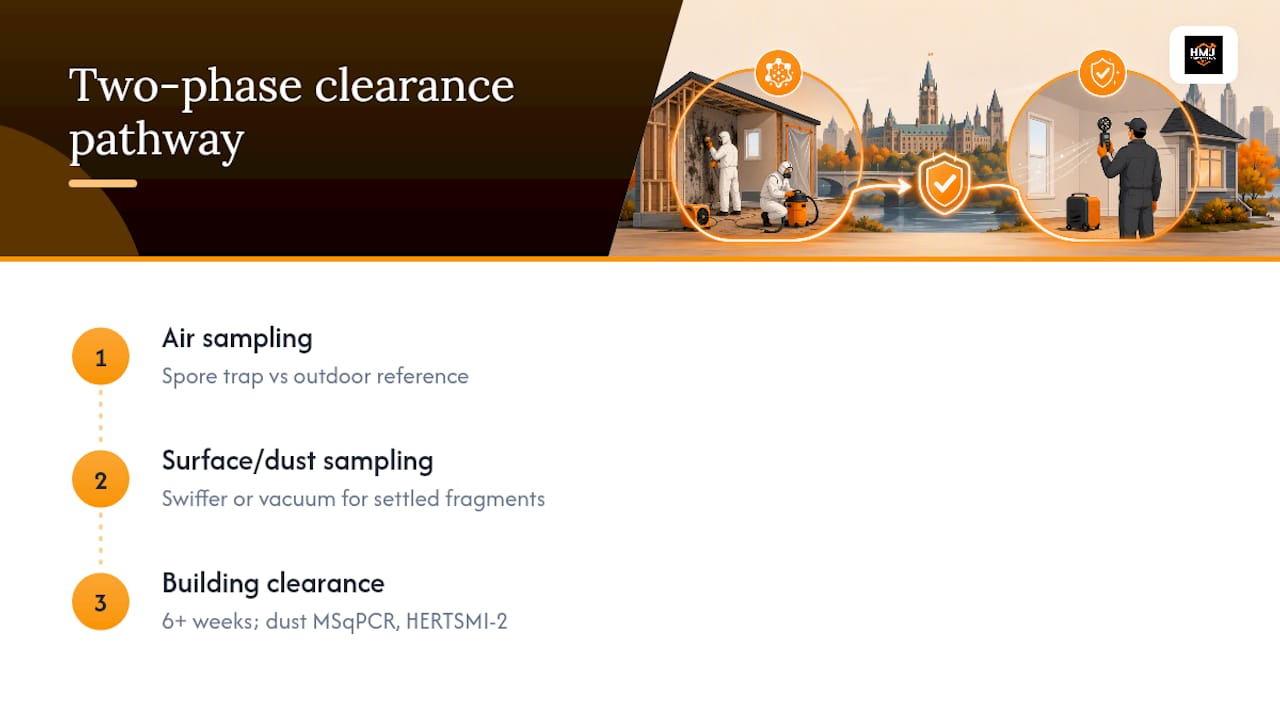
Clearance testing relies on a mix of methods, and no single test tells the whole story. Air spore trap samples measure what’s floating in the air at the moment of collection, then compare those counts to an outdoor or background reference sample taken the same day. If indoor spore counts and species match what’s found outside, that’s a strong signal the space has returned to a normal fungal ecology.
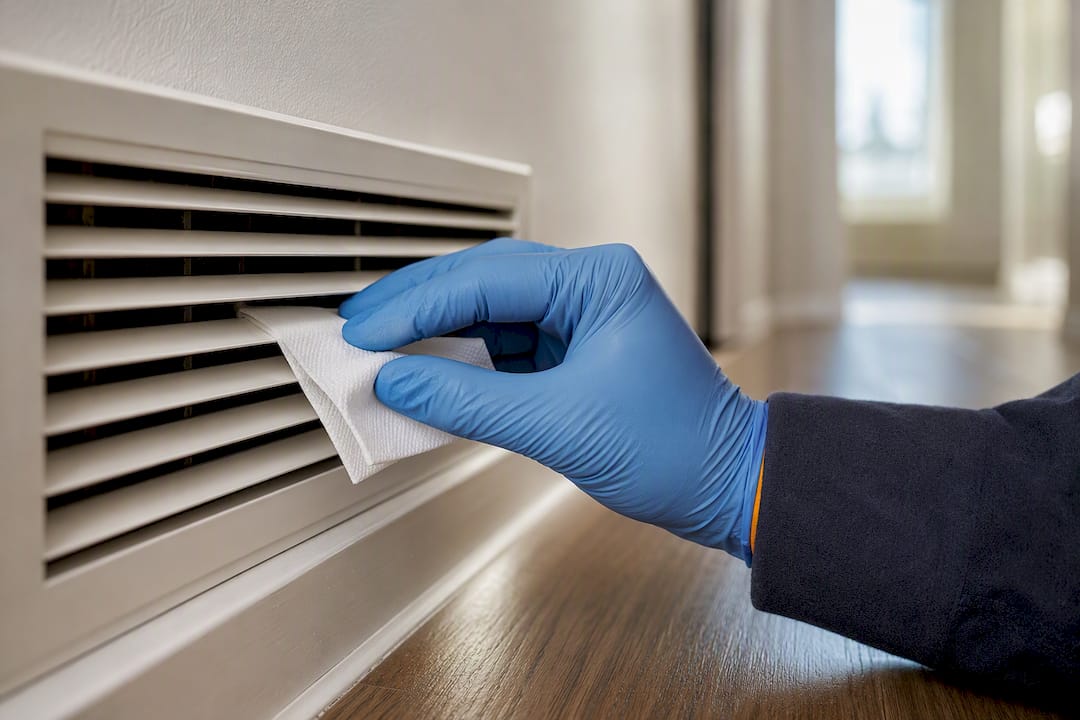
Surface and dust sampling fills a different gap. A Swiffer or vacuum sample from a windowsill or HVAC register can pick up settled mold fragments that air sampling misses entirely, particularly useful for confirming that dust from the remediation itself was properly cleaned up rather than just knocked loose.
Some projects also use a two-phase approach. Phase one, remediation clearance, happens shortly after work wraps up and confirms the immediate job was done correctly. Phase two, building clearance, happens 6 or more weeks later using dust-based MSqPCR analysis and HERTSMI-2 scoring where the project calls for it, giving a longer-term read on whether the fix actually held.
Here’s the part that surprises a lot of homeowners: there is no single national numeric “safe” spore count defined in Canada. Health Canada’s own guidance treats clearance as a comparative judgement, indoor conditions measured against outdoor or non-impacted background levels, backed by professional inspection rather than a pass/fail number pulled from a chart. That means the credentials and judgement of whoever reads the sample matter as much as the lab results themselves.
Step-by-step: getting a trustworthy clearance certificate
Getting a certificate you can actually rely on starts well before any testing happens. Here’s the sequence that avoids disputes later.
- Agree on clearance criteria in writing before work starts. Specify who hires the IEP, which tests will be used, and what counts as a pass. This single step, flagged repeatedly by industry sources, prevents most post-project arguments.
- Find and fix the moisture source. A certificate means nothing if the leak that caused the mold is still active. Health Canada recommends drying and repairs within 24 to 48 hours and keeping indoor humidity below roughly 65% going forward.
- Document the repair. Photos, invoices, and dated notes on what was fixed, not just what was removed, become part of your file if a question ever comes up.
- Complete remediation per the statement of work. Containment, HEPA vacuuming, and removal of affected materials should all be documented with photos as the job progresses.
- Schedule phase one PRV before containment comes down. Testing after the plastic sheeting is gone means you’ve lost your chance to catch a problem before it’s sealed behind new drywall.
- Hold final payment until clearance is achieved. A contract holdback tied to a passed clearance report gives the remediator a real incentive to get it right the first time.
- Schedule phase two building clearance if stakeholders require it. Six or more weeks out, and keep both reports on file permanently.
Pro Tip: Never release full payment on a verbal “it looks good” from the crew. Tie the final invoice explicitly to receipt of the written clearance report, in the contract, before the first hammer swings.
Reading the certificate and what happens if it fails
A passing certificate usually states plainly that indoor air and surface samples fall within the range of outdoor or background reference samples, with the specific test locations and dates attached. Watch for caveats limiting the scope, phrases like “limited to containment area” or “sampling reflects conditions on [date] only” matter more than they look, because conditions can change if moisture issues resurface.
Once you have a clean report, it earns its keep in a few concrete ways:
- Insurance claims, where adjusters want documented proof the covered peril was resolved.
- Real estate transactions, where sellers use it to reassure buyers and buyers use it to negotiate or confirm a repair was legitimate. It’s a similar logic to documents commonly requested in a home sale generally, proof that matters at closing.
- Final payment release, giving both homeowner and contractor a clear, documented trigger point.
If the report shows a fail, the process isn’t over, it’s a cycle. The inspector documents exactly which locations or tests came back out of range, the remediator corrects that specific deficiency, and retesting follows. Good contracts spell this retest cycle out up front so nobody’s surprised by the extra step.
What does a mold remediation certificate cost?
Clearance testing costs vary by project size and by how many rounds of sampling get built in, so treat any flat number you see elsewhere with some skepticism. The bigger cost driver isn’t the lab fee, it’s whether you’re paying for one inspection or two.
A single-phase remediation clearance, air and surface sampling done shortly after the work wraps up, is the smaller cost. A two-phase approach that adds a building clearance visit several weeks later, using MSqPCR and HERTSMI-2 analysis, adds a second inspection fee and a second lab turnaround. That second phase is optional for many residential jobs but worth budgeting for if the original contamination followed a major water event or if a buyer’s lawyer is going to want long-term assurance, not just a snapshot.
Retesting after a failed clearance adds cost too, which is exactly why agreeing on criteria and sampling locations before remediation starts matters so much. A homeowner who negotiates a contract holdback tied to passing clearance effectively shifts the financial risk of a first-attempt failure onto the remediator, where it belongs, rather than paying out of pocket for a second round of testing on top of a second round of work.
Common pitfalls that derail a valid clearance
The single most common mistake is skipping phase one testing because the containment removal felt like a natural stopping point. Once the plastic comes down and materials are rebuilt, you’ve lost the window to catch a problem cheaply.
A close second: hiring the same company to remediate and to verify. It’s not necessarily dishonest, most remediators genuinely want the job done right, but a report from an interested party simply carries less weight with an insurer or a buyer’s lawyer than one from an independent IEP, per IICRC S520 guidance.
Timing catches people off guard too. Provincial protocols often note validity windows on air sample results, meaning a clearance report from eight months ago may no longer be treated as current evidence if new moisture issues have appeared since. And a report that only tests inside the containment, while ignoring an adjacent room sharing the same wall cavity or HVAC duct, can pass on paper while missing the actual problem.
Finally, homeowners sometimes assume a passing air sample settles the question on its own. Air sampling reflects a single moment in time and can miss settled contamination that a surface swab would catch. Relying on one test type instead of the combination inspectors actually recommend is how a “clean” report ends up not matching reality six months later.
Do clearance standards vary by region?
Canada doesn’t have one federal mold clearance regulation that every province enforces identically. Health Canada issues guidance on moisture and mould in the home, but it stops short of setting a binding numeric threshold, which leaves interpretation largely to provincial health authorities and to industry standards like IICRC S520.
Provinces layer their own protocols on top of that federal guidance. Alberta Health Services, for instance, publishes specific procedures for fungal air testing in mould-contaminated buildings, including documentation requirements and guidance on sample validity windows that go beyond what Health Canada spells out nationally. Other provinces reference similar principles without publishing the same level of procedural detail.
What this means practically: a clearance report that satisfies requirements in one municipality’s rental housing bylaw might not automatically satisfy an insurer headquartered elsewhere, or a buyer’s lawyer working from a different province’s precedent. If your property is involved in an insurance claim or a cross-border sale, ask explicitly which jurisdiction’s standard the inspector is testing against, and whether the lab doing the analysis is accredited to a recognized standard rather than an informal in-house benchmark. It’s a five-minute question that can save weeks of dispute later.
HMJ Contracting’s take on getting clearance right
Homeowners often treat the clearance report as paperwork, something to file away once the invoice is paid. It deserves more attention than that. A remediation job can look flawless, fresh paint, no visible staining, no odour, and still fail a proper air and surface comparison if the original moisture source was never fully addressed.
We build our remediation projects around licensed abatement work, itemized quotes, and documentation that holds up to scrutiny: a written statement of work, dated photos through every stage, a sampling summary, and a final report. If a client’s insurer or a buyer’s lawyer wants independent verification, we coordinate directly with a third-party IEP rather than treating that request as an inconvenience.
If you’re hiring anyone for remediation, ask for clearance criteria, a payment holdback tied to passing results, and PRV coordination in writing before signing.
— Jason
Ready for certified mould remediation in Ottawa?
Some remediation crews skip providing a documented process for a clearance report you can actually use, beyond a verbal “all clear” and an invoice.

Every project starts with a free estimate and an itemized statement of work, so you know the scope and the testing plan before anything gets removed. From there, our licensed team handles mould remediation, including containment, HEPA cleaning, and coordination with an independent inspector when you want third-party verification for an insurance claim or a home sale. If the mould traces back to a structural or moisture issue, our abatement and renovation services cover the repair side too, so you’re not juggling separate contractors for the fix and the cleanup.
Request a free estimate today and ask us directly about coordinating post-remediation verification for your property.
Sources
- Addressing moisture and mould in your home (Health Canada)
- IICRC resources (Mold Remediation Specialist and S520 guidance)
- What is post‑remediation verification and why it matters (TrueSight Environmental)
- Post remediation verification (AirWell PRV protocol)
- Fungal air testing procedures and post‑remediation verification (Alberta Health Services)