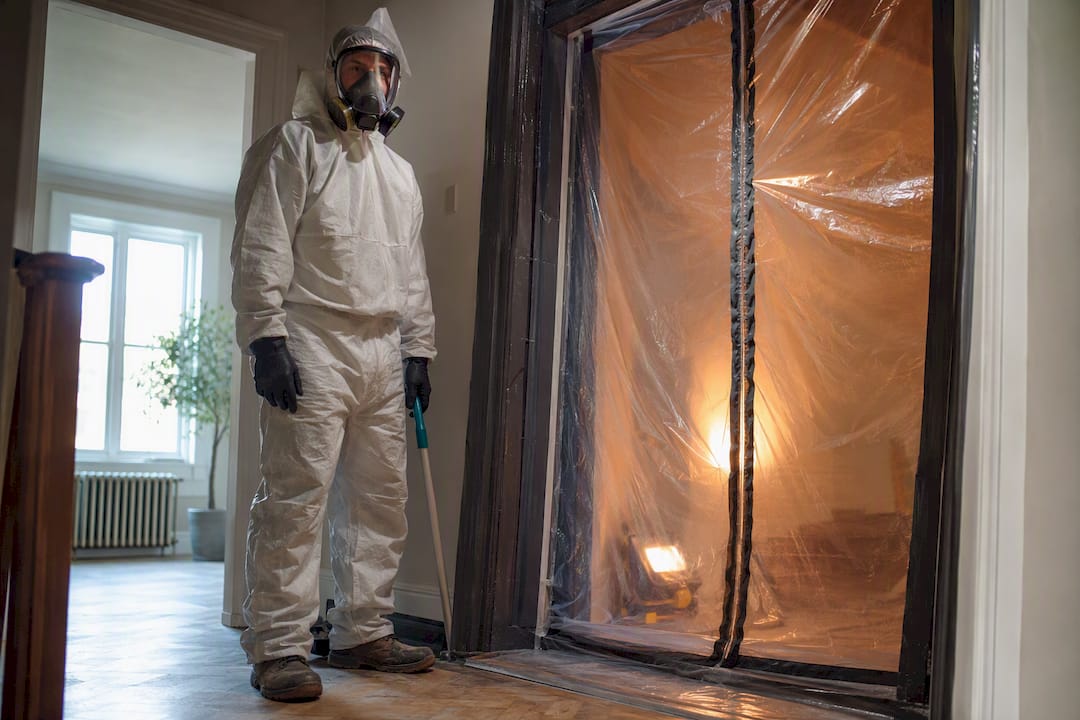
If you suspect asbestos anywhere in a renovation area, stop work immediately and don’t touch the material again. Cordon off the space, shut down the HVAC system if possible, and arrange a professional survey with lab testing before anyone lifts a hammer. If the lab confirms asbestos, hire a licensed abatement contractor. DIY removal is not an option here.
TL;DR:
- Laboratory testing is essential to confirm asbestos presence, as visual identification is unreliable and fibres can remain hidden until disturbed.
- Suspect materials include insulation, textured ceilings, vinyl tiles, pipe insulation, and old drywall compounds, especially in homes built before 1990.
- Early planning should include a professional survey, clear scope, containment measures, and proper contractor licensing before starting any renovation work.
- Only licensed abatement contractors should handle removal of friable materials, with clearance testing required before re-occupying the space.
- Delays in lab results protect long-term health; maintaining sealed containment and avoiding disturbance minimizes fiber release during testing.
Table of Contents
- Recognising materials that might contain asbestos
- Your pre-renovation checklist: testing, notification and planning
- Managing asbestos on site: containment and safe work practices
- When you need a licensed abatement contractor
- What happens after removal: clearance and paperwork
- Why the health risk is real even when exposure feels minor
- How HMJ Contracting handles an asbestos-affected renovation
- A safety-first reminder
- Get your renovation assessed before you touch a wall
- Where to check the rules and the science yourself
- Sources
Recognising materials that might contain asbestos
Asbestos was mixed into hundreds of building products in Canada until the early 1990s, and it still turns up in homes built or renovated decades before that. You can’t tell asbestos apart from a harmless material by looking at it. Fibres are microscopic, and manufacturers rarely labelled the product for what it was.
The most common places it hides in a residential renovation include:
- Vermiculite attic insulation, especially the loose, pebble-like grey or gold material poured between joists
- Textured ceilings and sprayed-on coatings, sometimes called “popcorn ceilings”
- Vinyl floor tiles and the black mastic adhesive underneath them
- Pipe and duct wrap insulation in basements and mechanical rooms
- Old joint compound and drywall taping mud
Because visual identification is unreliable, only a laboratory analysis of a physical sample can confirm what you’re dealing with. A material can look perfectly intact and still shed fibres once it’s cut, sanded, or pulled apart.
A few practical clues should raise your suspicion level before you even call anyone: the house was built or last renovated before 1990, you have no paper trail showing prior asbestos removal, or the finishes in question are visibly cracking, crumbling, or flaking. None of that confirms asbestos, but it’s exactly the situation where you should get a professional inspection before renovating.
Your pre-renovation checklist: testing, notification and planning
A renovation on an older property runs smoother when asbestos gets ruled in or out before the first wall comes down, not after. Work through this sequence:
- Stop and isolate. If you already suspect a material, halt work in that area, close doors, and turn off forced-air heating or cooling so fibres can’t travel through the ductwork.
- Order a survey and lab analysis. A qualified inspector collects samples from suspect materials and sends them to an accredited lab. A proper survey report identifies the material, its condition, and its friability, meaning how easily it crumbles and releases fibres.
- Brief your contractors early. Tell every trade bidding on the job that asbestos is suspected, and ask about their asbestos experience, licensing, and insurance coverage. Skipping this step is a common and costly mistake that leads to stop-work orders once a trade discovers the material mid-job.
- Get scope and contingency in writing. Your contract should spell out what happens if asbestos is confirmed, including who pays for abatement and how it affects the schedule.
- Check permits and provincial requirements, since notification and disposal rules vary by province and municipality.
- Budget extra time and money. Abatement, waste transport, and disposal fees can add real cost to a renovation, and it’s far cheaper to plan for that upfront than to absorb it as an emergency change order.
Managing asbestos on site: containment and safe work practices
When asbestos is confirmed but the project still needs the area disturbed, containment is what keeps fibres from spreading into the rest of the house. Crews typically build a sealed enclosure using polythene sheeting, run negative air machines to pull air out through a filtered exhaust, and set up a decontamination entry point so nobody tracks fibres out on their clothes or tools.
Work technique matters just as much as the enclosure. Standard controls include:
- Wetting materials before disturbance to keep fibres from becoming airborne
- Avoiding power sanding, dry scraping, or drilling on suspect materials
- Using hand tools instead of power tools wherever the job allows it
- Wearing respiratory protection rated for asbestos fibres and disposable coveralls
- Following a decontamination procedure before leaving the containment zone
These are the same core controls provincial safety authorities and federal guidance repeatedly point to.
Not every situation calls for full removal. If a material is in good condition and won’t be disturbed by the renovation, encapsulation, meaning sealing it in place, can sometimes be the safer and less costly route. Professionals note that removal itself can occasionally be more hazardous than leaving intact material undisturbed, which is exactly why this decision belongs to a licensed contractor, not a homeowner working from a forum post.
Pro Tip: If vermiculite insulation is suspected in your attic, don’t go up there to check for yourself. Health Canada’s guidance is to seal the attic access, avoid storing anything up there, and leave the material undisturbed until it’s tested.
When you need a licensed abatement contractor
Some situations always call for a licensed abatement contractor rather than a general renovation crew: friable materials that crumble under light pressure, any insulation product suspected of containing asbestos, textured or sprayed ceiling coatings, or a scope of work that will disturb a large surface area.
Before signing anything, ask to see:
- The survey report identifying the material and its condition
- A written abatement plan describing containment and removal method
- Proof of licensing and liability insurance
- References from comparable residential jobs
- A clearance testing plan for after the work is done
A complete quote should itemize the containment setup, negative air equipment, PPE, waste disposal consignment notes, and independent clearance air testing, not bundle them into a vague lump sum.
What happens after removal: clearance and paperwork
A finished abatement job isn’t done until it’s been checked and documented. Before anyone moves back into the space, an independent inspector should perform a visual check and collect clearance air samples to confirm fibre levels are back to acceptable background levels.
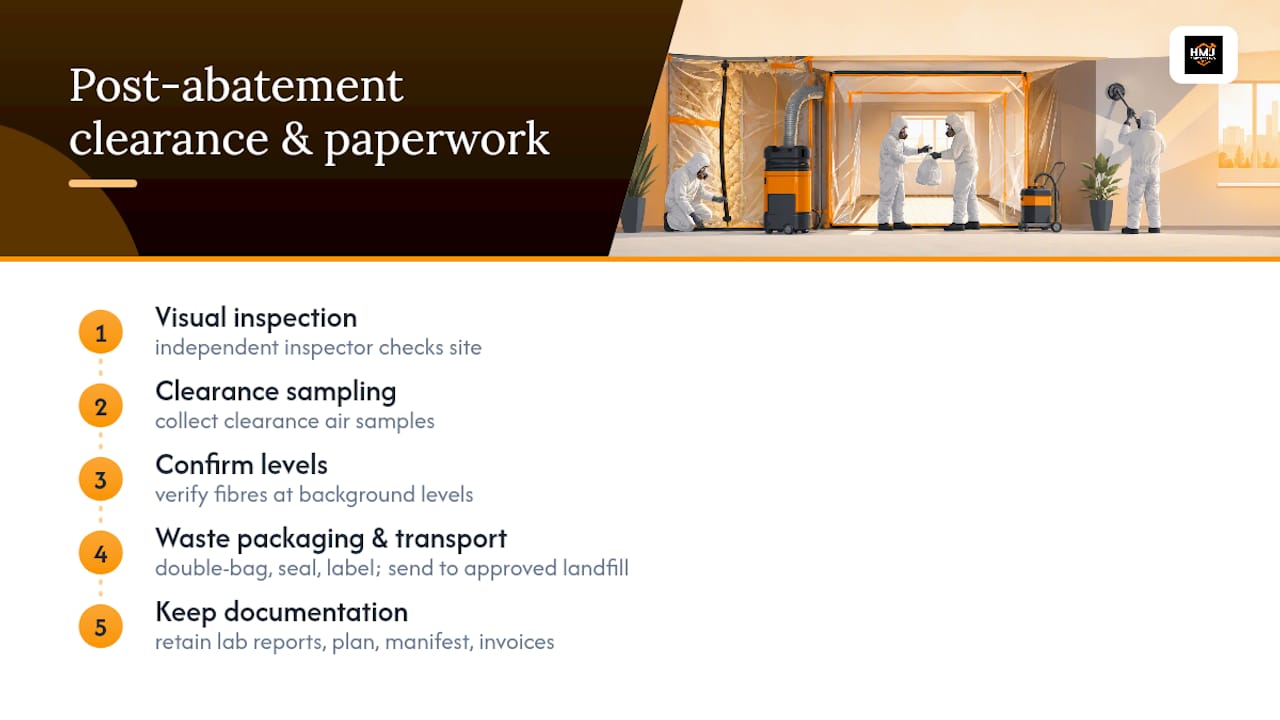
Asbestos waste itself has to be double bagged, sealed, and labelled before it ever leaves the property, then transported to a landfill approved to accept it. Keep the paper trail: lab reports, the written abatement plan, waste consignment or manifest records, and contractor invoices. If you ever sell the property or file an insurance claim, this documentation is what proves the work was done properly.
Why the health risk is real even when exposure feels minor
Asbestos is a recognized carcinogen, and there’s no dose considered fully safe. Diseases linked to exposure, including mesothelioma and lung cancer, often take 10 to 40 years to appear after the fibres were inhaled, which is part of why so many homeowners underestimate the stakes of a single weekend of demolition.
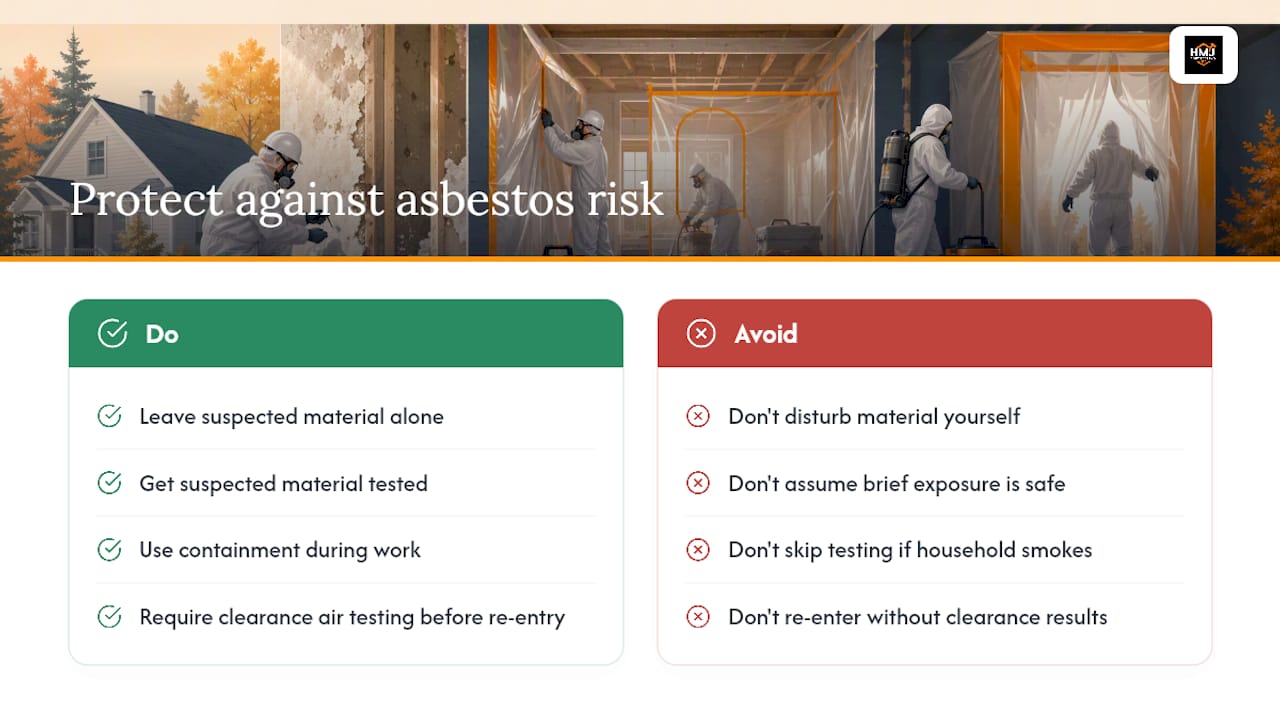
A brief, one-time exposure during a renovation generally carries lower risk than years of daily occupational exposure, but it isn’t zero. Cumulative exposure raises cancer risk, and that risk climbs substantially further for people who smoke. The practical takeaway doesn’t change based on how small the job looks: leave suspected material alone, get it tested, and let containment and clearance testing confirm the air is actually clean before you or your family breathe it again.
How HMJ Contracting handles an asbestos-affected renovation
Hmjcontracting runs every abatement job the same way: survey, written abatement plan, sealed containment, wet removal methods, then independent clearance testing before any documentation is handed over. Hmjcontracting backs that process with itemized quotes, so homeowners see exactly what they’re paying for before work starts.
A safety-first reminder
The biggest mistake homeowners make isn’t fear of asbestos. It’s impatience with the testing timeline. Waiting a few days for lab results feels slow when you want your kitchen torn out this weekend, but that delay is what protects your family’s air for decades.
While you wait, do one thing: keep the room sealed off and stay out of it. That single habit prevents more accidental exposure than almost anything else.
— Jason
Get your renovation assessed before you touch a wall
This service is a direct alternative to piecing together a survey company, an abatement crew, and a renovation contractor separately, since homeowners get inspection coordination, licensed abatement, clearance testing, and the renovation itself handled by one accountable team.

To speed up your quote, have the property’s age, the suspected material and its location, a few photos, and your planned scope of work ready when you call. Quotes are itemized, so you see the containment plan, PPE, disposal, and testing costs broken out rather than folded into one number. If mould is also a concern in the same space, Hmjcontracting’s mould remediation services cover that separately. Start with the asbestos abatement and renovation page to request a quote.
Where to check the rules and the science yourself
For the regulatory and health details behind this guide, go straight to the source. Health Canada covers exposure risk and renovation guidance, WorkSafeBC details demolition and renovation hazards, CCOHS explains home safety controls, and the National Cancer Institute covers long-term health effects. Always confirm licensing and disposal rules with your own province before starting work.
This article is general information, not a substitute for advice from a qualified doctor. Consult a qualified healthcare professional about your own circumstances before acting on anything here.
Sources
- Health risks of asbestos — Health Canada
- Asbestos hazards in demolition, renovation and salvage — WorkSafeBC
- Asbestos Exposure and Cancer Risk Fact Sheet — National Cancer Institute (NCI)
- Offermans et al., cohort study on asbestos and cancer risk — PubMed
- Asbestos in the home — CCOHS