

Selective demolition cuts landfill waste, recovers materials with resale value, and lowers total rebuild costs by removing only what a project needs. It also keeps disruption contained so occupants can often stay put during work. The trade-off: it demands more planning and more labour hours per square foot than knocking a structure down whole.
TL;DR:
- Selective demolition is more labor-intensive and slower than full demolition, requiring detailed planning, sequencing, and on-site material separation.
- The environmental benefits depend on effective reuse logistics, local salvage markets, and minimized transportation, which can lower a project’s carbon footprint.
- Cost savings often come from reduced landfill disposal and less new material buy-in, especially if high-value materials like steel or hardwood are salvaged for resale.
- Proper assessment for hazards and structural integrity is essential before specifying selective demolition to avoid safety risks and project delays.
- Coordinating abatement, demolition, and renovation under one contractor improves safety, efficiency, and clarity in scope, making bid comparisons more accurate.
Table of Contents
- What is selective demolition, and how does it differ from full demolition?
- Environmental benefits and what the lifecycle data actually shows
- How selective demolition changes your budget
- Operational advantages: safety, occupancy, and preserving what’s worth keeping
- When selective demolition isn’t the right call
- A practical checklist before you specify selective demolition
- How experienced contractors manage abatement, sequencing, and paperwork
- When to require selective demolition in your procurement documents
- Why Hmjcontracting is built for selective demolition and abatement work
- Sources
- FAQ
What is selective demolition, and how does it differ from full demolition?
Selective demolition means removing specific building components, finishes, or systems while protecting the structure and everything around it. Contractors sometimes call it soft strip demolition, particularly when the scope covers drywall, fixtures, and finishes ahead of a renovation rather than a full teardown.
Full demolition clears a structure entirely, usually with heavy equipment and a compressed timeline. Deconstruction goes further than selective demolition by disassembling a building piece by piece specifically to maximize material reuse, often with slower, more deliberate sequencing. A review of terminology in the field points out that these terms get used loosely across the industry, which causes real confusion in bid documents and scope letters.
Selective demolition tends to fit these scenarios best:
- Renovating one floor or wing while the rest of a building stays occupied
- Preserving a façade, structural frame, or heritage feature during a rebuild
- Removing hazardous materials in a contained area before broader work begins
- Salvaging high-value fixtures, hardwood, or steel cladding before a strip-out
Environmental benefits and what the lifecycle data actually shows
Selective demolition diverts more material from landfill than mechanical demolition because crews separate wood, metal, and fixtures for reuse rather than sending mixed debris straight to disposal. That separation is also what drives most of the lifecycle gains researchers have measured.
A study on global warming potential found that highly selective demolition strategies meaningfully reduce a project’s carbon footprint, largely by avoiding the emissions tied to manufacturing replacement materials.
A separate life-cycle assessment on façade steel cladding reuse found lower environmental impacts across several categories when cladding was selectively recovered rather than demolished and replaced. The same study flagged an important nuance: because selective work runs longer on-site, machine-hours and transport trips can push certain impact categories up, not down.
That means the environmental case isn’t automatic. It depends on:
- Whether local markets exist to absorb recovered materials
- How far salvaged components travel for reprocessing or resale
- Whether crews are equipped to separate materials efficiently on-site
Net benefit shows up most clearly when reuse logistics are planned before demolition starts, not improvised afterward.
How selective demolition changes your budget
Lower disposal volume and a narrower rebuild scope usually offset the higher labour cost of selective work, even though per-hour rates run higher than mechanical demolition. Fewer tonnes hauled to landfill means lower tipping fees, and preserving structural elements means less new material to purchase and install.
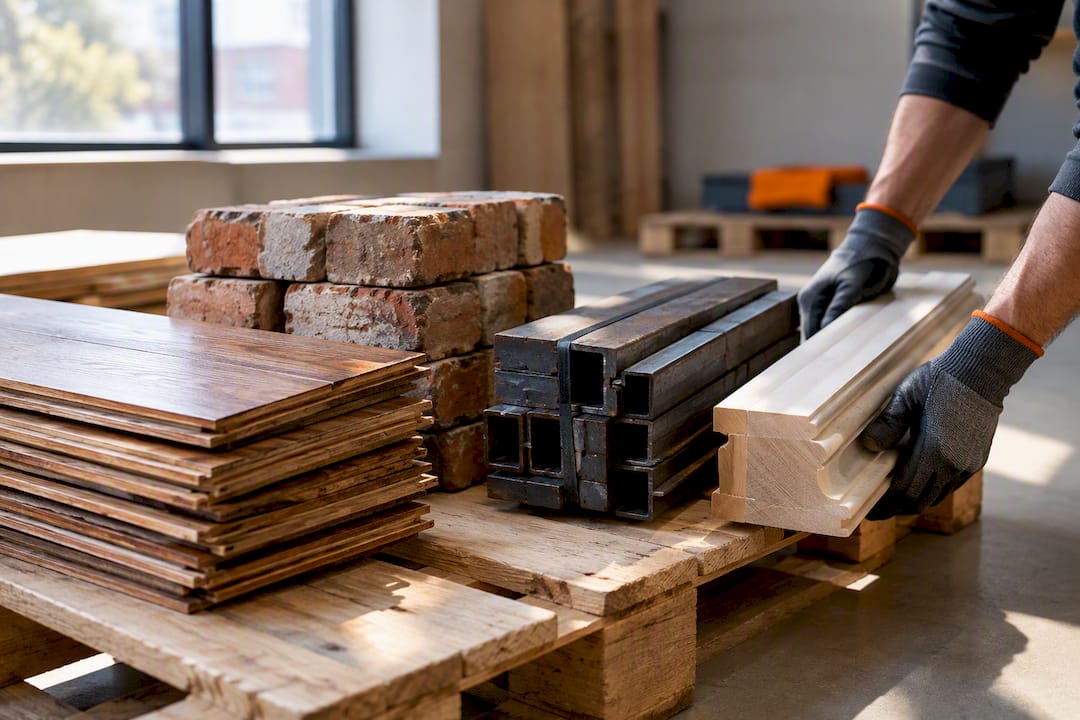
Salvage revenue can tip the economics further in your favour, but only for certain materials. Structural steel, hardwood flooring, brick, and architectural millwork often command real resale value. Drywall and standard framing rarely do.
An industry analysis on market sensitivity makes the point directly: selective demolition’s cost-effectiveness depends heavily on local salvage markets and regional labour rates, so a project that pencils out in one city might not in another.
When comparing bids, ask contractors to itemize:
- Disposal and haulage fees, separated from labour
- Salvage handling and on-site storage costs
- Any credit or revenue projection tied to recovered materials
A bid that bundles these into one lump sum hides where your actual savings, or extra costs, are coming from.
Operational advantages: safety, occupancy, and preserving what’s worth keeping
- Reduced dust and noise exposure. Selective demolition confines disruption to a work zone, which keeps airborne particulate and noise away from occupied areas of a building.
- Continued occupancy. Because work stays contained, tenants or homeowners can often remain in unaffected parts of a property while a kitchen remodel adds real home value during bathroom, kitchen, or single floor strip-outs.
- Feature preservation. Careful removal protects façades, original hardwood, trim, and fixtures that would be destroyed outright in a full teardown, and lets a contractor salvage them for reuse or resale.
- Fewer disruptive truck movements. Staged material handling and sorted debris mean fewer loads leaving site compared with the constant hauling a full demolition generates.
The reverse-assembly logic behind most selective demolition sequencing, removing what went in last, first, is what makes both the occupancy protection and the feature preservation possible. It’s slower than swinging a wrecking ball through a wall, but it’s the only way to pull a component out intact.
When selective demolition isn’t the right call
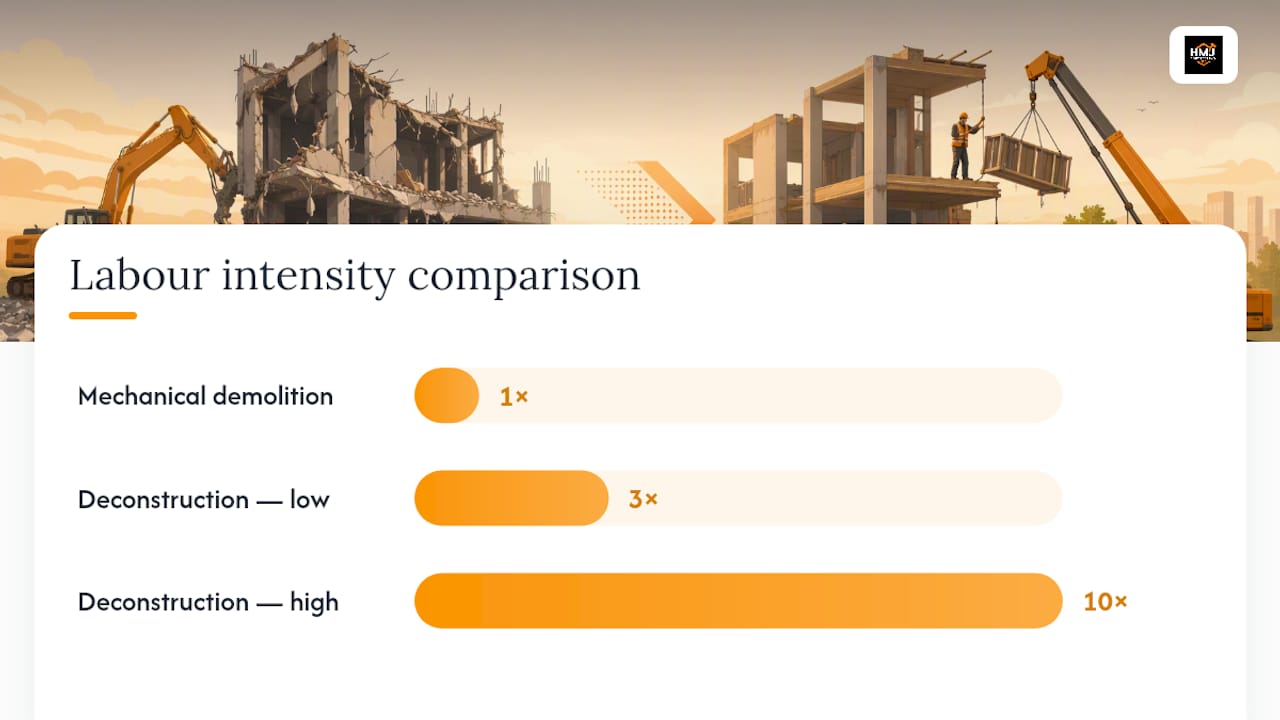
Selective demolition asks more of a project upfront. Structural reviews, sequencing plans, and field verification all take time before a single wall comes down, and the work itself is more labour intensive and tool dependent than mechanical demolition. Some estimates put deconstruction labour hours at 3 to 10 times higher per material volume than straight mechanical demolition, though salvage value can close that gap when conditions are favourable.
A few conditions tip the scale toward full demolition instead:
- Contamination spread throughout the structure rather than contained to one area
- Structural damage severe enough that partial removal creates safety risk
- A local market with no real demand for the materials you’d recover
- A timeline too tight to accommodate slower, staged removal
Pro Tip: Write contingency language into the contract for discovered conditions. Hidden contamination or structural surprises are common enough that a fixed scope without a change order process almost always leads to disputes.
A practical checklist before you specify selective demolition
- Order structural and hazardous-material surveys first. A structural review tells you what can safely stay standing, and testing for asbestos, lead, or mould tells you whether an abatement plan needs to run before demolition starts.
- Map your salvage strategy before crews arrive. Identify which components have resale or reuse value, then plan on-site storage and transport so recovered materials don’t sit exposed to weather or damage.
- Build waste-diversion targets into the contract. Specify a diversion percentage, require documentation of what gets reused versus landfilled, and set a process for handling conditions discovered mid-project.
- Budget for permit amendments. Field conditions often differ from what a permit application assumed, and a contingency line for amended permits saves a schedule from stalling later.
Pro Tip: Ask for a written sequencing plan, not just a scope of work. A contractor who can explain the removal order for each component is the one who’s actually thought through the salvage logistics, not just the demolition.
How experienced contractors manage abatement, sequencing, and paperwork
Selective demolition only delivers on its promise when the crew running it treats hazardous-material work and documentation as seriously as the demolition itself. This approach pairs licensed abatement, for asbestos, lead, and mould, with the demolition and renovation scope under one contract, rather than splitting it across separate trades that don’t coordinate schedules.
Coordinating abatement, demolition, and renovation under a single contractor removes the handoff risk that comes from managing three separate crews on three separate timelines, and it means one team is accountable for both the health-and-safety compliance and the final rebuild.
Every quote is itemized line by line, so property owners can see disposal, labour, and salvage handling costs separately rather than guessing what’s bundled into a lump sum.
When to require selective demolition in your procurement documents
If you’re writing the scope for a bid, name your terms explicitly. Don’t write “demolition” when you mean selective removal with salvage targets. Set a realistic diversion percentage based on what your local market can actually absorb, and align your schedule with reuse logistics rather than assuming salvage happens for free on the side.
The biggest procurement mistake I see is treating “selective demolition” as a synonym for “careful demolition” without defining what gets kept, what gets sold, and what gets documented. Contracts that specify this upfront avoid the disputes that come from mismatched expectations later.
— Jason
Why Hmjcontracting is built for selective demolition and abatement work
Most contractors treat demolition and abatement as separate jobs handed to separate crews, which is exactly where schedules slip and costs balloon. The contractor runs licensed abatement, selective demolition, and the renovation that follows it as one coordinated scope, with itemized quotes so you see disposal, labour, and salvage costs broken out rather than buried in a lump sum.

That matters most in older Ottawa-area properties, where asbestos, lead, or mould testing often needs to happen before a single wall comes down. If your project involves a single-room strip-out or a full interior strip-out, request an itemized estimate that separates demolition, abatement, and disposal so you can compare it against any other bid line by line.
Sources
- Study showing reduced global warming potential through selective demolition (ScienceDirect, 2025)
- Environmental benefits of applying selective demolition to buildings: reuse of façade steel cladding (Resources, Conservation & Recycling, 2022)
- Deconstruction, disassembly, or selective demolition: a review of terminology and conceptual challenges (Buildings, MDPI)
- Industry analysis on economic sensitivity of selective demolition to market conditions (RWTH Aachen publication)
FAQ
What is considered selective demolition?
Selective demolition is the removal of specific building components, finishes, or systems while the surrounding structure stays intact and protected. It’s used when a project needs to preserve part of a building, recover materials for reuse, or keep other areas occupied during work, and it typically requires more detailed sequencing than a full teardown.
What are the three types of demolition?
Most contractors group demolition into full demolition (complete structural removal), selective demolition (targeted removal of specific elements), and deconstruction (systematic disassembly aimed at maximizing material reuse). The terminology review notes these terms often overlap in practice, which is why clear scope language in a contract matters.
What should a demolition plan include?
A demolition plan should cover structural assessment findings, hazardous-material test results and any required abatement steps, a sequencing plan for removal order, salvage and waste-diversion targets, and contingency provisions for conditions discovered once work begins. Hmjcontracting builds these elements into its demolition scopes alongside itemized cost breakdowns.
What are demolition expenses?
Demolition expenses typically include labour, disposal and haulage fees, equipment costs, and, for selective work, salvage handling and storage. Selective demolition often carries higher labour costs per hour than mechanical demolition, but lower disposal volume and reduced rebuild scope frequently offset that difference over the full project budget.