
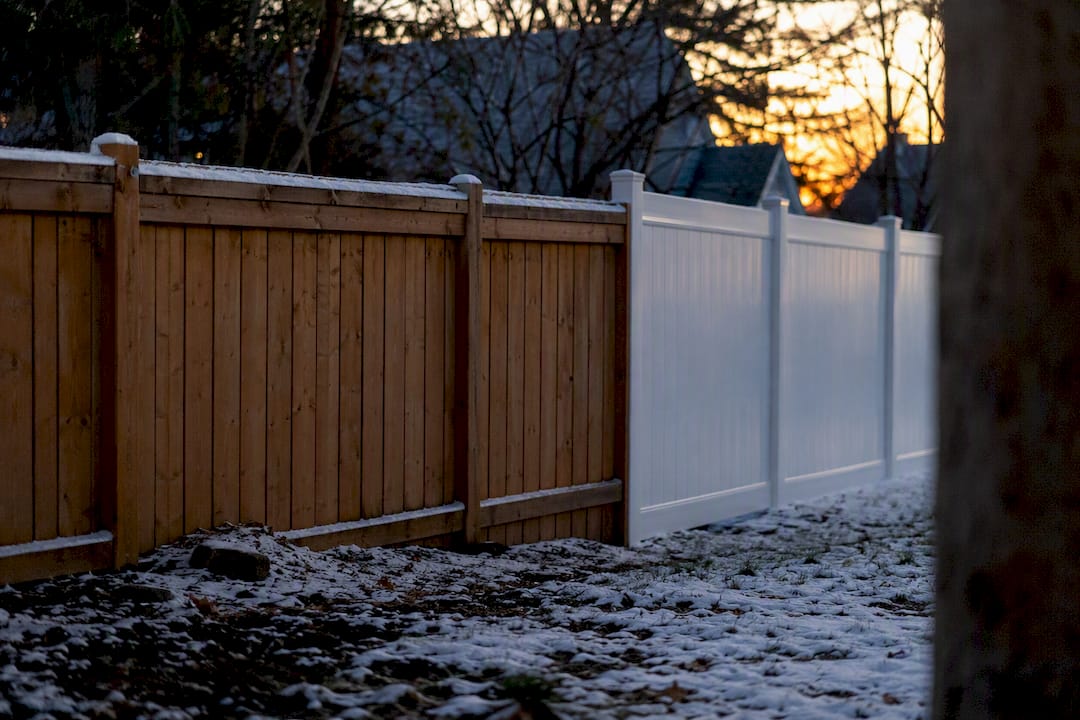
Vinyl fencing generally wins on long-term durability and low maintenance, often lasting 25 to 40 years with almost no upkeep. Wood, particularly cedar, costs less upfront and gives you a natural look, but it needs regular staining and sealing to hit even 15 to 30 years. If you live somewhere winters bite hard, the trade-off shifts again: cheap vinyl can turn brittle in extreme cold, so grade matters as much as the material itself.
TL;DR:
- Vinyl fences generally last 25 to 40 years with minimal upkeep, but can become brittle and crack in extreme cold if not properly rated.
- Wooden fences, especially cedar, typically endure 15 to 30 years, but require sealing or staining every 3 to 5 years to prevent rot and insect damage.
- Vinyl installation costs are higher upfront, but maintenance savings over 10 to 20 years often make it more economical long-term in climates with harsh winters.
- Proper installation, including frost line depth and quality materials, is critical to fence longevity, regardless of material choice.
- Environmentally, wood is biodegradable and renewable, while vinyl persists in landfills, though vinyl often needs less chemical treatment during its lifespan.
Table of Contents
- Vinyl vs wood fence: quick comparison at a glance
- Wood fencing: species, behaviour, and when it makes sense
- Vinyl fencing: construction, grades, and cold-weather performance
- How long does each fence actually last, and where do they fail?
- Vinyl fence vs wood cost: what 10 and 20 years actually look like
- What maintenance actually looks like for each material
- Choosing the right material for your climate
- How to pick between vinyl and wood: a decision framework
- Which fence is better for the environment?
- Which fence looks better and offers more customization?
- Does vinyl or wood fencing affect resale value more?
- Are there health or safety concerns with either material?
- What I’ve learned from years of fence and deck installs
- Get your fence installed right the first time
- Sources
Vinyl vs wood fence: quick comparison at a glance
Before you commit to either material, here’s how they stack up across the factors that actually affect your wallet and your weekends.
- Lifespan: Vinyl generally outlasts wood, with premium products reaching 25 to 40 years against cedar’s 15 to 30 years.
- Upfront cost: Wood wins here, with cedar typically running less per linear foot than vinyl.
- Maintenance: Vinyl needs occasional washing; wood needs staining or sealing every 3 to 5 years.
- Repairability: Wood is easier to patch, since you replace one board. Vinyl usually means swapping a whole panel.
- Appearance: Wood offers natural grain and custom stains; vinyl offers colour consistency and zero fading maintenance, though it can’t fully mimic real wood texture.
- Weak spot for vinyl: Panel matching after a few years, plus brittleness in extreme cold snaps.
- Weak spot for wood: Rot, insect damage, and the recurring labour cost of sealing.
Choose vinyl if you hate staining weekends. Choose wood if you want the lowest possible install cost and don’t mind the upkeep.
Wood fencing: species, behaviour, and when it makes sense
Wood fences come down to three common choices: cedar, pressure-treated pine, and occasionally redwood where it’s available. Cedar is the preferred choice for durability because its natural oils resist rot and repel insects better than most softwoods, a property that also makes cedar a durable choice for roofing in wet climates. Pressure-treated pine costs less but relies entirely on the chemical treatment to fend off decay, which means any cut or drilled surface needs resealing to stay protected.
Wood is porous. That’s the whole story behind most of its problems. Moisture gets into the grain, freezes, expands, and slowly breaks the fibres apart, which is why untreated or poorly maintained wood degrades faster in freeze-thaw regions. Sealing and staining slow that process by keeping water out of the surface layer.
Installation matters just as much as species selection. Posts need to sit below your region’s frost line, not just deep enough to feel sturdy, and concrete footings with proper drainage reduce the frost heave that gradually tilts a fence line over a few winters. Avoid direct soil contact where possible, or use pressure-treated posts rated for ground burial.
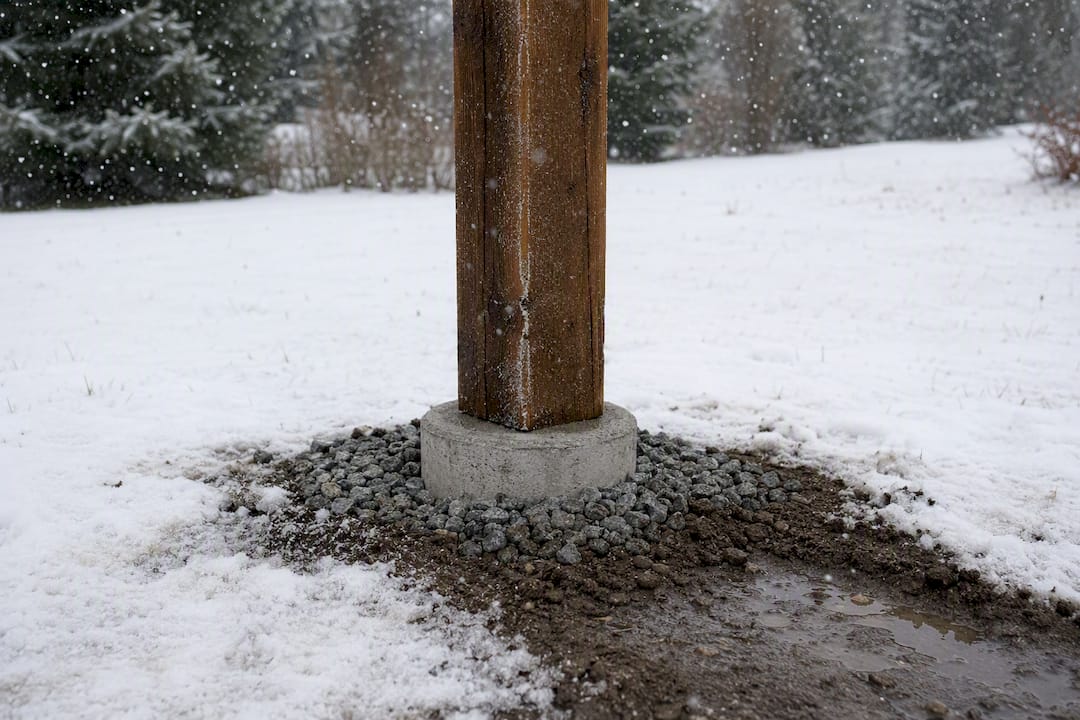
Wood is the right call when your budget is tight, you want that natural grain look, or you’re planning a custom horizontal-slat design that vinyl simply can’t replicate as convincingly.
Vinyl fencing: construction, grades, and cold-weather performance
Vinyl fencing is extruded PVC, and posts and rails are typically hollow to keep weight and material costs down. That hollow structure is fine for most applications, but wall thickness is where quality diverges sharply. Cheap vinyl without UV inhibitors or impact modifiers can yellow and turn brittle within a decade, especially in cold climates where the plastic loses flexibility. Contractor-grade vinyl uses thicker walls and cold-rated additives specifically to avoid that failure.
Repairs work differently than with wood. A cracked picket usually means replacing the entire panel rather than a single board, so it’s worth keeping spare panels from the same production batch when you install, since colour matching years later gets difficult.
Vinyl is the better pick when you’re planning to own the property long enough to amortize the higher install cost, when you’d rather never touch a paintbrush again, or when your site tends to stay damp, since PVC doesn’t rot the way wood does in humid, shaded yards.
How long does each fence actually last, and where do they fail?
Lifespan numbers only tell half the story. What matters more is how each material fails, because that tells you what to watch for on your own property.
Cedar typically lasts 15 to 30 years with regular sealing, though skipping maintenance for even a few years in a wet climate can cut that range significantly. Pressure-treated pine often falls at the shorter end unless it’s resealed consistently, since the chemical treatment fades faster than cedar’s natural oils. High-quality vinyl reaches 25 to 40 years with essentially no upkeep beyond occasional cleaning.
The failure modes are almost opposite. Wood fails through rot at the base, warping across panels exposed to sun on one side and shade on the other, and insect tunnelling that hollows out posts from the inside before you notice anything wrong. Vinyl fails through cracking and brittleness, usually triggered by an impact (a snowblower, a dropped branch) during extreme cold rather than gradual decay.
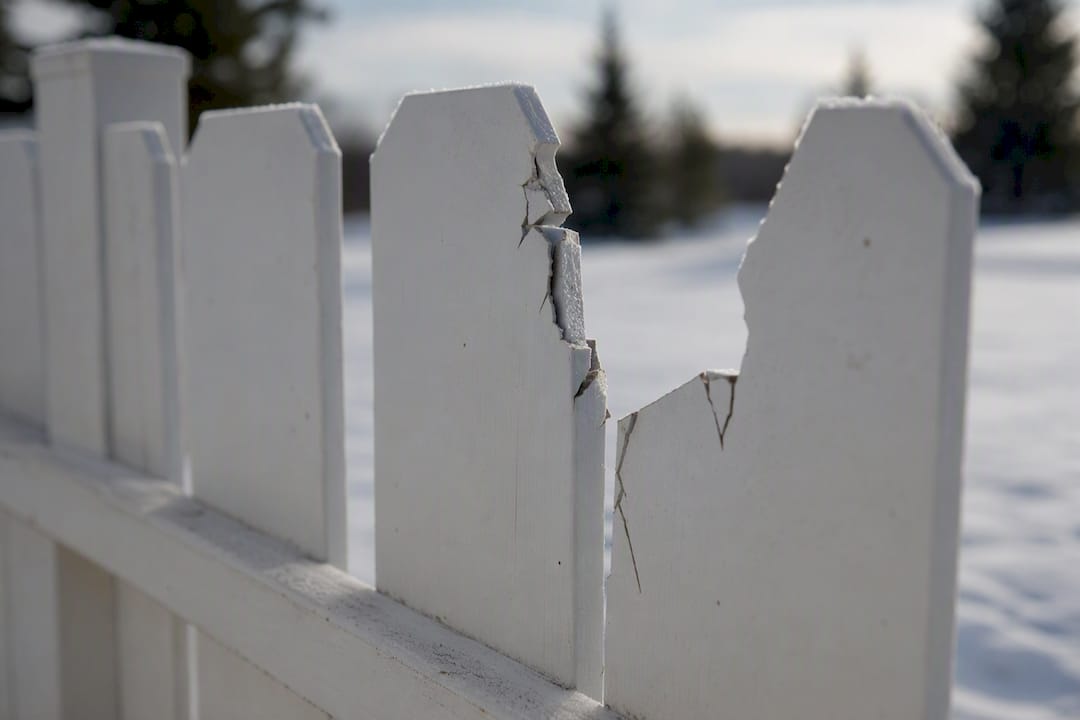
That distinction points to a real regional threshold. In areas that regularly see temperatures drop below about −30°C, lower-grade vinyl can become brittle enough to crack on impact. If you’re in that kind of climate, ask your contractor specifically for vinyl rated with impact modifiers for low-temperature performance, and get the manufacturer’s cold-weather documentation in writing rather than taking a verbal assurance.
Vinyl fence vs wood cost: what 10 and 20 years actually look like
Installed pricing gives you the first data point. Cedar typically runs $20 to $35 per linear foot installed, while vinyl runs $25 to $45 per linear foot, so wood almost always wins on day one.
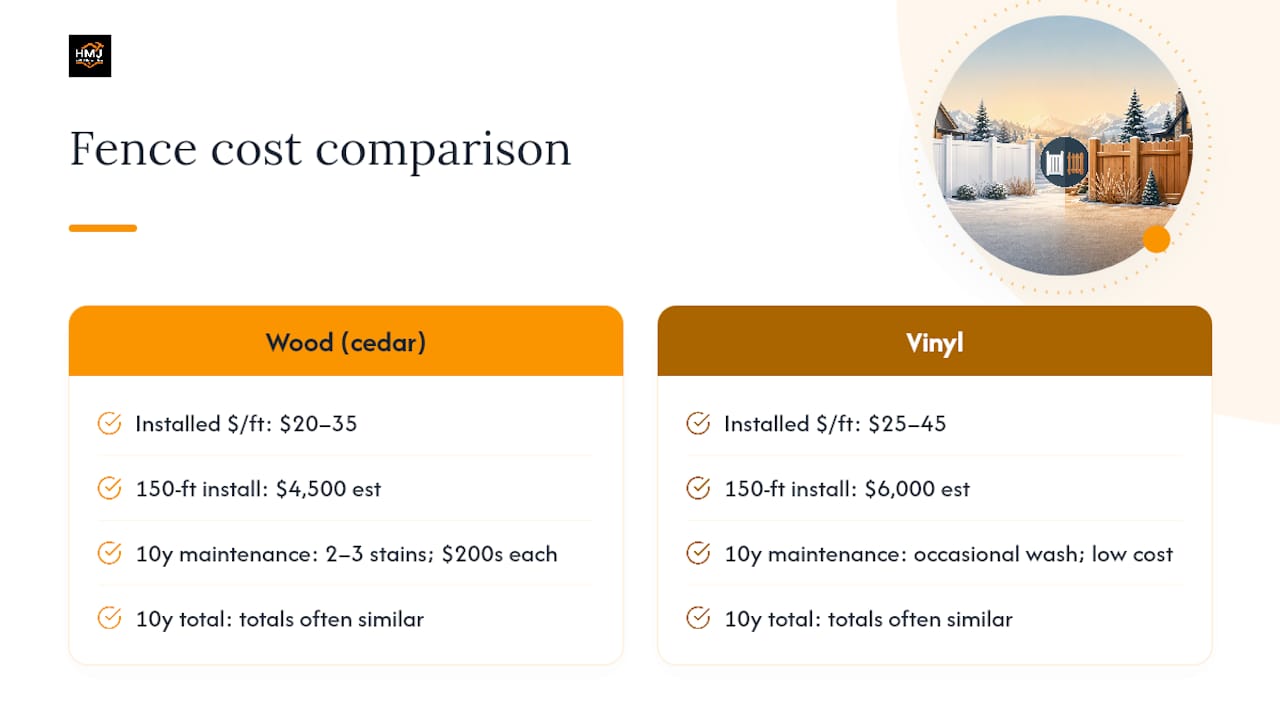
The picture changes once you factor in upkeep. Wood needs staining or sealing every 3 to 5 years, and each round of labour and material adds up over a decade. Run a rough 150-foot fence line as an example: cedar installed might land around $4,500, plus two or three maintenance cycles at a few hundred dollars each over ten years. Vinyl installed at the same length might run closer to $6,000, but with only occasional washing required.
Over a 10-year window, the totals often land close to each other. Vinyl’s higher entry price gets offset by wood’s recurring maintenance bill. Push the timeline to 20 years, though, and vinyl tends to pull ahead financially, since wood’s maintenance costs keep accumulating while vinyl’s stay flat. That’s also roughly when a wood fence built with untreated posts or inconsistent sealing starts needing partial replacement, which resets the cost comparison entirely.
Two variables swing this math more than anything else: local labour rates for staining, and how disciplined you actually are about sticking to the maintenance schedule. Skip a sealing cycle or two and wood’s lifetime cost climbs fast, since deferred maintenance on wood compounds. If you know yourself well enough to admit the staining won’t happen on schedule, that’s a real point in vinyl’s favour, not just a hypothetical.
Pro Tip: Ask your installer for the manufacturer’s cold-temperature warranty documentation on vinyl before you sign anything. A verbal promise about cold performance means nothing if the panel cracks in February.
What maintenance actually looks like for each material
Wood care follows a predictable rhythm. Stain or seal every 3 to 5 years, and walk the fence line annually checking for soft spots at the base of posts, since that’s where rot starts and where it’s easiest to catch early.
Vinyl maintenance is lighter but not zero. Algae and mildew can build up on shaded sections, especially near sprinklers or dense landscaping, and a simple wash with soap and water usually clears it.
- Wood: inspect posts annually, reseal every 3 to 5 years, replace individual boards as they crack or rot.
- Vinyl: wash annually or as needed, inspect panels after major storms, replace full panels when cracked.
- Small wood repairs (one board) are simple and cheap; vinyl repairs mean matching and swapping an entire panel, which gets harder as your fence ages and the exact colour becomes discontinued.
Call a professional when you see rotting posts at ground level, any sign of mould near the fence line that might indicate a broader moisture problem, or a fence that’s visibly leaning, since that often points to a failed footing rather than something you can shore up yourself.
Choosing the right material for your climate
Freeze-thaw cycles are the single biggest climate variable in this decision. Repeated freezing and thawing pushes moisture into wood grain and heaves improperly set posts out of the ground over several winters, regardless of material.
For vinyl in colder regions, specify thicker-walled, cold-rated product with tested impact modifiers, and ask your contractor for the manufacturer’s documentation on low-temperature performance rather than accepting “it’s rated for Canadian winters” as an answer. For wood, insist that posts go below your local frost line, sit on concrete footings with proper drainage, and use pressure-treated or naturally rot-resistant species anywhere the post touches soil.
Site conditions add another layer. Coastal properties dealing with salt spray should ask about corrosion-resistant hardware regardless of fence material. Heavy snowdrift areas benefit from slightly deeper post spacing and reinforced footings, and tighter post spacing with concrete footings improves wind rating for hollow vinyl posts that would otherwise flex or lift in sustained gusts.
How to pick between vinyl and wood: a decision framework
Match the material to how long you’re actually staying, not just what looks best in the driveway right now.
- If you’re staying under 7 to 10 years: wood’s lower upfront cost is usually the rational pick, since you won’t be around long enough for vinyl’s maintenance savings to pay off the price gap.
- If you’re staying long-term or want to never think about the fence again: vinyl’s lifetime cost usually wins, especially in a climate where staining is a real annual chore.
- Ask every installer these questions: What’s the wall thickness on this vinyl? Does it carry a cold-temperature warranty? What depth are posts set to relative to the local frost line? What wood species and treatment level am I getting?
- Watch for red flags in quotes: no stated post depth, a vague or unwritten warranty, or vinyl described only as “heavy-duty” without a wall-thickness spec.
- Before the contractor visit: measure your fence line, note any slope or drainage issues, and decide your ownership horizon so you can push back on a recommendation that doesn’t match your timeline.
Which fence is better for the environment?
Wood is biodegradable and comes from a renewable resource, which gives it a clear edge at end of life. A cedar fence that’s reached the end of its service life breaks down naturally, and off-cuts from installation can often be chipped or composted rather than landfilled.
Vinyl doesn’t biodegrade. PVC can persist for generations in a landfill, and while some vinyl fencing is technically recyclable, actual recycling infrastructure for post-consumer PVC fencing is limited in most municipalities, so most old vinyl panels end up disposed of rather than reprocessed.
The trade-off runs the other direction on the manufacturing and lifecycle side. Wood requires harvesting, and even sustainably sourced cedar has a forestry footprint, plus the repeated production and transport of stain and sealant over decades adds up. Vinyl’s manufacturing footprint is concentrated at the front end, and because it lasts longer and needs no chemical treatments over its life, its ongoing environmental cost after installation is close to zero.
Neither material is a clean win environmentally. If biodegradability and end-of-life impact weigh heavily on your decision, wood is the more defensible choice, particularly if you source from a certified sustainable supplier. If you’re weighing total resource consumption over a 30-year span, including the sealants and stains wood requires, vinyl’s longer service life without chemical inputs closes the gap more than most homeowners expect.
Which fence looks better and offers more customization?
Wood gives you something vinyl still can’t fully replicate: real grain variation, the option to stain any colour you want, and the flexibility to build custom designs like horizontal slats, board-on-board, or shadowbox styles. That flexibility matters if your home’s architecture calls for something specific, since a custom wood design can be built to match almost any aesthetic vision.
Vinyl has closed the gap considerably on style options. Manufacturers now offer wood-grain textures embossed into the surface, multiple colours beyond the classic white, and picket, privacy, and semi-privacy styles that mimic wood’s silhouette closely enough that most passersby won’t clock the difference from the street. What vinyl doesn’t offer is the ability to change your mind later. Wood can be restained a different colour in an afternoon; vinyl’s colour is baked into the material and stays that way for the life of the fence.
For curb appeal specifically, both materials perform well when properly installed and matched to your home’s style. A crisp white vinyl privacy fence reads as clean and low-maintenance to potential buyers. A well-maintained cedar fence with a natural stain reads as warm and established. The bigger risk to curb appeal isn’t the material choice, it’s neglect: peeling paint or grey, weathered wood hurts appearance far more than picking vinyl over wood ever would.
Does vinyl or wood fencing affect resale value more?
Neither material category shows a dramatic difference in resale value on its own. What buyers and appraisers actually respond to is condition, not material type. A five-year-old wood fence that’s been sealed on schedule and shows no rot will read better to a buyer than a low-grade vinyl fence that’s already yellowing.
That said, the maintenance story matters to buyers even if they don’t articulate it that way. A vinyl fence signals to a prospective buyer that they’re not inheriting a recurring maintenance task, which can be a quiet point in its favour during a walkthrough. A wood fence signals character and a natural aesthetic that some buyers specifically want, particularly for period homes or properties where a natural look fits the landscaping.
The bigger resale risk sits with deferred maintenance rather than material choice itself. A leaning, rotting wood fence with visibly failed posts will cost you more in negotiated price reduction than the fence itself was worth to build, and a cracked or mismatched vinyl panel from an incomplete repair reads as neglect just as clearly. If you’re planning to sell within the next few years, whichever material you already have is usually worth repairing properly rather than replacing, since buyers respond far more to visible upkeep than to the underlying material.
Are there health or safety concerns with either material?
Pressure-treated wood is treated with chemical preservatives to resist rot and insects, and older stock built before the mid-2000s may have used arsenic-based compounds that are no longer permitted for residential use. Modern pressure-treated lumber uses different formulations, but it’s still worth wearing gloves and a dust mask when cutting or sanding it, and never burning offcuts, since the smoke concentrates whatever chemicals remain in the wood.
Vinyl fencing can off-gas a mild plastic smell when it’s brand new, particularly in direct summer sun, though this typically fades within the first few weeks and isn’t associated with significant health concerns for outdoor installations. The bigger safety consideration with vinyl shows up during removal of old, low-grade product that’s become brittle. Cracked PVC can leave sharp edges, and demolition or replacement work should follow standard site safety practices for fencing removal to avoid injury and to dispose of the material properly rather than leaving broken panels around a work site.
If you’re renovating an older property and discover a fence or adjacent structure with peeling paint that could be lead-based, or noticeable mould growth on wood posts buried against a damp foundation wall, that’s worth a proper assessment before you touch it yourself.
What I’ve learned from years of fence and deck installs
The single biggest mistake I see isn’t material choice, it’s installation shortcuts. Posts set too shallow, without concrete footings, or without accounting for the local frost line, will cause problems regardless of whether you went with cedar or vinyl. I’ve walked onto properties where a fence built five years ago is already leaning because the posts were set a foot too shallow to save an afternoon of digging.
The second mistake is buying vinyl on price alone. Cheap vinyl without proper wall thickness or cold additives looks identical to premium product in a showroom, and the difference only shows up after the first brutal cold snap cracks a panel. Ask for the spec sheet, not just the sample swatch.
My honest advice: budget for quality material and proper footings before you worry about colour or style. Everything else is easier to fix later.
— Jason
Get your fence installed right the first time
Hmjcontracting builds fences the way we’d want ours built: proper post depth below the frost line, cold-rated vinyl when the climate calls for it, and concrete footings that won’t heave after two winters. That’s the difference between a fence that needs attention every five years and one you forget about entirely.

Beyond deck and fence installation, our crews handle the situations a standard fencing company can’t. If pulling out an old fence or adjacent structure turns up rot, mould, or material that needs proper hazardous handling, we’re licensed for abatement work and mould remediation on the same property, so you’re not coordinating three separate contractors. Every quote is itemized, permits are handled, and the post-installation check is documented in writing. If your fence project is tangled up with a broader backyard or exterior renovation, our renovation services cover that too. Request a free, itemized quote and get a straight answer on which material and grade actually fits your property before you commit to anything.
Sources
- Wood vs Vinyl Fence: Which Lasts Longer in Canadian Winters? | Lean On Me
- Vinyl Fence: Types, Styles, Durability & What to Expect in 2026 | FenceAdvisors
- Wood vs Vinyl Fence: The Ultimate Buying Guide | Lowe’s