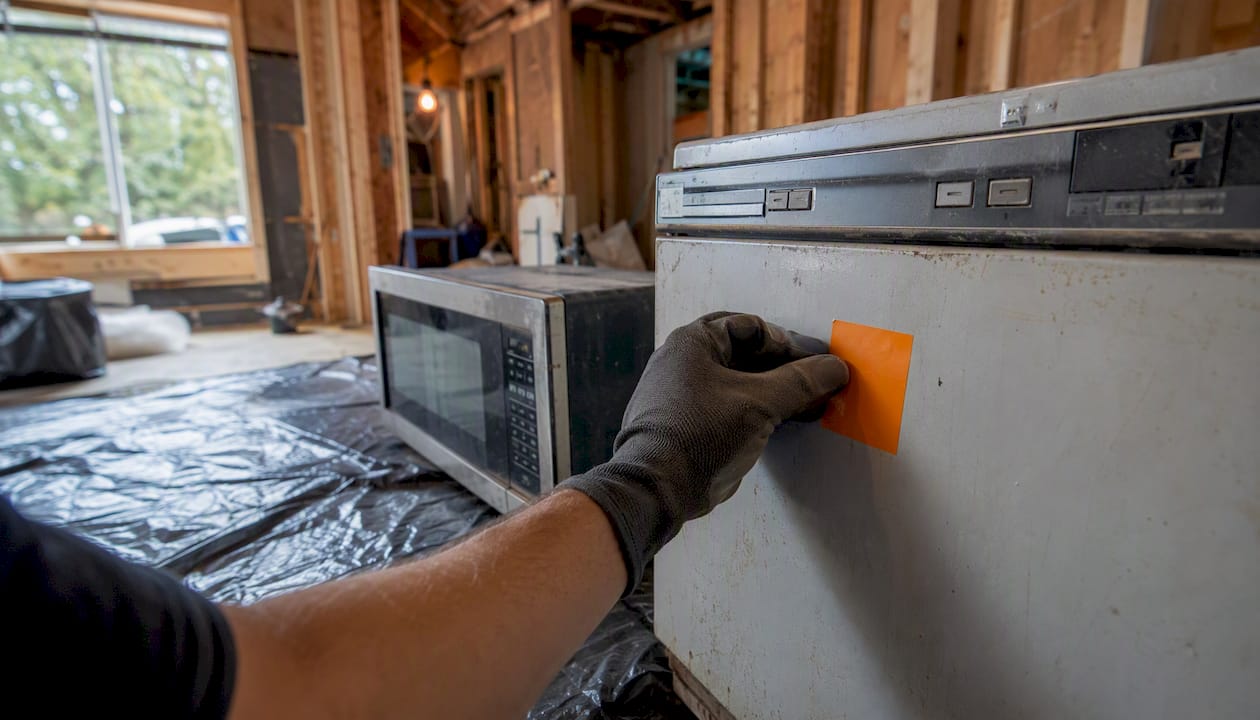
Electronics and appliances uncovered during a renovation or demolition are regulated hazardous waste under Ontario law. Stop work on the item, isolate it from general debris, and arrange licensed removal before anything else.
Here is what that means in practice:
- Identify and isolate immediately. Any CRT television, refrigerator, HVAC unit, mercury thermostat, or battery pack found during demolition must be set aside and labelled. Do not place it in a general debris bin.
- Do not attempt DIY removal of refrigerants or mercury devices. Ontario law requires a certified technician for refrigerant recovery and tagging. Attempting it yourself is both unsafe and non-compliant.
- Hire a licensed, registered contractor. Under the Ontario Ministry of the Environment, Conservation and Parks (MOECP) cradle-to-grave system, the property owner or project manager remains the legal generator. Hiring any hauler is not enough; the carrier must hold the correct Environmental Compliance Approval (ECA) or Environmental Activity and Sector Registry (EASR) registration.
- Preserve every document. Manifests, technician refrigerant removal tags, and disposal receipts are your legal proof of compliance under Ontario Regulation 347.
Hmjcontracting provides licensed abatement and removal services in Ottawa and handles the full compliance chain, from characterisation through manifesting and disposal documentation.
Key takeaways
Electronics found during Ottawa renovations are regulated hazardous waste under Ontario Regulation 347, and the property owner remains the legal generator until documented disposal is complete.
| Point | Details |
|---|---|
| Isolate suspect items immediately | Stop work, label the item, and keep it separate from general demolition debris before anything else. |
| Certified tagging is mandatory | Refrigerant-containing appliances must be tagged by a certified technician or they will be refused at Ottawa disposal facilities. |
| Generator responsibility stays with you | Hiring any hauler is not enough; the carrier must hold ECA or EASR registration and manifests must be completed at transfer. |
| Keep every document | Retain manifests, technician tags, and disposal receipts for the period recommended in MOECP guidance to close the liability loop. |
| Hmjcontracting manages the full chain | Hmjcontracting handles characterisation, certified removal, manifesting, and documentation for Ottawa renovation and demolition projects. |
Table of Contents
- What hazardous substances are hiding in renovation electronics?
- Why regulated handling matters for your project
- Ontario regulatory checklist for your renovation or demolition project
- Which items require certified removal and tagging before disposal?
- Practical on-site steps when you discover hazardous electronics
- How to verify a licensed hazardous-waste contractor in Ottawa
- Documentation to collect and keep
- Cost drivers and timeline for licensed hazardous-waste removal
- What happens when disposal goes wrong: Ontario examples
- Appliances vs. small electronics: what the disposal rules actually require
- Why these regulations protect Ottawa’s environment and public health
- A contractor’s perspective on why licensed removal matters
- Hmjcontracting handles compliant electronics removal in Ottawa
- Sources
What hazardous substances are hiding in renovation electronics?
The short answer: more than most people expect. Older homes and commercial properties in Ottawa regularly contain electronics and appliances with substances that trigger the regulated hazardous waste pathway under Reg. 347.
Lead is present in the glass of cathode ray tube (CRT) televisions and monitors, and in solder on older printed circuit boards. A single CRT screen can contain several kilograms of lead. Mercury appears in older thermostats, fluorescent lamps, certain switches, and boiler controllers. Refrigerants (CFCs and HFCs) are sealed inside refrigerators, freezers, air conditioners, and dehumidifiers. Batteries of all types, including lead-acid, lithium-ion, and nickel-cadmium, are subject waste when removed during demolition. Older capacitors and transformers may contain polychlorinated biphenyls (PCBs).
Matching these to common renovation finds:
- Old CRT television or computer monitor: leaded glass, possible lead solder
- Boiler or HVAC controller from pre-1990s: possible mercury switch or PCB-containing capacitor
- Refrigerator, freezer, window air conditioner, or dehumidifier: sealed refrigerant requiring certified removal
- Fluorescent light fixtures: mercury-containing lamps
- Uninterruptible power supplies or older smoke detectors: lead-acid or lithium batteries
One important distinction: intact waste electrical and electronic equipment (WEEE) destined for a licensed material recovery facility may be excluded from the definition of subject waste under Ontario’s regulatory framework. However, the MOECP registration guidance manual is clear that renovation-derived hazardous components, particularly those that are broken, leaking, or contain refrigerants, typically require the full subject-waste pathway. Many homeowners confuse consumer e-waste drop-off programmes with this regulated pathway. They are not the same channel, and using the wrong one creates both safety and legal problems.
Why regulated handling matters for your project
Ignoring these rules carries real consequences across three areas: worker health, project continuity, and legal liability.
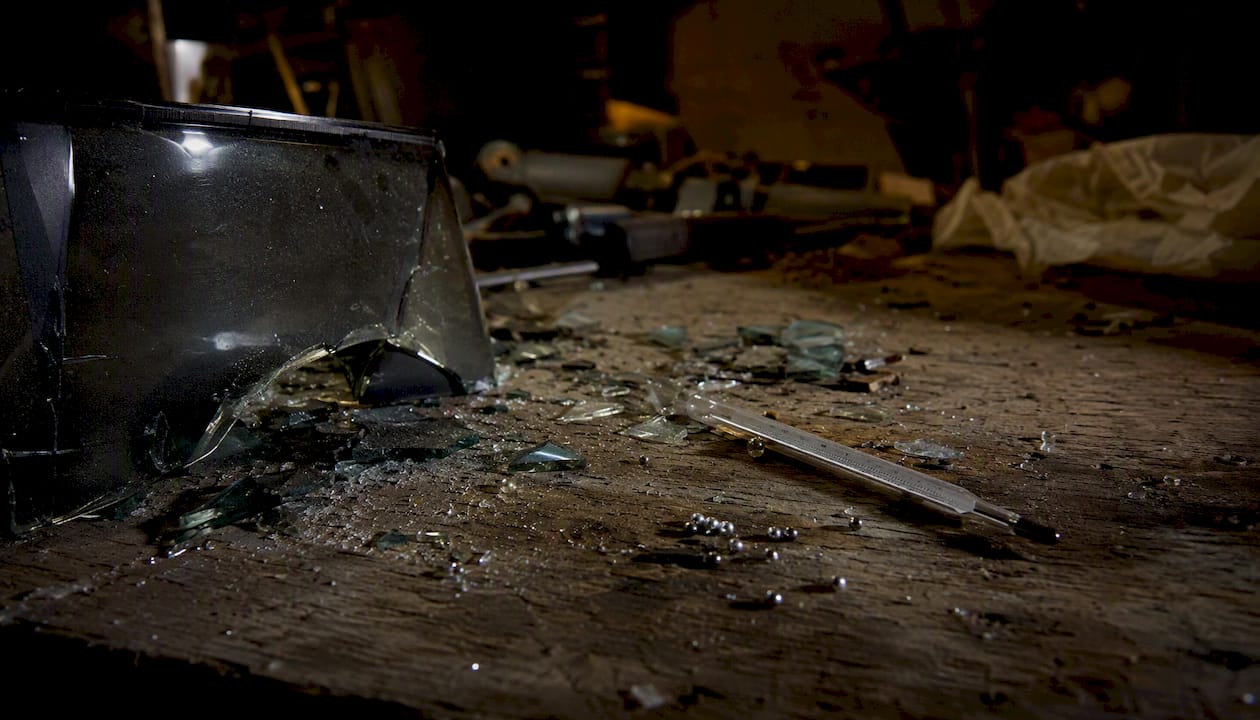
Health risks are direct. Lead dust released when a CRT is broken can cause neurological damage. Mercury vapour from a cracked thermostat or lamp is acutely toxic. Refrigerants released without recovery equipment can cause frostbite and displace oxygen in enclosed spaces. These are not theoretical risks on a demolition site.
Project continuity is where many Ottawa renovators get caught off guard. Mixing hazardous electronics with general demolition debris can cause an entire load to be rejected at the disposal facility. A rejected load means the debris comes back to your site, the project stalls, and you pay twice for transport. Untagged refrigerant-containing appliances are refused entry at Ottawa landfill sites, full stop.
Legal liability is the most overlooked risk. Ontario’s cradle-to-grave hazardous waste system places accountability on the generator, which is the property owner or project manager, not just the hauler. Hiring a carrier who lacks proper registration does not transfer your liability. If the chain of custody is missing, you remain responsible.
Ontario regulatory checklist for your renovation or demolition project
Follow these steps to stay compliant on any Ottawa project involving electronics or appliances.
- Characterise the waste. Identify which items are subject waste under Regulation 347 (listed or characteristic hazardous waste) and which intact WEEE items may qualify for the recovery exemption.
- Obtain or confirm generator registration. Your project must have a valid generator registration document and posted waste number before a licensed carrier can lawfully accept subject waste.
- Segregate on site. Keep hazardous electronics separate from general demolition debris. Mixing them risks load rejection and legal penalties.
- Confirm carrier ECA or EASR status. Under Ontario’s environmental permissions framework, carriers and receivers must hold the appropriate authorisation for the wastes they manage.
- Complete manifests at transfer. Paper or electronic manifests must accompany every transfer of subject waste. Electronic manifest rules specify how carriers record the transfer.
- Retain all documents. Keep manifests, technician tags, and disposal receipts for the period recommended in MOECP guidance. Do not rely on verbal assurances.
Regarding O. Reg. 522/20 (Electrical and Electronic Equipment): this regulation covers producer obligations for IT, telecom, and audio-visual equipment and was phased in from 2021 to 2023 for lighting categories. It governs intact WEEE destined for recovery programmes. Renovation-derived hazardous components that do not qualify for that exemption remain subject to the Reg. 347 pathway. The Ontario waste management overview explains how these two frameworks interact.
Which items require certified removal and tagging before disposal?
The City of Ottawa is explicit: refrigerators, freezers, air conditioners, and dehumidifiers must have cooling chemicals removed and be tagged by a certified technician before being brought to a landfill site. Untagged items will be refused entry.
Beyond refrigerant-containing appliances, the following categories commonly require certified removal or special handling before a disposal facility or licensed receiver will accept them:
- Intact mercury devices: thermostats, certain switches, and older fluorescent ballasts
- Batteries: lead-acid, lithium-ion, and nickel-cadmium packs removed during demolition
- PCB-containing equipment: older capacitors and transformers where PCB content is suspected
The tag or certificate concept works like this: a certified technician recovers the refrigerant using approved equipment, then issues a removable tag or written certificate confirming the work. That document travels with the appliance to the disposal facility. Without it, the facility turns the load away. For refrigerant phase-out context relevant to older HVAC equipment, the R-22 phase-out guidance explains why older systems are particularly likely to require this step.
Practical on-site steps when you discover hazardous electronics
The moment a suspect item appears during demolition, the sequence below protects your workers, your project, and your legal standing.
- Stop work on that item and move it away from the active demolition zone.
- Label it clearly as potential hazardous waste. A simple tag with the date and item description is sufficient as a first step.
- Call a licensed removal specialist for characterisation. For refrigerant-containing appliances, schedule certified refrigerant recovery and tagging before the item moves anywhere.
- Segregate intact WEEE destined for a recovery facility from subject hazardous waste that requires manifest tracking. These are two different streams with different paperwork.
- Photograph the item in place, including any serial numbers or model plates, before it is moved.
- Record the date, time, and contractor information at handover to the carrier.
Pro Tip: Photograph the technician’s tag and the receiving facility’s acceptance paperwork at the moment of handover. That single step gives you immediate, timestamped proof of transfer if a load is later questioned by a regulator or disposal site.
Mixing hazardous items into a general debris bin is the most common mistake on Ottawa renovation sites. It does not save time; it creates rejected loads and project delays. See Hmjcontracting’s guide on junk removal before home renovation for practical pre-project segregation planning.
How to verify a licensed hazardous-waste contractor in Ottawa
Not every hauler who offers to take away your old appliances is authorised to handle subject waste. Ask these questions before signing anything.
Ask for documentation upfront:
- Generator/carrier waste numbers and generator registration document
- ECA or EASR registration certificate, confirming which waste types they are authorised to manage
- Proof of liability insurance and WHMIS training for workers handling hazardous materials
- Confirmation of electronic manifest access or paper manifest capability
Sample questions to ask:
- “Can you produce your EASR or ECA registration and a sample manifest from a similar job?”
- “How do you handle refrigerant recovery, and who issues the technician tag?”
- “What happens if the receiving facility rejects the load?”
Red flags to watch for:
- Refusal to provide manifest numbers or registration documents
- No written procedure for refrigerant recovery
- Requests to combine hazardous items with general demolition debris
Verify carrier status directly through MOECP or the EASR registry. A contractor who cannot answer these questions clearly is a liability risk for your project. Property managers in particular should review common renovation mistakes that arise from skipping this verification step.
Documentation to collect and keep
These are the documents that protect you if a load is audited, refused, or questioned after the fact.
- Manifests (paper or electronic manifest number): required at every transfer of subject waste under Ontario’s manifest and carrier regulations
- Technician refrigerant removal tags or certificates: issued by the certified technician at the time of recovery
- Carrier and hauler receipts: confirm the waste left your site with an authorised party
- Disposal or recovery facility acceptance slips: confirm the waste reached a permitted receiver
- Chain-of-custody notes: dates, times, contractor names, and waste descriptions
Keep these records for the period recommended in MOECP guidance. Do not rely on a contractor’s verbal assurance that they will hold the paperwork. The generator responsibility under Ontario’s cradle-to-grave system means the liability stays with you until you have written proof the waste reached a permitted destination. Digital photos stored in a central project folder, combined with email confirmations from the carrier and receiver, are a practical and reliable system during an active renovation.
Cost drivers and timeline for licensed hazardous-waste removal
Budgeting for compliant removal requires understanding what drives the cost and where delays typically occur.
Primary cost drivers:
- Item type: refrigerant recovery and certified tagging for a large HVAC unit costs more than removing a small battery pack
- On-site characterisation time: identifying and classifying items before removal adds labour hours
- Certified technician labour for refrigerant recovery or mercury device handling
- Transport to a permitted receiver, which may be outside Ottawa depending on the waste type
- Manifesting and administration fees
Typical timeline for a renovation project:
- Identification and survey (1–2 days): walk the site, flag suspect items, photograph and document
- Pricing and scheduling (2–5 days): obtain quotes, confirm carrier EASR/ECA status, schedule certified technician
- Certified removal and tagging (half day to 1 day per appliance type): refrigerant recovery, mercury device removal, battery segregation
- Carrier pickup and manifesting (1 day): transfer of subject waste with completed manifests
- Receiver acceptance and documentation (1–3 days): confirmation from the permitted receiver, receipt of disposal or recovery certificates
Total: roughly one to two weeks from discovery to documented disposal for a typical residential renovation. Discovering hazardous items late in a project compresses this timeline and is the most common cause of delays and cost overruns. Planning for renovation cost overruns includes budgeting a contingency for exactly this scenario.
What happens when disposal goes wrong: Ontario examples
The consequences of improper disposal in Ontario are not abstract. Disposal sites that receive untagged refrigerant-containing appliances refuse the load and return it to the generator. The project owner then pays for a second transport run, a certified technician visit that should have happened first, and any storage costs while the item sits on site. That sequence routinely adds days to a project schedule and hundreds of dollars in avoidable costs.
Beyond load rejection, generators who cannot produce manifests or technician tags face scrutiny from MOECP. Ontario’s environmental enforcement framework allows for orders requiring remediation, and in cases of deliberate non-compliance, financial penalties. The legal exposure is not limited to the contractor; it follows the property owner as the registered generator.
Older Ottawa properties, particularly those built before 1990, are especially likely to contain mercury thermostats, PCB-containing equipment, and refrigerant-using appliances that have never been properly decommissioned. Identifying these items before demolition begins, rather than after a load is rejected, is the practical difference between a project that runs on schedule and one that does not. Hmjcontracting’s guide on hidden renovation hazards in older Canadian homes covers the full range of what to look for during a pre-demolition survey.
Appliances vs. small electronics: what the disposal rules actually require
The disposal pathway for renovation-derived electronics depends on the item type, its condition, and whether it qualifies for the WEEE recovery exemption.
Large appliances containing refrigerants (refrigerators, freezers, air conditioners, dehumidifiers) require certified refrigerant removal and a technician tag before any disposal facility will accept them. These items are not accepted at curbside in Ottawa and cannot be dropped at a standard landfill without documentation.
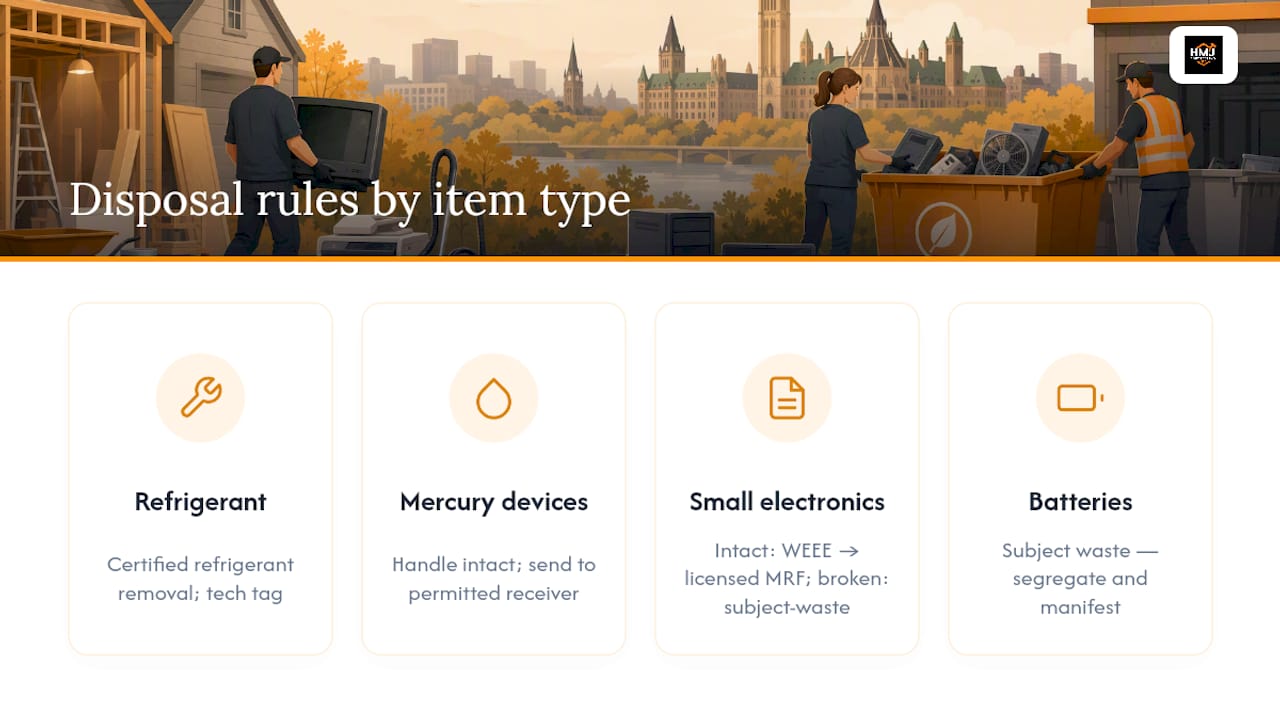
Mercury-containing devices (thermostats, certain switches, fluorescent lamps) must be handled intact where possible and routed to a permitted receiver. Breaking them releases mercury vapour, which creates an immediate health hazard and a secondary contamination problem.
Small electronics and circuit boards (computers, televisions, audio equipment) may qualify for the intact WEEE recovery exemption if they are undamaged and destined for a licensed material recovery facility. Broken or leaking items, or those removed as part of a demolition where hazardous components are exposed, typically enter the subject-waste pathway instead.
Batteries removed during renovation, regardless of chemistry, are subject waste and require segregation and manifesting. They cannot be placed in general demolition debris.
The key practical rule: when in doubt about which pathway applies, treat the item as subject waste and arrange licensed removal. The cost of over-compliance is a modest administration fee. The cost of under-compliance is a rejected load, potential enforcement action, and project delay.
Why these regulations protect Ottawa’s environment and public health
Ontario’s electronic waste regulations exist because the hazardous substances in electronics do not disappear when a device is discarded. Lead leaching from CRT glass into groundwater near an unlined landfill accumulates over years. Mercury released from broken thermostats or lamps can contaminate soil and water at concentrations that affect aquatic life and human health. Refrigerants released without recovery contribute to ozone depletion and carry global warming potential.
The cradle-to-grave manifesting system under Reg. 347 creates a documented chain of custody that allows MOECP to track where hazardous waste goes and hold generators accountable if it ends up somewhere it should not. That accountability is what motivates the tagging, manifesting, and carrier registration requirements. For renovation projects in Ottawa, compliance with these rules is also a direct protection for workers on site, neighbours, and the broader community.
Commercial renovation projects carry additional considerations around owner liability and site safety. The commercial renovation challenges guide covers how these risks affect project owners and what proactive steps reduce exposure.
A contractor’s perspective on why licensed removal matters
Having worked on renovation and abatement projects across Ottawa for over 25 years, the pattern we see most often is this: a project moves quickly through demolition, a refrigerator or old thermostat gets tossed into the debris bin without a second thought, and the load gets turned away at the disposal facility. The project stops. The client pays twice. And then we get the call.
The paperwork requirements under Reg. 347 and MOECP’s cradle-to-grave system are not bureaucratic obstacles. They are the mechanism that keeps hazardous materials out of Ottawa’s soil and water, and they are what protect the property owner from personal liability when something goes wrong downstream. When Hmjcontracting manages a removal, we handle the characterisation, confirm carrier registration, complete the manifests, and hand the client a complete documentation package at the end. That package is what closes the liability loop.
Early identification is where the real time and money savings happen. On a recent Ottawa project involving a pre-1990s commercial kitchen renovation, identifying a bank of mercury-containing switches and a refrigerant-charged walk-in cooler during the survey phase allowed us to schedule certified removal before demolition began. No rejected loads. No delays. The project finished on time.
Hmjcontracting handles compliant electronics removal in Ottawa
When a renovation uncovers hazardous electronics, the compliance steps move fast and the paperwork matters. Hmjcontracting’s licensed abatement services cover the full process: hazardous component characterisation, certified refrigerant recovery and technician tagging, licensed transport coordination, manifest completion and retention, and final disposal documentation.

For Ottawa homeowners and property managers, that means one call handles the regulatory requirements that would otherwise require coordinating a certified technician, a licensed carrier, and a permitted receiver separately. Hmjcontracting also provides demolition and site management services for projects where hazardous electronics removal is part of a larger structural scope. Request a free quote and get a clear, itemised estimate before work begins.
Sources
These primary sources are the authoritative references for Ontario hazardous waste rules, Ottawa-specific disposal requirements, and carrier verification.
- Special items - Hazardous Waste, Electronic Waste and Special Items | City of Ottawa
- Ontario
- Ontario