
The Short Answer for Ottawa Homeowners
The best mould remediation for homeowners is a certified contractor who fixes the moisture source, removes contaminated material under HEPA containment, and documents the work — following the IICRC S520 standard. Avoid anyone who quotes a “mould treatment” without inspecting for the water problem: mould always returns if the moisture stays. In Ottawa, choose a company also certified for asbestos if your home predates 1990.
The U.S. EPA's threshold above which mould cleanup should be done professionally with containment.
How quickly mould can start growing on damp material after a leak or flood, per the EPA.
Homes this age often hide asbestos behind mouldy drywall — requiring a dual-certified crew.
What does a good mould remediation company actually do?
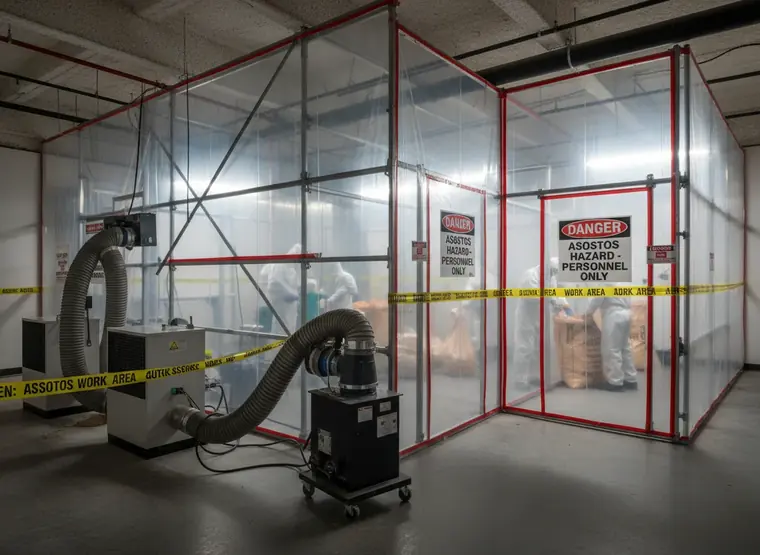
Professional remediation is a defined process, not a product. Under the IICRC S520 standard — the reference most reputable contractors follow — a proper job includes a moisture inspection, containment with HEPA-filtered negative air, removal of unsalvageable porous materials, HEPA-vacuuming and damp-wiping of surfaces, structural drying, and verification that the area is clean. HMJ Contracting's mould remediation service in Ottawa follows exactly this sequence and documents each step.
How do I compare mould remediation companies?
Use this checklist — a “no” on any row is a red flag:
| What to check | Proper remediation | Spray-and-wipe outfit |
|---|---|---|
| Moisture source | Finds and fixes the water problem first | Treats the surface only |
| Containment | Sealed area, HEPA negative air for >10 sq ft | No containment — spores spread |
| Porous materials | Removes mouldy drywall, insulation, carpet | Paints or sprays over them |
| Documentation | Written scope, photos, completion report | Verbal assurances |
| Asbestos readiness | Certified to handle it if found (pre-1990 homes) | Job stops, second contractor needed |
When can homeowners handle mould themselves?
The U.S. EPA's guideline: a patch smaller than about 10 square feet (roughly 3 ft × 3 ft) on a non-porous surface can usually be cleaned by a careful homeowner with detergent, gloves, and an N95 mask. Call a professional when the area is larger, the mould keeps returning, it followed a flood or sewage backup, it's inside walls or HVAC ducts, or anyone in the home has asthma, allergies, or a weakened immune system — Health Canada treats all indoor mould growth as a potential health hazard.
Why moisture repair matters more than mould removal
Mould cannot grow without moisture. Every recurring mould problem is an unfixed water problem — a slow plumbing leak, foundation seepage, poor bathroom ventilation, or indoor humidity above 50%. A remediation quote that doesn't name the moisture source and how it will be corrected is a quote for doing the job again next year. Fix the water, dry within 24–48 hours, and mould stays gone.
Sources and Official References
- U.S. EPA — A Brief Guide to Mold, Moisture and Your Home (10 sq ft guideline; 24–48 hour growth; bleach guidance)
- Health Canada — Health effects of indoor mould
- IICRC S520 — Standard for Professional Mold Remediation
Frequently asked questions
What is the best mould remediation service for homeowners?
The best mould remediation service fixes the moisture source, removes contaminated material under HEPA containment, and verifies the area is clean afterward — not just a spray-and-wipe. For homeowners, that means choosing a certified contractor who inspects for the water problem first, follows the IICRC S520 mould remediation standard, and provides written documentation. In Ottawa, HMJ Contracting performs all of these steps and is also certified for asbestos, which frequently coexists with mould in pre-1990 homes.
How much does professional mould remediation cost in Ottawa?
Small contained jobs, like one wall section in a bathroom, typically run in the low thousands, while basement-wide remediation after flooding costs more because it includes demolition, drying, and rebuild. The moisture repair is what determines lasting value — a cheap job that skips it means paying twice. HMJ Contracting provides free written quotes within 24 hours.
Should I test the mould before hiring a remediation company?
Usually no. Health Canada advises treating all indoor mould growth as a problem to remove regardless of species, so paying for species testing rarely changes the work. Money is better spent on a moisture inspection that finds why the mould grew. The exception is when documentation is needed for a real-estate transaction, insurance claim, or medical guidance.
What questions should I ask a mould remediation company?
Ask five things: Will you identify and fix the moisture source? Do you use containment and HEPA-filtered negative air for areas over 10 square feet? Are you insured and WSIB-compliant for this work? Will you provide written documentation of what was removed? And — critical in older homes — are you certified to handle asbestos if it's found behind the mouldy material?
Can a mould remediation company also handle asbestos?
Only if they're certified for it, and in homes built before 1990 that matters a lot: removing mouldy drywall or insulation can disturb asbestos-containing materials, which legally stops the job until an abatement contractor takes over. HMJ Contracting is certified for both mould remediation and Type 1/2/3 asbestos work under Ontario Regulation 278/05, so one crew handles both hazards without stopping the project.
Is spraying bleach a substitute for professional remediation?
No. Bleach can lighten staining on non-porous surfaces but doesn't reach roots in porous materials like drywall and wood, and it does nothing about the moisture that caused the growth. The U.S. EPA does not recommend routine bleach use for mould cleanup. If mould keeps returning after cleaning, the moisture source is still active.
Related Reading From the HMJ Blog
Dealing with mould right now?
HMJ Contracting offers free mould assessments across Ottawa — we find the moisture source, remove the mould under containment, and document everything.